Millions of Indian car owners are discovering that the fuel they are now forced to use may be quietly damaging their vehicles. India’s E20 ethanol-blending policy, celebrated as a climate and fiscal victory, has a side effect that policymakers did not advertise: it was implemented without the consent of the people who have to pay for it.
The policy triumph that skipped public consent
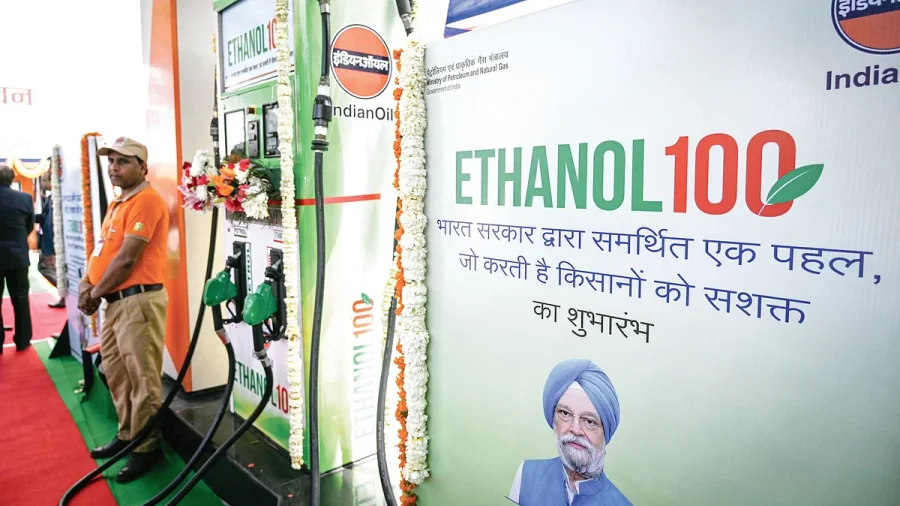
India’s ethanol-blending programme, which mandates 20 per cent ethanol in petrol, hit its target years ahead of the original 2030 deadline. Officials have pointed to reduced carbon emissions and savings of over a trillion rupees in crude oil imports. On paper, it is a success story. But public policy, critics argue, must also be judged by its impact on ordinary citizens — especially when they have no meaningful choice in the matter.
Why pre-2023 car owners are at risk
More than 80 per cent of petrol vehicles on Indian roads were manufactured before 2023. These cars were designed primarily for E10 (10 per cent ethanol) or lower blends. Their engines, fuel systems, and seals were not built to handle the higher corrosive and solvent properties of E20 fuel. Owners had no warning that the fuel they would be pumping into their tanks could cause long-term damage.
The hidden costs for millions of drivers
For the average car owner, the consequences are not abstract. Ethanol’s higher water absorption can lead to fuel system corrosion. Its solvent properties can degrade rubber seals and plastic components. Older engines may experience reduced fuel efficiency, starting problems, or even premature failure. Repair bills for fuel pump replacements, injector cleaning, or engine overhauls could run into thousands of rupees — costs that the policy’s architects did not factor into their calculations.
No choice, no compensation
The core problem is one of democratic fairness. Unlike a voluntary switch to a new product, E20 fuel is now the standard at most petrol pumps. Pre-2023 vehicle owners cannot opt out. There is no government-backed retrofit program, no compensation scheme, and no clear guidance on how to protect older cars. The policy’s benefits — lower emissions and import savings — are enjoyed by the nation, but the costs are borne disproportionately by a specific group of citizens.
What the government says
Officials have defended the policy, citing environmental gains and reduced dependence on imported crude. They have pointed to tests showing that many modern vehicles can handle E20. But those tests do not cover the vast majority of older cars still on the road. The government has not issued a formal statement addressing the concerns of pre-2023 vehicle owners.
The gap between policy and reality
The ethanol push was designed with a clear target in mind: blending targets, emission reductions, and import savings. What was missing was a transition plan for the existing vehicle fleet. The assumption that all cars would eventually be replaced by newer models ignores the reality that millions of Indians rely on older vehicles for daily commutes, livelihoods, and family transport. For them, the policy is not a triumph — it is an unexpected expense.
Confirmed facts vs what remains unclear
What is confirmed: India achieved its E20 target ahead of schedule. Over 80 per cent of petrol vehicles were built before 2023 and designed for lower ethanol blends. The policy has reduced emissions and saved on crude imports. What remains unclear: the exact number of vehicles at risk, the average repair cost per vehicle, whether the government plans any compensation or retrofit program, and the long-term durability of older engines running on E20.
Risks and balanced view
Supporters of the policy argue that the environmental and fiscal benefits outweigh the costs, and that newer vehicles are already E20-compliant. Critics counter that the policy was rushed without adequate consumer protection, and that the burden falls unfairly on lower-income car owners who cannot afford new vehicles. There is also concern that the ethanol push may increase food prices if sugarcane diversion for ethanol production competes with food crops.
Wider trend: Policy without public consultation
The ethanol story is part of a broader pattern in Indian policymaking where ambitious targets are set without sufficient public consultation or transition planning. Similar concerns have been raised about the sudden shift to BS-VI emission norms, the ban on older diesel vehicles, and the push for electric vehicles without adequate charging infrastructure. In each case, the costs of compliance are passed to citizens who had no say in the decision.
What car owners should do now
If you own a pre-2023 petrol vehicle, check your owner’s manual for ethanol compatibility. Consider using fuel additives designed to protect older engines. Avoid long periods of storage with E20 fuel, as ethanol can absorb moisture. Monitor your car for signs of fuel system trouble — rough idling, reduced mileage, or difficulty starting. If possible, consult a trusted mechanic about whether your vehicle needs any modifications.
Future outlook
The government may eventually introduce a retrofit program or extend the timeline for older vehicles, but no such plan has been announced. Automakers are likely to phase out non-E20 compliant models. In the meantime, millions of car owners will have to live with the hidden costs of a policy they never agreed to.
Our Take
India’s ethanol push is a textbook case of policy success measured by macro numbers while ignoring micro realities. The emissions savings and import reductions are real, but so are the costs imposed on ordinary citizens. A policy that forces millions of people to bear unexpected expenses without their consent is not a triumph — it is a failure of democratic process. The lesson for future policymaking is clear: targets matter, but so do the people who have to live with them.
Frequently Asked Questions
What is the E20 ethanol policy in India?
The E20 policy mandates that petrol sold in India contain 20 per cent ethanol blended with petrol. It was achieved ahead of the original 2030 target, aiming to reduce carbon emissions and cut crude oil import costs.
Why are pre-2023 car owners at risk from E20 fuel?
Over 80 per cent of petrol vehicles on Indian roads were built before 2023 and designed for E10 or lower ethanol blends. Their engines, fuel systems, and seals may not withstand the higher corrosive and solvent properties of E20, leading to potential damage and repair costs.
What should I do if I own a pre-2023 car and have to use E20 fuel?
Check your owner’s manual for ethanol compatibility. Use fuel additives designed for older engines. Avoid storing the car with E20 fuel for long periods. Monitor for signs of fuel system trouble and consult a mechanic if needed.
Is the government planning any compensation for affected car owners?
As of now, no compensation or retrofit program has been announced by the government. The policy was implemented without a transition plan for pre-2023 vehicles.