The threat of new US tariffs on Canada has taken an unexpected turn, with former President Donald Trump now linking trade policy to cross-border wildfire smoke. Trump alleges that Canadian wildfires are sending 'filthy' air into American cities, a claim that has ignited a fresh political and environmental dispute between the two neighbors.
What Trump Said About Canada Wildfire Smoke and Tariffs
Trump’s remarks, made during a recent public appearance, accused Canada of failing to manage its wildfires, which he said were causing hazardous air quality in US cities. He suggested that new tariffs could be a tool to pressure Canada into taking more aggressive action. The statement marks a significant escalation in rhetoric, blending environmental concerns with trade leverage.
Why This Tariff Threat Matters for US-Canada Relations
The threat comes at a time when US-Canada trade relations are already strained over issues like lumber, dairy, and digital services taxes. Linking tariffs to wildfire smoke introduces a new, unpredictable variable. For Canadians, it raises questions about sovereignty and environmental accountability. For Americans, it highlights the transboundary nature of climate impacts, where one country’s environmental crisis can directly affect another’s public health.
Mark Carney’s Response: A Call for Shared Climate Responsibility
Canadian leader Mark Carney pushed back firmly, stating that both the US and Canada have an equal responsibility to fight climate change. He pointed to scientific consensus that climate change is worsening wildfire conditions globally, including in Canada. Carney’s response reframes the issue from a bilateral blame game to a collective challenge, urging cooperation rather than confrontation.
How Wildfire Smoke Affects US Cities
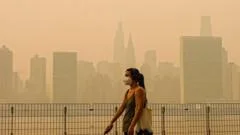
In recent years, smoke from Canadian wildfires has drifted into US cities like New York, Chicago, and Minneapolis, causing air quality alerts and health advisories. The smoke contains fine particulate matter (PM2.5) that can penetrate lungs and worsen respiratory conditions. For millions of Americans, this is not a distant threat but a recurring reality during wildfire seasons. Trump’s tariff threat taps into this public frustration, though experts argue that tariffs are an ineffective solution to a climate-driven problem.
Expert View: Climate Change and Wildfire Intensity
Climate scientists have long warned that rising temperatures and prolonged droughts are creating conditions for more intense and frequent wildfires. Canada’s boreal forests, which store vast amounts of carbon, are particularly vulnerable. Experts say that addressing wildfire smoke requires joint investment in fire management, emissions reductions, and cross-border air quality monitoring—not punitive tariffs.
What’s Unclear About Trump’s Tariff Proposal
It remains unclear whether Trump’s threat is a serious policy proposal or a rhetorical tool. No formal tariff mechanism has been outlined, and it is uncertain how such a tariff would be enforced or measured. The connection between wildfire smoke and trade policy is unprecedented, leaving legal and diplomatic experts puzzled about its feasibility.
Confirmed Facts vs What Remains Unclear
Confirmed: Trump has publicly threatened tariffs over Canadian wildfire smoke. Carney has responded by emphasizing shared climate responsibility. Wildfire smoke from Canada has affected US air quality in recent years.
Unclear: Whether any formal tariff proposal will be introduced. How such a tariff would be calculated or justified under trade agreements like USMCA. The specific US cities Trump referenced.
Risks and Balanced View
Critics argue that Trump’s tariff threat is a distraction from the real issue: climate change. They warn that it could harm US-Canada economic ties, which support millions of jobs on both sides. Supporters may see it as a tough negotiating tactic to force Canada to invest more in wildfire prevention. However, environmental groups caution that tariffs do not reduce smoke—they only create economic friction.
Wider Trend: Climate Change as a Trade Weapon
This incident reflects a growing trend where environmental issues are increasingly used as leverage in trade disputes. From carbon border adjustments to deforestation-linked tariffs, countries are finding new ways to link climate policy with economic pressure. Trump’s threat, while unconventional, fits this broader pattern of using environmental rhetoric to advance trade agendas.
Practical Guidance for Affected Communities
For residents in US cities near the Canadian border, monitoring air quality indexes during wildfire season remains essential. Using N95 masks, air purifiers, and staying indoors during smoke events can reduce health risks. On a policy level, citizens can advocate for cross-border cooperation on wildfire management and climate resilience, rather than punitive tariffs.
Future Outlook: What Could Happen Next
If Trump follows through on his threat, Canada could retaliate with its own tariffs, escalating a trade war. Alternatively, the two nations might negotiate a joint framework for wildfire management and air quality monitoring. The outcome will depend on political will and the broader trajectory of US-Canada relations. For now, the threat remains a political statement, but one with real implications for trade and climate policy.
Our Take
Trump’s tariff threat over wildfire smoke is a dramatic and arguably misguided attempt to address a complex environmental issue. While public frustration over poor air quality is understandable, tariffs are a blunt instrument that do nothing to reduce smoke or prevent fires. The real solution lies in shared climate action, not economic punishment. This episode underscores how climate change is reshaping not just our environment, but our politics and trade relationships in unpredictable ways.
Frequently Asked Questions
Why is Trump threatening tariffs over Canadian wildfire smoke?
Trump claims that Canadian wildfires are sending 'filthy' air into US cities, and he is using the threat of tariffs to pressure Canada into taking more aggressive action on wildfire management.
How does Canadian wildfire smoke affect US air quality?
Smoke from Canadian wildfires can drift south, carrying fine particulate matter (PM2.5) that causes air quality alerts, respiratory issues, and health advisories in US cities, especially near the border.
What did Mark Carney say in response?
Canadian leader Mark Carney said both the US and Canada have an equal responsibility to fight climate change, which experts say is worsening wildfire conditions. He urged cooperation rather than tariffs.
Could Trump’s tariff threat actually become policy?
It is unclear. No formal proposal has been made, and linking tariffs to wildfire smoke is unprecedented. It may remain a rhetorical tool, but if pursued, it could escalate trade tensions significantly.