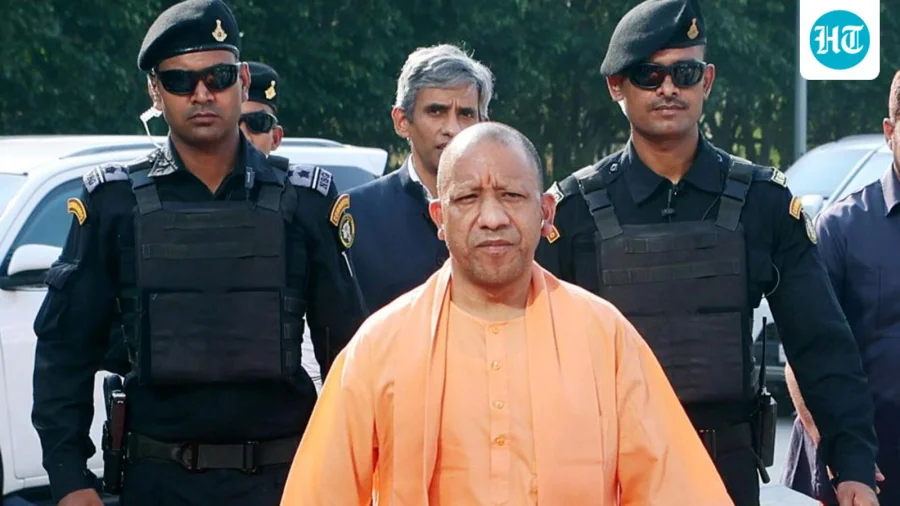
Uttar Pradesh Chief Minister Yogi Adityanath has brought back one of his sharpest political catchphrases — and this time, he is tying it directly to the Rajya Sabha. Speaking after the recent Upper House elections, he said the results have "foreshadowed the outcome" of the upcoming assembly polls, reviving the '80 vs 20' framing that dominated the 2024 general election narrative in the state.
What Yogi Actually Said — And Why the Wording Matters
The Chief Minister's claim is straightforward: the Rajya Sabha election results, he argued, are an early indicator of how voters will swing in the assembly elections. "The Rajya Sabha elections have foreshadowed the outcome of the upcoming assembly elections," he said.
The phrasing is deliberate. By treating an indirect election — decided by MLAs, not the general public — as a proxy for mass sentiment, Yogi is signalling that his party reads the numbers as confirmation of its continued dominance in India's most politically consequential state.
The '80 vs 20' Slogan, Explained
The '80 vs 20' formulation refers to Uttar Pradesh's 80 Lok Sabha seats. During the 2024 general election campaign, the BJP framed the contest as a direct binary — its own tally versus the combined opposition's — positioning itself as the sole claimant to the state's mandate.
Reviving it now, ahead of the 2027 assembly polls, serves two purposes: it reminds the party's base of its Lok Sabha performance, and it frames the opposition as a residual, minority force.
Why Rajya Sabha Numbers Are Being Read as a Signal
Rajya Sabha elections in Uttar Pradesh are decided by members of the state legislative assembly. Every vote cast reflects the current strength of each party within the Vidhan Sabha — which is why parties treat these results as a temperature check on legislative arithmetic.
For the BJP, a strong showing reinforces the argument that its MLA base remains intact and disciplined. For the opposition, the same numbers become a test of whether its legislative presence can translate into electoral momentum.
Who This Message Is Really Aimed At
The immediate audience is not the voter — it is the party cadre and the state's political commentariat. By framing the Rajya Sabha outcome as a preview, Yogi is setting the terms of the 2027 debate early, before the opposition can define its own narrative.
For ordinary voters in UP, the practical takeaway is simpler: the campaign season has effectively begun, more than a year before polling.
What the Opposition Is Likely to Argue
Opposition parties have consistently rejected the '80 vs 20' framing, arguing that Lok Sabha and assembly elections follow different logics — local candidates, caste arithmetic, and state-level governance matter more than national narratives.
They are also likely to point out that Rajya Sabha elections are indirect and decided by MLAs, not voters, making them a weak proxy for public mood. No formal opposition response to Yogi's latest remark has been confirmed in available material.
Confirmed Facts vs What Remains Unclear
Confirmed: Yogi Adityanath made the statement linking Rajya Sabha results to the assembly polls, and revived the '80 vs 20' framing.
Unclear: The exact seat-wise Rajya Sabha numbers being referenced, the specific assembly election timeline being invoked, and whether the BJP will formally adopt this framing as its 2027 campaign line. Any interpretation of the numbers as a definitive electoral forecast remains speculation.
The Bigger Pattern: Early Framing in Indian Politics
Yogi's remark fits a broader trend in Indian politics — parties increasingly use indirect elections, bypoll results, and legislative arithmetic to build early narratives for major state contests. The goal is not accuracy but momentum: whoever defines the story first often sets the terms of the debate.
Uttar Pradesh, with its 403 assembly seats and outsized national influence, is the most watched laboratory for this strategy.
What This Means for Voters and Political Observers
For voters, the practical implication is that political messaging around 2027 will intensify well ahead of the formal campaign. For analysts and journalists, the Rajya Sabha results now become a data point to track — not a verdict.
Anyone following UP politics should watch three things: opposition counter-messaging, internal BJP cohesion in the Vidhan Sabha, and whether the '80 vs 20' framing gains traction beyond party events.
What Could Happen Next
The BJP is likely to repeat this framing at public rallies and organisational meetings through 2025 and 2026. The opposition, in turn, will attempt to shift the conversation to governance, unemployment, and local issues.
Whether the Rajya Sabha math actually predicts the assembly outcome will only be known when voters cast their ballots — and that is precisely why the claim is politically useful now.
Our Take
Yogi Adityanath's remark is less a prediction than a positioning move. By linking an indirect election to a direct one, he is framing the BJP as the party of inevitability in Uttar Pradesh — and forcing the opposition to argue against a narrative rather than set one.
The math may or may not hold. But in politics, the framing often matters as much as the numbers.
Frequently Asked Questions
What is the '80 vs 20' slogan?
It refers to Uttar Pradesh's 80 Lok Sabha seats, with the BJP framing the contest as its own tally versus the combined opposition's. Yogi Adityanath revived the slogan after the recent Rajya Sabha elections.
Why did Yogi link Rajya Sabha results to assembly polls?
Rajya Sabha elections in UP are decided by MLAs, so the results reflect the current strength of each party in the Vidhan Sabha. Yogi is using this as an early indicator of momentum ahead of the 2027 assembly polls.
Are Rajya Sabha results a reliable predictor of assembly elections?
Not necessarily. Rajya Sabha elections are indirect and decided by legislators, while assembly elections are decided by voters. Local issues, caste arithmetic, and governance often matter more than national narratives.
When are the next Uttar Pradesh assembly elections?
The next UP assembly elections are expected in 2027, though the formal schedule will be announced by the Election Commission closer to the time.