The sky over many of the world's driest regions is no longer just a source of despair. It is becoming a laboratory. As rivers shrink, groundwater tables fall, and cities brace for another summer of water rationing, the idea of squeezing rain out of clouds — once dismissed as fringe science — is getting a serious second look. And this time, drones are part of the conversation.
What Cloud Seeding Actually Does — And Why Drones Are Being Tested
Cloud seeding works on a simple principle: certain clouds contain moisture but lack the tiny particles — called nuclei — around which water droplets or ice crystals can form and grow heavy enough to fall as rain. Seeding introduces those particles, typically silver iodide or salt compounds, into the cloud.
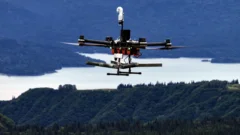
Traditionally, this is done by aircraft or ground-based generators. Drones offer something different: they can fly lower, slower, and more precisely — potentially targeting the right part of a cloud at the right moment, at a fraction of the cost of a manned aircraft operation.
Why This Matters More Now Than Ever
Water stress is no longer a distant concern. According to the United Nations, billions of people already face severe water scarcity for at least part of the year. In India, reservoirs in several states have repeatedly hit low levels, and monsoon variability has made farmers increasingly anxious.
Cloud seeding is already used in parts of India — including Karnataka, Maharashtra, and Tamil Nadu — during dry spells. But results have been mixed, and the cost of aircraft-based operations limits how often it can be done. If drones can make the process cheaper and more responsive, the implications for agriculture, urban water supply, and drought management could be significant.
How the Technology Has Evolved
Cloud seeding itself dates back to the 1940s, when scientists first demonstrated that certain chemicals could trigger ice formation in clouds. Over the decades, countries including China, the United States, the UAE, and Australia have invested in large-scale seeding programmes.
The UAE, in particular, has run an extensive cloud seeding operation for years to supplement its meagre rainfall. China has used it for weather modification around major events and agricultural regions. The missing piece — until recently — has been precision and cost-effectiveness. Drones are being explored to fill that gap.
Who Stands to Benefit — And Who Remains Skeptical
For farmers in rain-shadow regions, any technology that can add even a few centimetres of rainfall during a critical sowing window is worth watching. For municipal water authorities, the appeal is obvious. For disaster management agencies, the ability to influence rainfall patterns — even marginally — could help during prolonged dry spells.
But not everyone is convinced. Scientists have long debated how effective cloud seeding really is. Some studies suggest modest gains — perhaps 5% to 15% additional precipitation under ideal conditions. Others argue that the evidence is too inconsistent to justify large public spending.
What Scientists and Authorities Say
Meteorological experts generally agree that cloud seeding can work under specific conditions — the right type of cloud, sufficient moisture, and proper delivery of seeding agents. The challenge is that these conditions are not always present, and measuring the exact impact of seeding remains difficult.
No official global body has endorsed cloud seeding as a standalone solution to drought. It is typically viewed as one tool among many — alongside water conservation, rainwater harvesting, and groundwater recharge.
Confirmed Facts vs What Remains Unclear
Confirmed: Cloud seeding is a real, established technology used in multiple countries. Drones are being explored as a delivery method. Water scarcity is a growing global concern driving interest in weather modification.
Unclear: How effective drone-based seeding will be compared to traditional methods. Whether it can be scaled affordably. What the long-term environmental effects of widespread seeding might be. Whether regulatory frameworks will keep pace with the technology.
Risks and the Balanced View
Cloud seeding is not without controversy. Some researchers worry about the environmental impact of silver iodide accumulation. Others raise concerns about "weather modification" being used in ways that benefit one region at the expense of another — essentially, who owns the rain?
There is also the risk of overpromising. If governments present cloud seeding as a cure-all for drought, it could divert attention and funding from more reliable solutions like water recycling and conservation.
A Wider Pattern: The Global Push for Weather Control
Cloud seeding is part of a broader trend of countries investing in weather modification as climate variability intensifies. From the UAE's rain enhancement programme to China's massive weather modification budget, the idea that humans can — and should — intervene in rainfall patterns is gaining ground.
Drones fit into this trend because they lower the barrier to entry. A country or even a large agricultural cooperative that cannot afford a fleet of seeding aircraft might be able to afford drones.
What This Means for Readers
If you live in a drought-prone region, cloud seeding — with or without drones — is unlikely to solve your water problems on its own. But it may become part of a broader strategy. Keep an eye on local government announcements about seeding trials, and treat claims of "artificial rain" with cautious optimism.
For students and researchers, this is a field where meteorology, drone engineering, and environmental policy intersect — and where the science is still very much in motion.
What Could Happen Next
Expect more trials. Several countries are already testing drone-based seeding, and results from those experiments will shape whether the technology moves from pilot projects to operational programmes. Regulatory frameworks will also need to evolve — currently, rules around weather modification vary widely and are often unclear.
The bigger question is whether cloud seeding, however delivered, can meaningfully address water scarcity — or whether it will remain a marginal tool in a much larger fight.
Our Take
Cloud seeding drones are not a silver bullet. They are a promising experiment in a world that desperately needs new ideas about water. The technology deserves serious research and honest evaluation — not hype, and not dismissal. The rainmakers may not control the weather, but they are asking the right questions.
Frequently Asked Questions
What is cloud seeding and how do drones fit in?
Cloud seeding is a weather modification technique that introduces particles like silver iodide into clouds to encourage rain or snow. Drones are being explored as a cheaper, more precise way to deliver these particles compared to traditional aircraft.
Does cloud seeding actually work?
Studies suggest it can increase precipitation by a modest amount — often cited as 5% to 15% — under the right conditions. However, results vary, and scientists continue to debate its overall effectiveness.
Is cloud seeding used in India?
Yes. Several Indian states, including Karnataka, Maharashtra, and Tamil Nadu, have used cloud seeding during dry spells. It is typically deployed as a temporary measure during drought conditions.
What are the risks of cloud seeding?
Concerns include potential environmental effects of seeding agents, questions about who benefits from modified weather, and the risk that it distracts from more reliable water management solutions.