

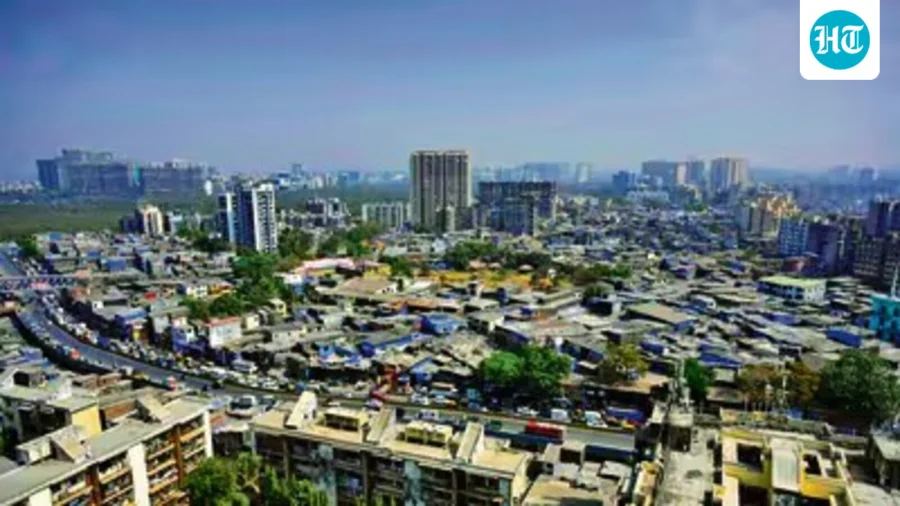
For thousands of families living in Delhi's Jhuggi-Jhopri clusters, the address on their documents has always carried a question mark. That may now begin to change. The Delhi Development Authority has started the process of in-situ rehabilitation across 45 JJ clusters, covering roughly 21,229 households — a move that, if it holds pace, could turn temporary shelters into permanent homes without pushing families out of the neighbourhoods they already know.
What DDA Has Actually Started
According to the original update, DDA has initiated the in-situ rehabilitation process for 45 JJ clusters in Delhi. The figure attached to the exercise is significant: around 21,229 households are covered under this phase.
In-situ rehabilitation, in simple terms, means rehousing families at or close to the site where they currently live, rather than relocating them to the city's outskirts. The process has been initiated — the operational stages of survey, eligibility verification, and construction follow from here.
Why "In-Situ" Changes the Deal for These Families
Relocation has long been the most contested part of slum redevelopment in Delhi. Moving families far from their settlement often cuts them off from work, schools, and the informal networks that sustain daily life.
In-situ rehabilitation avoids that break. For a family whose livelihood depends on being near a particular market, factory belt, or transport hub, staying in place is not a small detail — it is the difference between a workable home and an unworkable one.
How Delhi's JJ Rehabilitation Story Has Unfolded
Delhi has a long history of JJ cluster rehabilitation schemes, with in-situ redevelopment emerging as the preferred model in recent years because it reduces displacement. The current exercise extends that approach to a defined set of 45 clusters.
What is known at this stage is the scope — the number of clusters and households. What is not yet in the public domain from this update is the cluster-wise breakdown, the construction schedule, or the flat allotment mechanism.
Who Is Affected — and What They Stand to Gain
The direct beneficiaries are the roughly 21,229 households living in these 45 clusters. For them, the practical gains of a completed rehabilitation are concrete: a pucca dwelling, legal address proof, and access to basic civic infrastructure.
An address also matters beyond housing. It feeds into school admissions, bank accounts, ration cards, and voter rolls. For families that have lived for years without secure documentation of where they live, that is a quiet but real shift.
What DDA Has Said — and What Remains Open
The update confirms that the rehabilitation process has been initiated. It does not, on its own, confirm construction timelines, the design of the dwelling units, or the eligibility criteria that will be applied cluster by cluster.
Those details typically emerge as the process moves from initiation to survey and execution. Until then, residents and observers should treat the announcement as a starting point, not a completion.
Reading the Announcement Carefully
There is a difference between a process being initiated and a process being delivered. Initiation signals intent and administrative movement. Delivery depends on land availability, funding, contractor timelines, and the often slow work of verifying who qualifies.
For a project of this scale, the meaningful milestones will be the first survey notices, the first foundation stone, and the first allotment letter. Each of those will tell residents more than the headline number does.
Confirmed Facts vs What Remains Unclear
Confirmed: DDA has begun the in-situ rehabilitation process for 45 JJ clusters in Delhi, covering around 21,229 households.
Unclear: Cluster-wise names, construction start dates, unit sizes, eligibility rules, and the allotment process. Any specific claim on these points should be treated as unverified until DDA issues it officially.
Risks and the Balanced View
Large rehabilitation exercises carry familiar risks. Surveys can leave out families who lack documentation. Construction can stretch across years, leaving residents in limbo. Transit accommodation arrangements, where needed, are often the weakest link.
There is also the question of density. In-situ redevelopment typically means higher floors on the same land, which raises concerns about maintenance, water supply, and civic services once families move in. These are legitimate questions that residents and civic groups will likely raise as the process advances.
The Wider Pattern This Fits Into
Delhi's approach to JJ clusters has gradually moved from clearance-and-relocation toward in-situ redevelopment. The logic is straightforward: it is cheaper socially, if not always financially, to keep communities intact.
If this phase progresses, it could serve as a template for the remaining clusters in the city — making the execution of these 45 clusters a test case for the larger model.
What Residents Should Do Now
Families in the affected clusters should watch for official DDA notices, survey announcements, and eligibility verification drives. Keeping documents — identity proof, address proof, and any prior allotment or survey papers — ready will matter when verification begins.
It is also worth relying only on official DDA communication for timelines, rather than on informal updates circulating in the neighbourhood.
What Comes Next
The next visible steps would be cluster-wise surveys, eligibility lists, and construction tenders. Each of these will give a clearer picture of how quickly the 21,229 households move from a number in an announcement to keys in hand.
Until then, the honest position is this: the process has started, and the outcome depends on execution.
Our Take
Announcements of this kind are easy to make and hard to finish. What makes this one worth watching is the model — in-situ rehabilitation, if done properly, respects both the housing need and the social fabric of these communities. The number 21,229 is not just a statistic; it is the count of families whose daily lives could change if the process holds. The right measure of success will not be the launch, but the first family that moves into a home on the same ground where their jhuggi once stood.
Frequently Asked Questions
What is in-situ rehabilitation of JJ clusters?
In-situ rehabilitation means rehousing families at or near their existing JJ cluster instead of relocating them elsewhere. The idea is to give residents pucca homes without breaking their access to work, schools, and community networks.
How many families are covered under this DDA initiative?
According to the update, around 21,229 households across 45 JJ clusters in Delhi are covered under this phase of in-situ rehabilitation.
Will residents have to move out during construction?
That depends on how DDA plans the execution. In-situ projects sometimes require temporary transit arrangements while new units are built. No confirmed transit plan has been shared in the available information.
What should affected families do right now?
Watch for official DDA notices and surveys, and keep identity and address documents ready. Rely on official DDA communication for timelines rather than informal updates.