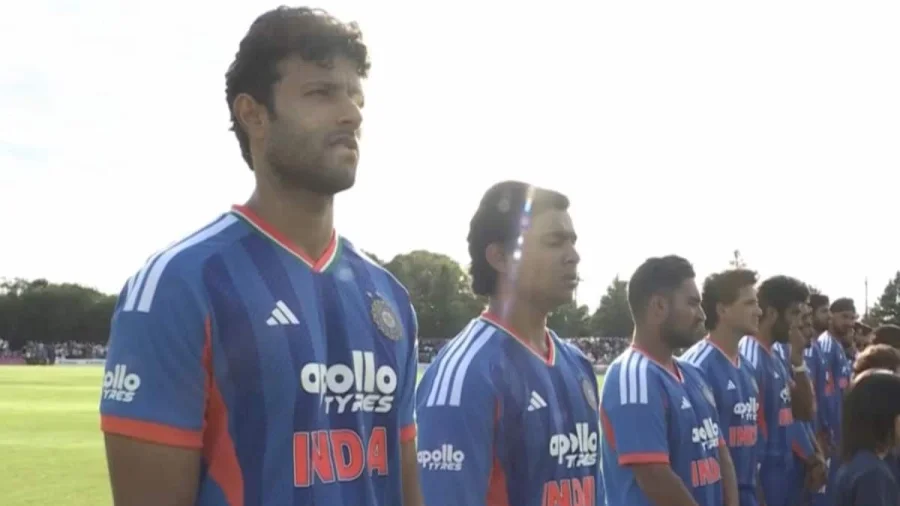
The stadium speakers in Sano began with "Vande Mataram." Only after it ended did "Jana Gana Mana" follow. For millions watching the India-Japan T20I, the order felt unfamiliar — and within minutes, clips of the ceremony were circulating with the same question attached: why was the national song played before the national anthem?
The answer is not a mistake, and it is not a change in the status of either song. It is protocol.
What Actually Happened in Sano
Ahead of India's historic T20I against Japan, the pre-match ceremony included both "Vande Mataram" and "Jana Gana Mana." The national song was rendered first, followed by the national anthem.
The sequence was captured on video and quickly drew attention, with viewers noting that the order differed from what they typically hear at cricket matches and official events.
Why the Order Was Not an Accident
The sequence came months after the Union Home Ministry issued updated guidelines governing the rendition of India's national song and national anthem at official functions.
Under those guidelines, when both are included in a ceremony, a prescribed order applies. The Sano ceremony followed that order — which is why "Vande Mataram" preceded "Jana Gana Mana."
National Song vs National Anthem: A Distinction Worth Knowing
"Jana Gana Mana," written by Rabindranath Tagore, is India's national anthem. "Vande Mataram," written by Bankim Chandra Chattopadhyay, is the national song.
Both hold a respected place in India's cultural and constitutional framework, but they are not the same category of composition. The guidelines issued by the Home Ministry address how each is to be rendered when both appear in the same ceremony.
Why This Drew So Much Attention
For most Indian cricket fans, the pre-match routine is familiar: the anthem plays, players stand at attention, and the match begins. Seeing the national song first disrupted that expectation.
The reaction online was less about controversy and more about curiosity — many viewers simply did not know that a prescribed sequence existed for ceremonies that include both compositions.
What the Guidelines Actually Cover
The Home Ministry's updated guidelines govern the rendition of the national song and national anthem at official functions. They address the order of performance, the manner of rendition, and the contexts in which each is to be included.
The Sano ceremony fell within that framework, which is why the sequence followed the prescribed order rather than the more commonly seen anthem-only format.
Confirmed Facts vs What Remains Unclear
Confirmed: "Vande Mataram" was played before "Jana Gana Mana" at the India-Japan T20I pre-match ceremony. The sequence followed updated Home Ministry guidelines.
Unclear: The specific operational decisions behind including both compositions at this particular match — including who requested the format — have not been detailed in the available information.
Any claim that the order reflects a change in the status of either song is not supported by the guidelines.
The Bigger Picture: A Historic Fixture
The India-Japan T20I itself was a notable fixture, marking a rare meeting between the two sides on Japanese soil. The pre-match ceremony, in that context, carried added ceremonial weight.
That both the national song and national anthem were included — rather than the anthem alone — reflects the official nature of the occasion.
What This Means for Fans and Future Ceremonies
For viewers, the takeaway is straightforward: when both compositions are part of a ceremony, the order is prescribed, not improvised.
Fans can expect the same sequence at future official events where both are included. The anthem-only format at most cricket matches remains unchanged.
Future Outlook
The guidelines are expected to continue governing ceremonial renditions at official functions. Whether more sporting events adopt the two-composition format will depend on the organisers and the nature of the occasion.
For now, the Sano ceremony stands as a clear example of the protocol in practice.
Our Take
This was never a controversy — it was a protocol most people had simply never seen applied. The confusion in Sano says less about the ceremony and more about how rarely the two-composition format appears in everyday viewing.
The guidelines exist precisely for moments like this. The fact that they were followed is the story.
Frequently Asked Questions
Why was Vande Mataram played before Jana Gana Mana at the India-Japan T20I?
Because updated Union Home Ministry guidelines prescribe the order when both the national song and national anthem are included in an official ceremony. The Sano ceremony followed that order.
Is Vande Mataram the national anthem of India?
No. "Jana Gana Mana" is India's national anthem. "Vande Mataram" is the national song. Both are respected compositions, but they hold different designations.
Did the order of the songs change their status?
No. The sequence followed prescribed protocol and does not reflect any change in the status of either composition.
Will this sequence be followed at future events?
At official functions where both the national song and national anthem are included, the prescribed order is expected to apply. Most cricket matches continue to feature only the national anthem.