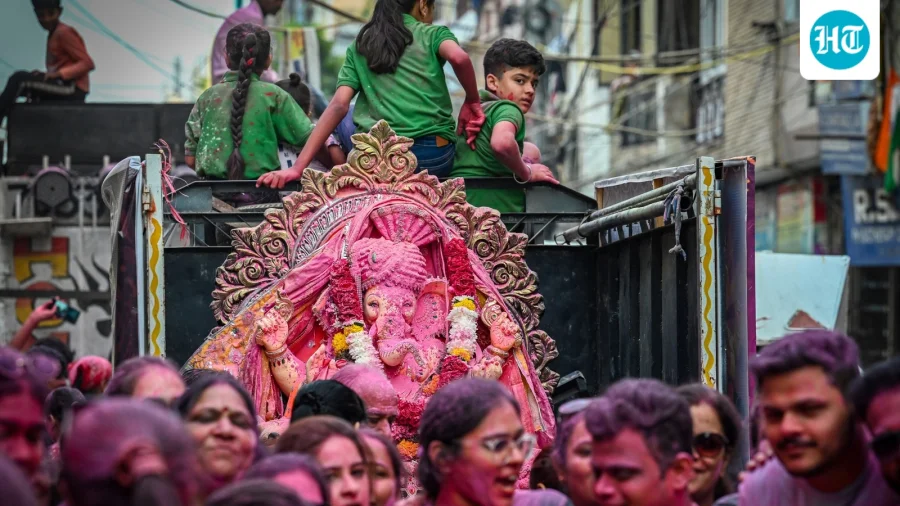
Every year, thousands of Ganesh idols — many made of plaster of Paris, painted with chemical dyes — end up in the Yamuna. The river, already among India's most polluted, takes another hit. This year, the Delhi government is trying a different approach: 78 artificial ponds across the city, built specifically for Ganpati visarjan.
Where Delhi's Artificial Ponds for Ganpati Visarjan Are Located
The 78 sites are spread across parks, Ramlila grounds, vacant plots and other government or public-use land. These are not natural water bodies but temporary structures designed to hold idols during immersion.
The idea is simple: give devotees a nearby, accessible alternative so they don't travel to the Yamuna or other rivers and lakes.
Why the Yamuna Can't Take Another Festival Season
The Yamuna's pollution levels are a recurring concern for Delhi. During festival months, idol immersion adds plaster, paint, flowers, and non-biodegradable material to the river.
These materials don't dissolve quickly. They settle, they float, they choke. For a river already struggling with industrial effluents and untreated sewage, the festival load makes things worse.
Artificial ponds are meant to intercept that waste before it reaches the river.
How the Artificial Pond System Is Supposed to Work
Devotees bring idols to the designated pond, immerse them, and leave. Civic agencies then handle what's left — collecting debris, managing water, and disposing of waste responsibly.
In theory, this keeps the ritual intact while containing the environmental damage. In practice, it depends on how many people actually use these sites.
Who This Affects — and Why It Matters to Real People
For devotees, the change means adjusting long-standing traditions. Many families have immersed idols at the same river ghat for generations. Being redirected to a park or vacant plot feels different.
For residents living near the Yamuna, it could mean a slightly cleaner riverbank after the festival. For civic workers, it means additional responsibility — managing multiple sites instead of a few river entry points.
The success of this plan depends on trust. If people believe the artificial ponds are respectful and well-maintained, they'll use them. If not, they'll find their own way to the river.
What Officials Have Said About the Arrangement
The Delhi government has positioned these 78 ponds as part of its broader effort to protect the Yamuna during festival season. The arrangements include sites on government and public-use land, making them accessible without private property disputes.
No specific budget figures, timelines, or agency-wise breakdowns have been shared in the available information.
Confirmed Facts vs What Remains Unclear
Confirmed: 78 artificial ponds have been created. They are located in parks, Ramlila grounds, vacant plots and other public land. The purpose is to manage Ganpati visarjan.
Unclear: How many devotees will actually use these sites. Whether the ponds are permanent or temporary. What happens to the idols and waste after immersion. Whether there's any penalty for those who still go to the Yamuna.
These are practical questions that will shape whether the plan works or becomes another well-intentioned initiative that fades after the festival.
Risks and the Balanced View
Artificial ponds solve one problem but can create others. If not cleaned regularly, they become stagnant water bodies — a health hazard. If idols are left behind, they become dumping grounds.
There's also the question of scale. Delhi sees lakhs of Ganesh idols every year. Seventy-eight ponds may not be enough during peak visarjan days.
And then there's the cultural question: for many, the Yamuna is not just a river — it's sacred. Redirecting that faith to a park pond is not just a logistical shift. It's an emotional one.
The Bigger Pattern: Indian Cities Rethinking Festival Waste
Delhi is not alone. Mumbai, Pune, Bengaluru and other cities have experimented with artificial tanks and mobile immersion units for years. Some have worked. Many have struggled with maintenance and public buy-in.
The common lesson: infrastructure alone doesn't change behaviour. Awareness, convenience, and respect for tradition matter just as much.
What Devotees Should Know Before Visarjan
If you're in Delhi for Ganpati visarjan, check the nearest designated artificial pond. Use it if possible. Avoid immersing idols directly into the Yamuna or other natural water bodies.
If you're using a plaster idol, consider eco-friendly alternatives next year — clay idols dissolve faster and leave less residue. For now, the 78 ponds are the government's answer. Whether they become the norm depends on this season.
What Happens After the Festival
The real test comes after visarjan. How quickly are the ponds cleaned? Are the idols disposed of properly? Does the Yamuna see less waste this year compared to last?
If the answers are positive, this could become a permanent feature of Delhi's festival calendar. If not, it may be remembered as a good idea that needed better execution.
Our Take
Delhi's 78 artificial ponds are a practical response to a recurring problem. They won't fix the Yamuna — that requires decades of systemic work. But they can reduce one source of pollution during one festival season.
The bigger question is whether this becomes a template for other festivals and other cities. If Delhi can make artificial immersion work at scale, it sets an example. If it can't, the Yamuna will keep paying the price.
Frequently Asked Questions
What are artificial ponds for Ganpati visarjan in Delhi?
These are temporary water bodies created in parks, Ramlila grounds and vacant plots where devotees can immerse Ganesh idols instead of using the Yamuna or other natural water sources.
How many artificial ponds has the Delhi government created?
The Delhi government has created 78 artificial ponds across the city for Ganpati visarjan this year.
Why is Delhi using artificial ponds for idol immersion?
To prevent plaster, paint and other waste from entering the Yamuna, which is already heavily polluted. The ponds contain the waste and allow civic agencies to manage disposal.
Can I still immerse my Ganpati idol in the Yamuna?
Devotees are being encouraged to use the designated artificial ponds. While no penalty has been announced, the government's clear intent is to shift immersion away from natural water bodies.