

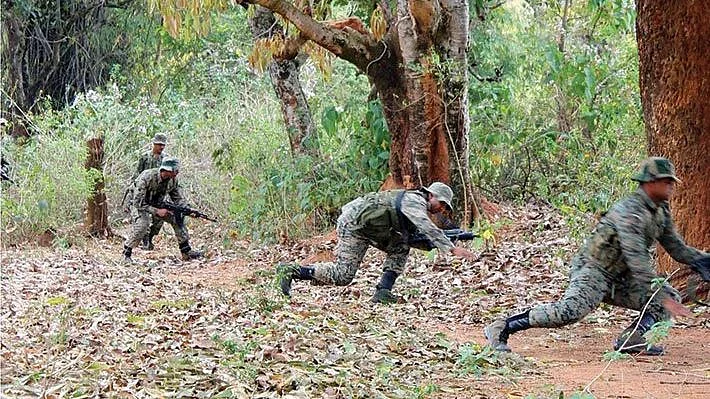
Maharashtra has told the Bombay High Court that 64 active Maoist front organisations are operating within its borders — the highest number recorded for any state — as it fights to keep a controversial security law on the books. The number, drawn from Union home ministry data, was cited in an affidavit filed on Tuesday to defend the constitutional validity of the Maharashtra Special Public Security Act.
The state described Maharashtra as a "focal point for urban Maoist activities," arguing that the law is essential to dismantle networks that operate quietly through civil society fronts rather than open insurgency.
What the Affidavit Claims — and Why the Number Matters
According to the government's filing, the 64 organisations are not banned outfits themselves but "fronts" — groups the state says provide logistical, ideological, or recruitment support to Maoist activity. The affidavit argues that these networks have shifted from forest strongholds to cities, making conventional policing inadequate.
The government's core argument: without a law that can act against front organisations before they commit a visible crime, Maharashtra's security apparatus is effectively blind to a growing threat.
The Law Under Challenge: What Petitioners Say
The Special Public Security Act, which the state has invoked to justify preventive action, is being challenged by petitioners who argue its provisions are vague and excessively broad. Their central concern is that the definition of "unlawful activity" and the grounds for detention are open to wide interpretation — potentially sweeping in legitimate dissent, academic work, or civil society activism.
Petitioners have not disputed the existence of Maoist networks. Their challenge is about the legal architecture: whether a law this broad can coexist with constitutional protections.
Why This Case Matters Beyond Maharashtra
Several states have enacted or considered similar public security laws in recent years. A Bombay High Court ruling on the Maharashtra Act's constitutional validity could set a benchmark for how far states can go in pre-emptive security legislation — and how courts weigh national security claims against civil liberties.
For residents of affected districts, the immediate stakes are practical: who can be detained, on what grounds, and with what judicial oversight.
How the Case Reached This Point
The petitioners filed their challenge earlier this year, arguing that the Act's provisions violate fundamental rights. The state responded with its affidavit on Tuesday, citing home ministry data to establish the factual basis for the law. The court has now granted the petitioners time to file their reply.
No date has been set for the next substantive hearing.
Who Is Affected — and How
The law's reach extends to anyone the state identifies as linked to a front organisation. That includes not just alleged operatives but also people associated with groups the government says are fronts — a category that can include activists, writers, and NGO workers.
For communities in districts with a history of Maoist activity, the case is not abstract. It determines whether the state can act pre-emptively or must wait for a prosecutable offence.
What the Government Says — and What It Doesn't
The affidavit does not name the 64 organisations. It relies on home ministry data to establish the scale of the network, but the specific groups and their activities are not detailed in the filing. The government's argument rests on the aggregate number and the characterisation of Maharashtra as a hub.
Officials have not commented publicly beyond the affidavit.
Confirmed Facts vs What Remains Unclear
Confirmed: The affidavit was filed Tuesday. It cites 64 active Maoist front organisations. The court granted petitioners time to respond. The Act's constitutional validity is under challenge.
Unclear: The names of the 64 organisations. The specific evidence linking each to Maoist activity. Whether the court will accept the home ministry data as sufficient justification for the law's breadth. The timeline for the next hearing.
Risks and the Balanced View
The government's position is that without this law, front organisations can operate with impunity — recruiting, fundraising, and spreading ideology while staying below the threshold of criminal prosecution. Security officials argue that urban Maoist networks are harder to track precisely because they don't look like insurgents.
Petitioners and civil liberties groups counter that vague laws create a chilling effect. When the definition of "unlawful activity" is broad, the risk is not just misuse but self-censorship — people avoiding legitimate work because they fear being labelled.
The court will have to weigh both: the state's genuine security concerns against the constitutional requirement that laws be precise enough to guide both citizens and enforcement agencies.
The Wider Pattern: Security Laws and Judicial Scrutiny
This case fits a broader pattern in Indian jurisprudence — states expanding preventive detention and public security powers, and courts being asked to draw the line. Similar challenges have played out in other states, with mixed outcomes. The Bombay High Court's ruling will be watched closely, not just in Maharashtra but wherever comparable laws exist or are proposed.
What Readers Should Watch For
The petitioners' reply will be the next key document. If they challenge the home ministry data's specificity — or argue that even 64 fronts don't justify a law this broad — the court may order the state to provide more detailed evidence. That would shift the case from a legal argument about constitutional validity to a factual dispute about the nature and scale of the threat.
For now, the Act remains in force.
Future Outlook
The court could uphold the Act, strike it down, or read it down — narrowing its scope through judicial interpretation. Each outcome has different implications for how Maharashtra polices extremism and how much room states have to legislate pre-emptively. A verdict is unlikely soon; the reply stage alone could take weeks.
Our Take
The number 64 is striking, but numbers alone don't settle constitutional questions. The state has made a factual case for the law's necessity. The petitioners are making a legal case about its design. The court's job is to determine whether both can be true at once — and whether a law this broad is the only way to address the threat it describes.
What matters most is not the headline number but the evidentiary standard the court applies. If the state can act on aggregate data without naming organisations or detailing activities, the law's reach becomes effectively unlimited. If it can't, the state may need a narrower, more precise instrument. Either way, this case will clarify where the line sits between security and rights in Maharashtra — and possibly beyond.
Frequently Asked Questions
What is the Maharashtra Special Public Security Act?
It is a state law that grants authorities preventive powers to act against organisations and individuals deemed a threat to public security, including those linked to Maoist activity. Its provisions are currently under challenge in the Bombay High Court.
Why did Maharashtra cite 64 Maoist front organisations?
The state cited Union home ministry data to argue that Maharashtra faces a significant urban Maoist threat, justifying the need for the Act's broad preventive powers. The government described the state as a "focal point" for such activity.
What are the petitioners arguing?
They argue the Act's provisions are vague and excessively broad, potentially allowing detention or action against people engaged in legitimate civil society work. They have not disputed the existence of Maoist networks but challenge the law's design.
What happens next in the case?
The Bombay High Court has granted petitioners time to respond to the government's affidavit. After that, the court will hear arguments on the Act's constitutional validity. No date has been set for the next hearing.