Every day, thousands of tonnes of garbage are generated across the national capital. But official data reveals a stark reality: nearly half of it is never processed. The Municipal Corporation of Delhi (MCD) is failing to keep pace with the city's mounting waste, leaving 44% of it untreated.
The Widening Chasm Between Generation and Processing
The core of the crisis lies in a simple imbalance. Delhi's waste generation assessment has increased, meaning the city is producing more garbage than ever before. However, the infrastructure to process this waste has not scaled at the same rate.
According to official data, the MCD's processing capabilities are severely lagging. This 44% gap represents thousands of tonnes of solid waste that is not being scientifically treated daily.
Why 44% Unprocessed Waste is a Capital Concern
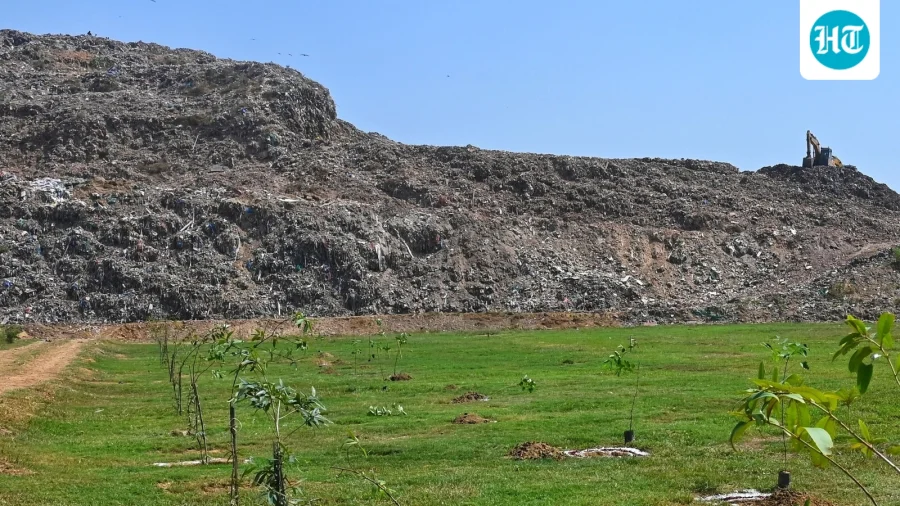
When waste is not processed, it does not simply disappear. It is diverted to already overflowing landfills, primarily in areas like Ghazipur, Bhalswa, and Okhla. These sites are well beyond their intended capacity.
The unprocessed waste contributes directly to air pollution through frequent fires, contaminates groundwater with toxic leachate, and creates severe public health hazards for nearby communities. For a city already grappling with a pollution crisis, this unprocessed waste is a critical aggravating factor.
How Delhi's Waste Management Gap Developed
The gap has not emerged overnight. It is the result of a consistent failure to modernize and expand waste processing facilities in line with the city's rapid population and consumption growth.
While some progress has been made in recent years with the establishment of waste-to-energy plants and composting centers, the data confirms these efforts have been insufficient. The pace of infrastructure creation has simply not matched the pace of waste generation.
The Human Cost of Unprocessed Garbage
This is not just an administrative failure; it is a daily reality for millions of residents. For those living near landfill sites, the impact is severe—from the pervasive stench to the constant threat of respiratory illnesses.
Furthermore, the unprocessed waste stream often includes hazardous materials that mix with general garbage, complicating recycling efforts and endangering the informal sector workers who handle much of the city's waste.
MCD's Acknowledgment of the Processing Deficit
The official data itself is an acknowledgment of the deficit. The assessment shows that while the MCD is responsible for managing the city's waste, its current system is overwhelmed.
Officials have previously pointed to land constraints and delays in setting up new processing plants as major hurdles. However, the latest figures underscore the urgent need for a strategic overhaul, not just incremental fixes.
Beyond Landfills: The Need for Decentralized Solutions
Experts have long argued that centralizing waste processing at large landfills is a flawed model. The focus needs to shift towards decentralized processing—setting up composting and material recovery facilities at a local level.
This approach reduces the burden on the MCD's central system and the need to transport waste across the city. It also encourages community participation in segregation at source, which is critical for any processing to be effective.
Confirmed Facts vs. What Remains Unclear
Confirmed: Official data confirms that 44% of Delhi's waste remains unprocessed and that the MCD is failing to keep pace with generation.
Unclear: The specific timeline for when new processing plants will become operational is not clear. It is also uncertain how the MCD plans to bridge this 44% gap in the immediate future, given existing infrastructure constraints.
Risks and Balanced View: The Challenge of Implementation
While the need for more processing plants is clear, their implementation faces significant challenges. Securing land in a densely populated city like Delhi is a major political and logistical hurdle. Waste-to-energy plants, often touted as a solution, have also faced criticism for their environmental emissions.
A balanced approach must consider not just the volume of waste processed, but the environmental sustainability of the processing methods themselves. The goal must be to move up the waste hierarchy—from disposal to recycling and reuse.
A National Pattern of Urban Waste Stress
Delhi's struggle is not unique. Many major Indian cities are facing similar crises as their waste generation outpaces their management systems. The problem is a systemic one, reflecting a national trend of rapid urbanization without commensurate investment in civic infrastructure.
Delhi's data serves as a high-profile example of a challenge that requires urgent attention across the country.
What This Means for Delhi Residents
For the average resident, this data is a call to action. The most effective immediate step is to segregate waste at home—separating wet, dry, and hazardous waste. This simple act significantly improves the efficiency of whatever processing capacity exists.
Citizens can also put pressure on local representatives to prioritize decentralized waste management solutions and ensure that the MCD is held accountable for meeting processing targets.
The Road Ahead: From Crisis to Circular Economy
The future outlook depends on a fundamental shift in approach. The goal must be to treat waste as a resource, not a burden. This means investing heavily in recycling infrastructure, promoting composting, and holding producers accountable for the waste their products generate.
Without this transition, the 44% gap will only grow, and Delhi's landfills will continue to rise as monuments to a failed waste management system.
Our Take
The 44% figure is more than a statistic; it is a measure of a systemic failure. It reflects a city that is consuming more but managing its byproducts less. The MCD's inability to keep pace is not just an administrative lapse but a public health and environmental emergency. Bridging this gap requires not just more plants, but a complete rethinking of how Delhi handles its waste—from the household to the landfill.
Frequently Asked Questions
What is the current waste processing gap in Delhi?
According to official data, 44% of Delhi's total daily waste generation remains unprocessed by the Municipal Corporation of Delhi (MCD).
Why is the MCD failing to process Delhi's waste?
The MCD is failing to keep pace because the city's waste generation has increased, but the infrastructure for processing it has not expanded at a matching rate.
What happens to the unprocessed waste in Delhi?
Unprocessed waste is typically sent to already overflowing landfill sites like Ghazipur, Bhalswa, and Okhla, contributing to air and water pollution.
What can Delhi residents do to help?
Residents can help by segregating their waste at the source into wet, dry, and hazardous categories, which improves the efficiency of existing processing systems.