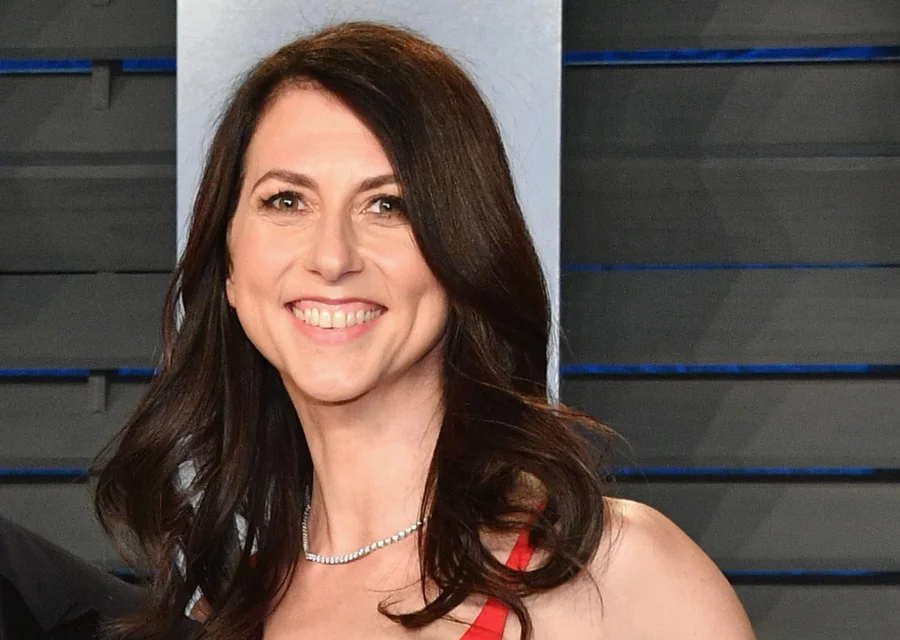
MacKenzie Scott has spent the last several years giving away billions of dollars and saying almost nothing about it. So when she quietly released her first novel in 13 years—serialized chapter by chapter on Substack—readers did what readers always do with a famously private billionaire: they went looking for clues.
What many found instead was confusion.
A Novel That Arrives Without a Map
Last Days in Two Nations (A History) began appearing on Substack on August 8, released in installments rather than as a single bound book. The serialized format is unusual for a writer of Scott's profile—most authors at her level publish through traditional houses with coordinated marketing.
Scott chose neither. No publisher fanfare. No interview circuit. Just chapters, posted quietly, in a format that asks readers to keep up rather than wait.
Why Reviewers Are Calling It 'Baffling'
The critical response has been notably unsettled. Writer and editor Eve Sneider, reviewing the book for Business Insider, described its ending as "a baffling conclusion fit for a baffling project," noting that readers finish with more questions than answers about what Scott was trying to say.
The New York Post called the novel "hard to untangle." Neither review accused the book of being lazy or careless—the frustration, instead, seems to be about meaning. What is this book arguing? What is it asking readers to feel?
Those questions remain open.
The Silence That Makes the Book Harder to Read
Scott's public persona is built on absence. She does not give interviews. She does not explain her giving. Her philanthropy—more than $26 billion distributed through the Yield Giving organization—arrives as announcements, not arguments.
That silence has worked in her favor as a philanthropist. It has made the scale of her giving feel less like branding and more like action. But it creates a different problem for a novelist. Fiction asks for interpretation. It invites the reader to ask what the author meant. And Scott, characteristically, has not said.
What the Novel Is Actually About—and What Remains Unclear
Confirmed: the book is titled Last Days in Two Nations (A History), it was released serially on Substack beginning August 8, and it is Scott's first work of fiction in 13 years.
Unclear: what genre the book ultimately settles into, whether Scott considers it complete, and whether she intends it as a statement of any kind. Reviewers have speculated about themes, but Scott has not confirmed any interpretation. Any reading of the book's "message" right now is the reader's, not the author's.
The Philanthropy Context That Follows Every Page
It is impossible to read Scott's fiction without the philanthropy in the background. She is, by any measure, one of the most consequential donors of the past decade—and one of the least publicly legible.
That combination has made her a subject of fascination. Readers want to know what someone who gives away that much money, that quietly, actually thinks. The novel was read, in part, as an answer to that question. The reviews suggest it did not provide one.
What the Critics Are Really Saying
The criticism is not that the book is bad in a conventional sense. It is that the book resists the kind of reading its author's reputation invites. Readers came for insight. They got a text that withholds it.
That may be intentional. It may be a limitation. The reviews so far do not agree—and Scott has not helped them agree.
Risks and the Balanced View
It is worth being careful here. Two prominent reviews calling a book "baffling" and "hard to untangle" is not a consensus. Literary fiction often divides critics, and serialized fiction read in installments can land differently than a finished novel read in one sitting.
It is also possible that the book's difficulty is the point—that Scott is writing against the expectation that a billionaire's fiction should explain its author. That reading is plausible. It is not confirmed.
A Pattern Worth Noticing
Scott's move to Substack fits a broader shift: high-profile figures bypassing traditional publishing and media to speak directly to readers. It gives them control. It also removes the editorial scaffolding—the interviews, the framing, the explanations—that usually helps readers understand what they are holding.
Scott has chosen the direct route. The reviews suggest the direct route has costs.
What Readers Should Take From This
If you are curious about the book, it is available on Substack and can be read without any intermediary. That is the fairest way to judge it—not through reviews, including this one.
If you are reading it looking for Scott's views on wealth, giving, or power, temper that expectation. The early critical response suggests the novel does not deliver a thesis. It may deliver something else.
What Comes Next
Scott has not indicated whether she will write more fiction, respond to the reviews, or address the book publicly in any form. Based on her history, silence is the most likely outcome.
The novel will continue to be read, and the argument about what it means will continue without her.
Our Take
The most interesting thing about Last Days in Two Nations may not be the book itself but what its reception reveals. Readers approached a novel by MacKenzie Scott expecting it to function as a key—to unlock a person who has spent years refusing to be unlocked.
That expectation was always going to be hard to satisfy. Whether the book fails on its own terms is a separate question from whether it fails as an answer to a question Scott never agreed to answer.
Frequently Asked Questions
What is MacKenzie Scott's new novel called?
It is titled Last Days in Two Nations (A History). It is her first novel in 13 years.
Where can I read MacKenzie Scott's novel?
Scott released the novel chapter by chapter on Substack, beginning August 8. It is available there directly.
Why are critics calling the book 'baffling'?
Reviewers, including Eve Sneider in Business Insider, said the ending left them with more questions than answers about what Scott intended to say. The New York Post described it as "hard to untangle."
Has MacKenzie Scott responded to the criticism?
No. Scott has not issued a public statement about the reviews, consistent with her long-standing practice of avoiding public commentary.