
The org chart — that familiar pyramid of boxes and dotted lines that has defined corporate life for a century — is quietly being dismantled. Not by a reorganisation memo, but by artificial intelligence. And the people responsible for managing Fortune 500 workforces say most employees are not ready for what comes next.
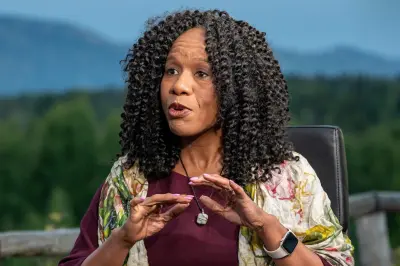
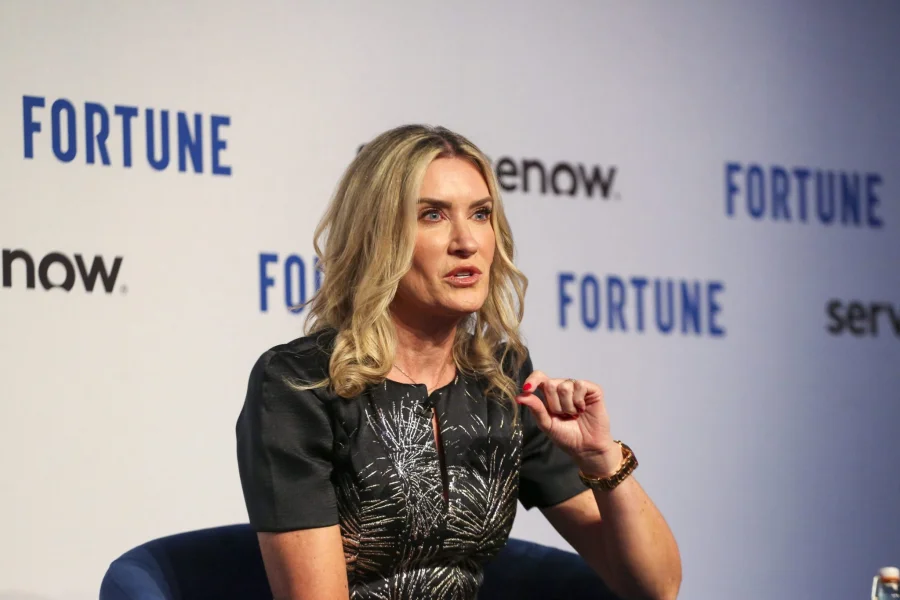
Speaking at Fortune's inaugural AIQ Summit, Stacy Dillow, executive vice president and chief people officer at Hewlett Packard Enterprise, delivered a message that should unsettle anyone still clinging to the job description they were hired for.
"We've got to force ourselves to think differently because if we're not trying to change how we work, we're just trying to..." Dillow said, trailing off as she made her central point: the hardest part of the AI transition is not the technology. It is the human architecture built around it.
The Org Chart Was Built for a World That No Longer Exists
For decades, the org chart served a clear purpose: it told employees who reported to whom, who owned which process, and where decisions stopped. It was a map of authority.
AI has made that map obsolete. When autonomous workflows can route tasks, flag exceptions, and escalate decisions without human intermediaries, the layers that once justified entire departments begin to dissolve.
Dillow's argument is not that companies should abandon structure. It is that the structure itself must be rebuilt around how AI actually enables work — not around legacy reporting lines that exist mainly because they always have.
Why 91% of Companies Are Stuck in the Experimentation Phase
The gap between AI enthusiasm and AI execution is stark. According to ServiceNow, just 9% of organizations have made meaningful progress building complex autonomous workflows. The rest are still running pilots, testing tools, and wondering why productivity gains have not materialised at scale.
The reason, according to the people chiefs at the summit, is that companies are bolting AI onto old processes instead of redesigning the processes themselves. A chatbot added to a broken approval chain does not fix the chain. It just makes the brokenness faster.
This is where the concept of "unlearning" becomes critical. Employees who thrived in a world of defined roles and sequential handoffs must now operate in environments where AI handles the routine and humans are left with the ambiguous, the judgment-heavy, and the relational.
What 'Unlearning' Actually Means for the Average Employee
Unlearning is not about forgetting skills. It is about releasing the assumption that your value at work is tied to the tasks you perform. In an AI-augmented workplace, value shifts to how you frame problems, interpret AI outputs, and make decisions that algorithms cannot.
For a mid-level manager, that might mean spending less time reviewing reports and more time coaching a team through uncertainty. For a junior analyst, it means learning to interrogate AI-generated insights rather than simply compiling them.
The employees who struggle most, Dillow suggested, are those who treat AI as a faster version of the old way of working. The ones who thrive treat it as a reason to redefine what their work is for.
The Tokenmaxxing Trap and Other False Signals of Progress
The summit also surfaced a growing workplace trend: "tokenmaxxing" — the practice of measuring AI usage by volume of tokens consumed or prompts submitted. It is the corporate equivalent of judging a writer by word count.
People chiefs warned that this metric-driven approach misses the point. Using more AI does not mean working better. In fact, it can entrench the very inefficiencies that autonomous workflows are meant to eliminate.
The real signal of progress is not how much AI an employee uses. It is whether the work itself has changed shape.
Confirmed Facts vs What Remains Unclear
Confirmed: Fortune 500 chief people officers, including HPE's Stacy Dillow, spoke at Fortune's AIQ Summit about AI's impact on organisational structure. ServiceNow data shows only 9% of organisations have built complex autonomous workflows. Dillow explicitly called for rethinking how work gets done, not just adopting tools.
Unclear: The specific timeline for when org charts will be formally replaced across Fortune 500 companies. Whether "unlearning" will be formally embedded in HR evaluation frameworks. How companies will measure success beyond token usage metrics. The full scope of Dillow's remarks, as the published quote was truncated.
Why This Matters Beyond the Boardroom
For employees, the message is uncomfortable but clear: the job you were hired to do may not exist in its current form within a few years. The skills that got you promoted — process mastery, efficiency, reliability — are precisely the ones AI is best at replicating.
For HR leaders, the challenge is equally daunting. Performance reviews, promotion criteria, and hiring profiles were all designed for a world of defined roles. If the org chart is dead, those systems need to be rebuilt too.
And for companies watching competitors move faster, the 9% statistic is a warning. The gap between AI adopters and AI transformers is widening, and it will not close by adding more tools to the same old structure.
Risks and the Balanced View
Not everyone agrees that the org chart is dead. Critics argue that flattening structures without clear accountability can create chaos, especially in regulated industries where decision trails matter. Others point out that "unlearning" is easier said than done — it requires psychological safety, time, and investment that many companies are unwilling to provide.
There is also a risk that "unlearning" becomes a convenient way for employers to justify layoffs or role eliminations without calling them that. The language of transformation can mask the reality of displacement.
Dillow's framing, however, is not about cutting headcount. It is about rethinking the work itself — a distinction that will matter enormously in how this transition is received by employees.
The Wider Pattern: From Job Titles to Capabilities
The shift Dillow describes is part of a broader trend across Fortune 500 companies: moving from job-title-based structures to capability-based ones. Instead of asking "what is your role?", organisations are beginning to ask "what can you do that AI cannot?"
This is not a new idea. Agile teams, cross-functional squads, and project-based work have been chipping away at the traditional org chart for years. AI is simply accelerating a process that was already underway.
What is new is the speed. Companies that once had years to adapt now have months. And the people chiefs at the AIQ Summit made clear that the clock is already running.
Practical Guidance for Employees and HR Leaders
For employees: Start by identifying which parts of your job are routine and repeatable. Those are the parts most likely to be automated. Then focus your development on judgment, communication, and cross-functional problem-solving — the areas where AI still needs a human in the loop.
For HR leaders: Audit your performance management system. If it rewards task completion over capability growth, it is already misaligned with where work is heading. Consider piloting capability-based assessments alongside traditional role evaluations.
For managers: Create space for your team to experiment with AI without fear of failure. The unlearning process requires tolerance for ambiguity, and that starts with leadership behaviour, not policy documents.
Future Outlook
If the AIQ Summit is any indication, the conversation is shifting from "should we adopt AI?" to "how do we rebuild work around it?" That is a harder question, and it will not be answered by technology alone.
Expect more Fortune 500 companies to publicly grapple with org design in the coming months. Expect the 9% autonomous workflow statistic to become a benchmark that boards track. And expect employees to face a choice: unlearn the habits of the old workplace, or risk being managed by an algorithm that never had them in the first place.
Our Take
The most striking thing about Dillow's remarks is not that AI is changing work — that is well established. It is that the people responsible for human capital at the world's largest companies are now openly saying the org chart itself is the obstacle. That is a more radical statement than it first appears.
Org charts are not just diagrams. They encode power, status, and identity. Dismantling them is not a technology project. It is a cultural one. And the companies that treat it as such — investing in unlearning, not just upskilling — will be the ones whose employees actually thrive.
The rest will have AI tools and the same old problems, just faster.
Frequently Asked Questions
What did Fortune 500 chief people officers say about AI and org charts?
At Fortune's AIQ Summit, chief people officers including HPE's Stacy Dillow said AI has made traditional org charts obsolete. They argued that companies must rethink how work gets done rather than simply adding AI tools to existing structures.
What does "unlearning" mean in the context of AI and work?
Unlearning means releasing old assumptions about how work should be structured and how value is created. It involves moving away from task-based job definitions toward capabilities like judgment, problem-framing, and decision-making that AI cannot easily replicate.
How many companies have actually built autonomous AI workflows?
According to ServiceNow, just 9% of organisations have made meaningful progress building complex autonomous workflows. The vast majority are still in the experimentation or pilot phase.
What is "tokenmaxxing" and why is it a problem?
Tokenmaxxing is the practice of measuring AI adoption by volume — how many tokens or prompts are used. People chiefs warn this metric-driven approach misses the point, because using more AI does not necessarily mean working better or more efficiently.
What should employees do to prepare for an AI-driven workplace?
Employees should identify routine, repeatable parts of their jobs that are most likely to be automated, and focus their development on judgment, communication, and cross-functional problem-solving — areas where human oversight remains essential.