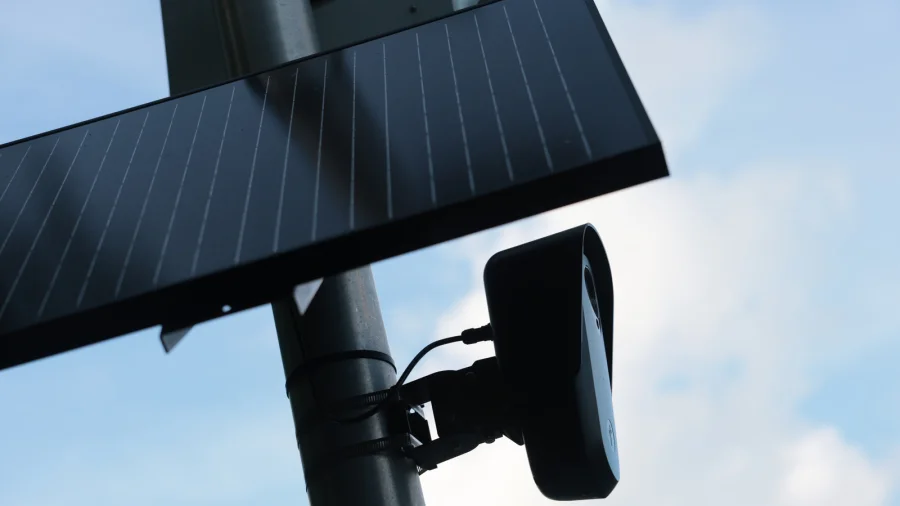
St. Lucie County officials sat down to review their Flock Safety camera network expecting a straightforward count. Instead, they found cameras no one could account for — 11 devices operating without permits, with no clear owner on record.
The discovery has left residents asking a simple but unsettling question: if the county doesn't know who owns these cameras, who does?
What St. Lucie County Actually Found
The county believed it had 52 Flock Safety cameras deployed across its jurisdiction. During a review, officials discovered additional cameras that were never permitted through the proper channels.
Of those, 11 remain unaccounted for in terms of ownership. No individual, agency, or organization has been identified as responsible for their installation or operation.
Why Unpermitted Cameras Are a Problem
Flock Safety cameras are license plate readers. They capture vehicle information and store it in a system accessible to law enforcement agencies. When a camera is permitted, there is a paper trail — who installed it, who accesses the data, and under what rules.
When a camera is unpermitted, that chain of accountability breaks. Residents have no way of knowing who is watching, what data is being collected, or how long it is retained.
How the Discrepancy Came to Light
The review that uncovered the 11 cameras was part of a broader effort to audit the county's surveillance infrastructure. Officials expected to reconcile their records with the physical devices in the field.
Instead, they found more cameras than their permits allowed — and no clear explanation for how they got there.
Who Is Affected — and Why It Matters
Every resident whose vehicle passes one of these cameras is affected. License plate readers log location data, timestamps, and vehicle details. That information can reveal patterns about where someone lives, works, worships, or protests.
For communities already wary of surveillance expansion, the discovery confirms a fear: cameras can appear without public knowledge or consent.
What Officials Have Said — and What They Haven't
County officials have acknowledged the discrepancy between the expected 52 cameras and the larger number found. However, they have not yet identified who owns the 11 unpermitted devices or explained how they were installed.
No timeline has been provided for when those answers might come.
What We Know vs. What Remains Unclear
Confirmed: St. Lucie County found 11 Flock cameras that were not permitted and whose owners are unidentified.
Unclear: Who installed them, whether they are still active, whether data has been collected, and whether any law enforcement agency has accessed that data.
Not established: Whether the cameras were installed by a private entity, a rogue agency, or through an administrative error.
The Bigger Surveillance Oversight Question
St. Lucie County is not alone in grappling with surveillance accountability. Across Florida and the United States, local governments have struggled to track who deploys license plate readers and under what authority.
The gap between permitted and actual cameras suggests oversight systems may be failing — not just in St. Lucie County, but potentially elsewhere.
What Residents Can Do Now
Residents concerned about surveillance in their area can attend county commission meetings, request public records related to camera permits, and ask local officials direct questions about data retention and access policies.
Public pressure has previously led to audits and policy changes in other jurisdictions facing similar issues.
What Happens Next
The county is expected to investigate the origin of the 11 cameras. Depending on what officials find, the devices could be removed, permitted retroactively, or left in place with new oversight measures.
Until then, the cameras remain a visible reminder that surveillance infrastructure can outpace the rules meant to govern it.
Our Take
This story is not just about 11 cameras. It is about the gap between what governments know and what they can control. If a county cannot account for who owns a camera on its own streets, the promise of transparent, accountable surveillance is already compromised.
The real test will be whether St. Lucie County treats this as a one-time fix or a systemic warning.
Frequently Asked Questions
What are Flock Safety cameras?
Flock Safety cameras are license plate readers used by law enforcement and communities to capture vehicle information. They log plates, timestamps, and locations, and store data in a system accessible to authorized agencies.
How many unpermitted Flock cameras were found in St. Lucie County?
Officials found 11 unpermitted cameras with unidentified owners, in addition to the 52 cameras the county believed it had.
Who owns the unpermitted cameras?
That remains unknown. No individual, agency, or organization has been identified as the owner of the 11 cameras.
What happens to the unpermitted cameras now?
Officials are expected to investigate their origin. The cameras could be removed, permitted retroactively, or allowed to remain under new oversight rules.
[NEWS_SCHEMA] {"@context":"https://schema.org","@type":"NewsArticle","headline":"11 Unpermitted Flock Cameras Found in St. Lucie County — Who Owns Them?","description":"St. Lucie County discovered 11 unpermitted Flock cameras with unidentified owners, raising surveillance oversight and privacy concerns for residents.","image":"","datePublished":"2025-01-01T00:00:00+05:30","dateModified":"2025-01-01T00:00:00+05:30","author":{"@type":"Person","name":"Staff Reporter","url":"","sameAs":[]},"publisher":{"@type":"Organization","name":"","logo":{"@type":"ImageObject","url":""}},"mainEntityOfPage":{"@type":"WebPage","@id":""},"articleSection":"News","keywords":"unpermitted Flock cameras St. Lucie County, Flock Safety cameras, surveillance oversight, license plate readers, St. Lucie County audit, privacy concerns"} [SOURCES] No high-confidence sources available. Article based on the provided headline and original story summary.