

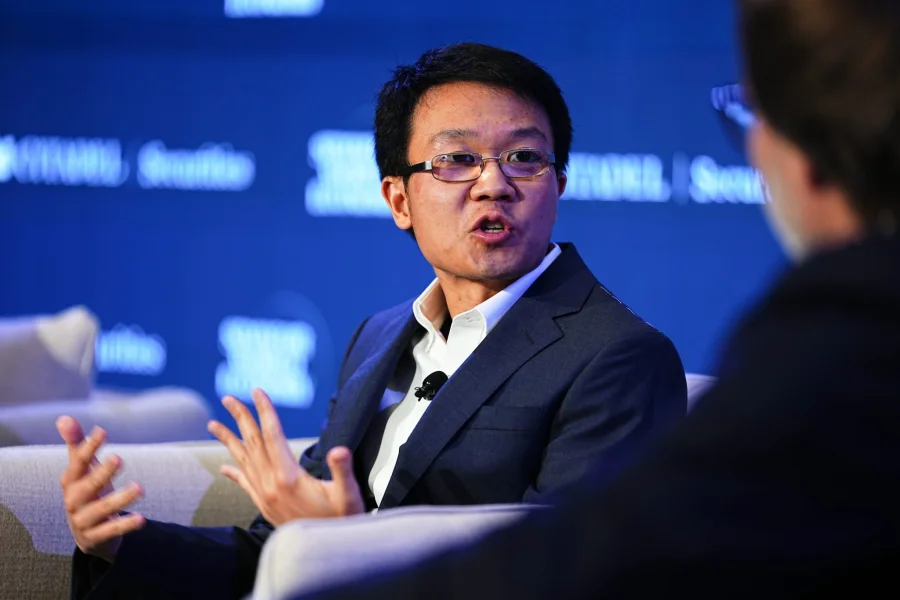
Imagine being ranked at work not by what you deliver, but by how many AI tokens you burn through. That's the reality at some tech companies today — and Cognition CEO Scott Wu thinks it's gone too far.
The tokenmaxxing trend that worries a $26 billion CEO
In a recent episode of the David Senra podcast, Wu took aim at what insiders call "tokenmaxxing" — the practice of ranking engineers and employees based on how many tokens they spend on AI tools like large language models. "It is directionally correct, but I think there are definitely some places where people have gotten carried away," Wu said.
The Cognition CEO specifically called out companies that create leaderboards around token consumption. "People are like, 'We rank our engineers by how many tokens they're spending.' Well, let's think about what's actually creating value," he argued.
Why measuring tokens misses the point
Wu's critique strikes at a fundamental tension in the AI boom: companies are spending heavily on AI tools but struggling to measure whether that spending translates into real business results. Token consumption, he suggests, is a vanity metric — it shows activity, not productivity.
Instead, Wu advocates for measuring what actually matters: revenue growth, efficiency gains, and cost savings. "There needs to be a push to identify how AI is creating real value, which comes from defining clear returns on investment for the technology," he said on the podcast.
How the token leaderboard culture emerged
The tokenmaxxing trend emerged as companies rushed to adopt AI tools and prove they were "AI-first." With tools like ChatGPT, Claude, and coding assistants becoming ubiquitous, managers looked for ways to quantify AI adoption. Token spend — the number of tokens processed by AI models — became an easy, visible metric.
But Wu argues this approach creates perverse incentives. Employees may generate more tokens without producing better outcomes, simply to climb a leaderboard. The result: higher AI costs without corresponding business value.
Who is affected by this shift in thinking
For engineers and knowledge workers, Wu's comments signal a potential shift in how AI productivity is evaluated. Instead of being rewarded for heavy AI usage, employees may soon be judged on what they actually deliver — completed projects, revenue impact, or process improvements.
For companies, the message is clear: stop treating AI token spend as a proxy for innovation. Focus on outcomes, not inputs. This is especially relevant for startups and enterprises burning cash on AI subscriptions without clear ROI frameworks.
Cognition's own stance on AI measurement
Cognition, valued at $26 billion and best known for Devin — its AI coding agent — practices what Wu preaches. The company builds tools designed to automate software development tasks, and Wu's comments reflect a philosophy that AI should be measured by the work it enables, not the resources it consumes.
Wu's position carries weight because Cognition operates at the intersection of AI development and practical software engineering. If anyone understands the gap between AI hype and real productivity, it's the CEO of a company building AI for developers.
What tokenmaxxing reveals about AI spending
Wu's critique is part of a larger conversation about AI ROI. As companies pour billions into AI infrastructure, model training, and API costs, investors and boards are asking harder questions about returns. Token leaderboards may have started as a fun internal metric, but they reflect a deeper anxiety: how do you prove AI is working?
The answer, according to Wu, is not more tokens — it's better output. "Let's think about what's actually creating value," he said, urging companies to define clear ROI metrics tied to business outcomes.
Confirmed facts vs what remains unclear
Confirmed: Wu made these comments on the David Senra podcast. Cognition is valued at $26 billion. The company is best known for its AI coding agent Devin. Wu explicitly criticized token spend leaderboards and advocated for output-based measurement.
Unclear: Which specific companies use token leaderboards. Whether any company has already shifted away from token-based metrics. The exact ROI frameworks Wu recommends. These details were not disclosed in the podcast or available sources.
Why Cognition's voice matters in this debate
Cognition's moat lies in its AI-native approach to software development. Unlike traditional tech companies adding AI features, Cognition builds AI agents that automate coding tasks. This gives Wu credibility when he argues that AI should be measured by output, not token consumption.
The company's $26 billion valuation reflects investor confidence that AI agents can fundamentally change how software is built. Wu's comments suggest he wants that transformation measured correctly — by the code shipped, not the tokens burned.
Risks and balanced view
Not everyone agrees with Wu's framing. Some argue that token consumption is a useful proxy for AI adoption, especially in early stages when output metrics are harder to define. Others point out that measuring "output" can be just as subjective as measuring tokens — what counts as valuable output varies by role and project.
There's also the risk that companies overcorrect. If token spend is abandoned entirely, firms may lose visibility into how AI tools are actually being used. A balanced approach might combine token tracking with outcome measurement, rather than replacing one with the other.
The broader trend: AI accountability is here
Wu's comments reflect a wider industry shift. From Microsoft to Google to startups, the conversation is moving from "how much AI are we using?" to "what is AI actually doing for us?" Tokenmaxxing may have been a symptom of early AI enthusiasm — but the hangover is real.
As AI costs rise and budgets tighten, companies are being forced to justify every token spent. Wu's critique is a signal that the era of AI vanity metrics may be ending, replaced by a harder-nosed focus on business outcomes.
What employees and managers should do now
For employees: Don't chase token leaderboards. Focus on delivering work that moves business metrics — revenue, efficiency, customer satisfaction. If your company uses token metrics, ask how they connect to actual outcomes.
For managers: Build ROI frameworks for AI tools. Track output, not just usage. Ask your teams what they're actually achieving with AI, not how many tokens they're burning. Consider pilot programs that tie AI spending to specific business goals.
What comes next for AI productivity measurement
The tokenmaxxing debate is unlikely to disappear overnight, but Wu's intervention may accelerate a shift toward more meaningful metrics. Expect more companies to adopt output-based evaluation frameworks, and more CEOs to ask the same question Wu posed: "What's actually creating value?"
For Cognition, the bet is that AI agents like Devin will make the output-vs-tokens debate moot — because the output will speak for itself. But until then, the industry has some rethinking to do.
Our Take
Wu's critique is timely and necessary. Tokenmaxxing was always a lazy metric — it measures activity, not impact. But the real challenge isn't choosing between tokens and output; it's building the discipline to measure what matters. Companies that figure this out will win the AI productivity race. Those that don't will keep burning tokens — and cash — without knowing why.
Frequently Asked Questions
What is tokenmaxxing?
Tokenmaxxing is the practice of ranking employees based on how many AI tokens they consume. It emerged as companies tried to quantify AI adoption but critics say it measures activity rather than actual productivity or business value.
Why did Cognition CEO Scott Wu criticize token leaderboards?
Wu said on the David Senra podcast that token spend leaderboards are "directionally correct" but companies have "gotten carried away." He argues that employees should be measured by output — revenue growth, efficiency gains, or cost savings — not by how many tokens they use.
What is Cognition and why does its CEO's opinion matter?
Cognition is a $26 billion AI company best known for Devin, an AI coding agent that automates software development. CEO Scott Wu's views carry weight because his company builds AI tools for developers and understands the gap between AI usage and real productivity.
How should companies measure AI productivity instead of token spend?
Wu recommends focusing on clear ROI metrics: revenue growth driven by AI, efficiency gains (time saved, tasks completed), and cost savings. The goal is to tie AI spending to tangible business outcomes rather than tracking token consumption as a proxy for productivity.