
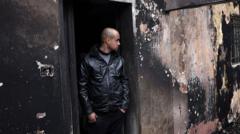
Palestinian families in the occupied West Bank are facing a wave of retaliatory violence after groups of Israeli settlers entered several villages to attack residents and destroy property. These attacks followed the death of 18-year-old settler Yehuda Sherman, who died on Sunday after a vehicle driven by a Palestinian hit his quad bike. The resulting clashes have left local communities in fear as the cycle of violence between the two groups intensifies across the territory.
Settlers enter Palestinian villages following the death of Yehuda Sherman
Groups of Israeli settlers moved into multiple Palestinian villages shortly after news of Yehuda Sherman’s death spread through the region. The 18-year-old was riding a quad bike when he was struck by a vehicle. Reports indicate the driver of that vehicle was a Palestinian man. Following the crash, settlers began targeting Palestinian homes, vehicles, and individuals in what appears to be a coordinated act of revenge.
Witnesses in the affected villages described seeing groups of men arriving to cause damage. These groups targeted private property, breaking windows and setting fire to cars parked near residential areas. In some locations, the settlers confronted Palestinian villagers directly, leading to physical altercations. The scale of the property damage is still being assessed as local leaders attempt to restore order in the wake of the incursions.
The violence has not been limited to a single location. Instead, it has spread across various parts of the occupied West Bank where settler outposts and Palestinian villages sit in close proximity. Local residents report that the speed of the retaliation left many families trapped inside their homes. Security forces have been deployed to the area, but the situation remains volatile as groups continue to gather in response to the initial quad bike incident.
The quad bike collision that triggered the current unrest
The current unrest stems from a specific incident involving 18-year-old Yehuda Sherman. Sherman was operating a quad bike in the West Bank when he was involved in a fatal collision with a car. Initial reports from the scene suggest the car was driven by a Palestinian. While the exact circumstances of the crash are still under investigation, the event was immediately viewed by the settler community as a deliberate act rather than an accident.
This perception fueled an immediate and angry response. In the West Bank, the death of a settler often leads to "price tag" attacks, where settlers target Palestinians to "pay a price" for any harm done to their community. The death of a young man like Sherman, who was just 18, has historically served as a powerful catalyst for these types of large-scale retaliatory actions. The speed at which the attacks began suggests a high level of tension already existed in the area.
The occupied West Bank has seen a steady rise in such confrontations over the past year. The territory is a patchwork of Palestinian towns and Israeli settlements, which are considered illegal under international law by most of the global community. This geographic setup means that any incident, whether a traffic accident or a deliberate attack, can quickly turn into a wider conflict involving hundreds of people from both sides.
Why the retaliatory attacks put civilian lives at risk
The primary victims of this violence are Palestinian civilians who live in the targeted villages. When settlers enter these areas to damage property, the risk of injury or death to bystanders increases. Families with children often find themselves caught in the middle of the chaos, unable to leave their homes or protect their belongings. This creates a climate of constant fear that disrupts daily life, including school and work.
For the settler community, the death of Yehuda Sherman represents a loss that they feel must be answered with force. This mindset ensures that the violence does not end with a single incident. Instead, it creates a back-and-forth struggle where each side feels justified in attacking the other. This environment makes it nearly impossible for local authorities to maintain peace, as the emotional weight of the death overrides legal or security warnings.
The international community often views these events as a barrier to any long-term peace. When property is destroyed and people are attacked in their own villages, it deepens the divide between the two populations. The lack of immediate protection for Palestinian villagers during these raids is a frequent point of concern for human rights organizations, who argue that the cycle of revenge only serves to radicalize more people on both sides.
What changes for residents on the ground today
The immediate impact of the violence is a total shutdown of normal movement in parts of the West Bank. Residents in Palestinian villages are now staying indoors to avoid contact with settler groups. This has led to the following changes in the daily routine of the region:
- Roadblocks have been set up by security forces to prevent further movement between settlements and villages.
- Public transport and private travel for Palestinians have become dangerous or impossible in certain corridors.
- Local businesses in the affected villages have closed their doors to prevent looting or arson.
- Israeli military presence has increased at key junctions to monitor the gathering of settler groups.
These changes mean that even those not directly involved in the fighting are suffering. Farmers cannot reach their land, and workers cannot travel to their jobs. The physical damage to cars and homes also places a heavy financial burden on families who may not have the resources to rebuild. The psychological toll of the attacks is expected to last much longer than the physical cleanup.
Risks of a wider escalation in the West Bank
The biggest risk now is that the violence will spread beyond the villages currently under attack. If Palestinian groups decide to launch their own retaliatory strikes for the damage done to their homes, the region could see a full-scale uprising. Security experts worry that the death of Sherman has provided a reason for extremist elements on both sides to bypass the official police and military channels.
There is also a concern regarding the role of the Israeli security forces. If the military is seen as failing to stop settler attacks, it loses credibility with the Palestinian population. Conversely, if the military takes a hard line against the settlers, it faces political pressure from within Israel. This balancing act is difficult to maintain during periods of high emotion, and any perceived bias can lead to more unrest.
The timing of this violence is also a factor. With tensions already high due to regional conflicts, a sustained period of rioting in the West Bank could draw in other groups. The risk of the quad bike incident turning into a multi-day conflict is high, especially as funerals for Sherman are held and more people gather to mourn and protest.
Confirmed next steps for the investigation and security
Authorities have confirmed that an investigation into the death of Yehuda Sherman is underway. Police are looking for the driver of the vehicle involved in the quad bike crash to determine if the act was intentional. Until the driver is found and questioned, the official cause of the collision remains unconfirmed. This investigation is a priority for the Israeli police as they try to calm the settler community.
In the villages, local Palestinian leaders are calling for international protection. They are documenting the damage to homes and cars to present to human rights groups. There are also plans for increased patrols by Israeli security forces in the "seam zones" where settlements and villages meet. These patrols are meant to act as a buffer to prevent further incursions by settler groups.
Funerals and memorial services for Sherman are expected to take place in the coming days. These events often serve as gathering points for further protests. Security forces are likely to remain on high alert throughout the week to manage these crowds. The goal is to prevent any more property damage while the legal investigation into the crash continues.
Key Numbers and Facts
The confirmed figures behind the current unrest in the West Bank.
Key Fact Detail Primary victimYehuda Sherman Age of victim18 years old Date of incidentSunday Vehicle involvedQuad bike and passenger car LocationOccupied West Bank Type of retaliationAttacks on villages and property Current statusOngoing tension and security alerts Next confirmed stepInvestigation into the crash driver
The dangerous reality of retaliatory justice
The events following the death of Yehuda Sherman show how quickly a single tragedy can turn into a collective crisis. When individuals take the law into their own hands to seek revenge, the legal system is pushed aside in favor of raw emotion. This approach does not bring back the life lost in the crash, but it does ensure that more people, many of them innocent, will suffer in the days to follow. The only way to break this cycle is for both sides to allow the facts of the incident to be established through a formal process rather than through the destruction of homes and lives.
Frequently Asked Questions
What caused the settler attacks in the West Bank?
The attacks began after 18-year-old Israeli settler Yehuda Sherman was killed in a vehicle collision. Sherman was riding a quad bike when he was hit by a car driven by a Palestinian. Settlers entered Palestinian villages shortly after to retaliate for his death.
What kind of damage was done to the Palestinian villages?
Settler groups targeted people and property, including homes and vehicles. Witnesses reported that windows were smashed and several cars were set on fire during the raids. These actions have left many families trapped inside their homes for safety.
Is the driver of the car in custody?
The driver of the vehicle that hit Yehuda Sherman has not yet been publicly identified as being in custody. Israeli authorities are currently investigating the crash to determine if it was a deliberate attack or a traffic accident. Finding the driver is a key part of the ongoing police investigation.