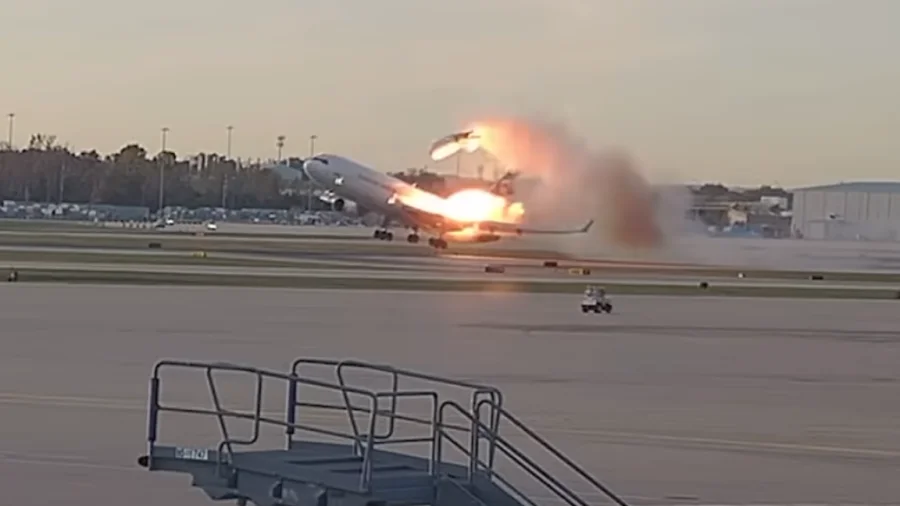
What began as a morbid experiment by internet sleuths has now triggered an unprecedented government shutdown. The US National Transportation Safety Board (NTSB) has abruptly suspended public access to its entire database of civil transportation accidents—because users used AI tools to recreate the voices of dead pilots from the final seconds of a fatal cargo plane crash. The move has sent shockwaves through the aviation community, raising urgent questions about the limits of technology, the sanctity of tragedy, and the future of public transparency.
How AI Users Recreated the Voices of Dead Pilots
According to reports, internet users accessed publicly available documents from the NTSB's online docket system, which contains factual reports and evidence from crash investigations. Using these materials—which included transcripts and technical data—they employed AI voice synthesis software to reconstruct the pilots' voices from the final moments of a cargo plane crash. The recreated audio, which captured the last seconds of the pilots' lives, was then shared online, sparking outrage and a swift government response.
Why This Matters Right Now
This isn't just about one crash. The NTSB's decision to suspend public access to its database affects every family, journalist, and researcher who relies on this information for accountability and closure. The core issue is a clash between two powerful forces: the public's right to know and the privacy of the dead. Federal law explicitly prohibits the public release of audio from cockpit voice recorders. But AI has now made it possible to reconstruct those voices from other public data, creating a legal and ethical gray area that the government is scrambling to address.
How the Incident or Update Unfolded
The NTSB, which usually shares detailed factual reports and evidence from its investigations, announced on May 21 that its online docket system was "temporarily unavailable." The agency stated it was reviewing the publicly available materials that had enabled people to recreate the cockpit audio. The move was a direct response to the AI-generated recreation, which the NTSB views as a violation of federal law and the privacy of the deceased pilots and their families.
Who Is Affected and What Officials Are Saying
The immediate impact is on the families of the deceased pilots, who now face the painful reality of their loved ones' final moments being recreated and shared without consent. Aviation safety experts, journalists, and accident investigators are also affected, as they rely on the NTSB's database for critical research. The NTSB has not issued a detailed public statement beyond the notice of the database suspension, but the agency's actions signal a deep concern about the misuse of AI technology in the context of tragedy.
What We Know So Far — and What Remains Unclear
What we know: The NTSB has suspended public access to its online docket system. The suspension is directly linked to the AI recreation of pilots' voices from a fatal cargo plane crash. Federal law prohibits the release of cockpit voice recorder audio. What remains unclear: How long the database will be unavailable. Whether the NTSB will permanently change its data-sharing policies. And what legal or technical measures the government can take to prevent similar AI recreations in the future.
Risks, Concerns, and the Balanced View
The risks are profound. On one hand, the NTSB's database is a vital tool for transparency and safety improvement. Shutting it down could hinder accident investigations and public accountability. On the other hand, the ability to recreate the final voices of the dead using AI is a deeply disturbing violation of privacy and dignity. Critics argue that the government's response is an overreaction that punishes the public for the actions of a few. Supporters say it is a necessary step to protect the sanctity of the deceased and prevent further exploitation. The balanced view is that this incident exposes a critical gap in our laws and technology, one that requires a thoughtful, long-term solution rather than a temporary shutdown.
Why Similar Trends or Concerns Are Growing
This is not an isolated incident. AI voice cloning technology has become increasingly accessible and powerful. From deepfake audio scams to the recreation of deceased celebrities' voices, the ethical and legal boundaries are being tested daily. The NTSB's dilemma is a microcosm of a larger societal challenge: how to regulate a technology that can turn any public data into a deeply personal and potentially harmful recreation. The aviation industry, in particular, is now on high alert, as the potential for misuse of crash investigation data is now a clear and present danger.
- The NTSB's online docket system was made "temporarily unavailable" on May 21.
- The suspension is a direct response to AI users recreating the voices of dead pilots from a cargo plane crash.
- Federal law prohibits the public release of audio from cockpit voice recorders.
"The NTSB announced that the online docket system containing such information was 'temporarily unavailable' as it reviewed the publicly available materials that had enabled people to re-create cockpit..." — NTSB Statement
What Readers, Users, or Investors Should Know Now
For anyone who relies on the NTSB's database for research, journalism, or personal closure, this is a moment of uncertainty. The database is currently offline, and there is no clear timeline for its return. If you are a family member of a crash victim, you may want to contact the NTSB directly for information. For the general public, this incident serves as a stark reminder that AI technology is advancing faster than our laws and ethical frameworks can keep up. Be cautious about the information you share online, as it can be used in ways you never intended.
What Could Happen Next
The NTSB is likely to conduct a thorough review of its data-sharing policies. Possible outcomes include a permanent restriction on certain types of data, the implementation of AI-detection filters, or a complete overhaul of the public docket system. Legal challenges are almost certain, as transparency advocates argue that the database is a public good. Meanwhile, the AI community may face increased scrutiny and potential regulation. The long-term impact could be a chilling effect on public access to government data, as agencies become more cautious about what they release.
Our Take: Why This Story Matters Beyond One Incident
This story is a warning. It shows how quickly a powerful technology can disrupt established norms and force governments into reactive, defensive positions. The NTSB's shutdown is not a solution; it is a symptom of a deeper problem. We are entering an era where the line between public information and private tragedy is being erased by AI. The real question is not whether the government should shut down a database, but how we, as a society, will navigate the ethical minefield that AI has created. The voices of the dead should not be a playground for the curious. But neither should the truth be hidden behind a wall of fear.
FAQs
Why did the NTSB shut down its public database?
The NTSB suspended public access to its online docket system after internet users used AI tools to recreate the voices of dead pilots from a fatal cargo plane crash. The agency is reviewing its data-sharing policies to prevent further violations of federal law, which prohibits the public release of cockpit voice recorder audio.
Is it legal to recreate the voices of dead pilots using AI?
The legality is complex. While the AI recreation itself may not be explicitly illegal, the use of public data to circumvent a federal law that prohibits the release of cockpit audio is a legal gray area. The NTSB's actions suggest they view it as a violation of the spirit and intent of the law.
How long will the NTSB database be unavailable?
The NTSB has not provided a timeline for when the database will be restored. The agency stated it is "temporarily unavailable" while it conducts a review. The duration could range from days to months, depending on the complexity of the policy changes needed.
What can I do if I need information from the NTSB database?
If you are a researcher, journalist, or family member of a crash victim, you can contact the NTSB directly through their official channels to request specific information. However, be prepared for potential delays as the agency navigates this new legal and ethical landscape.