
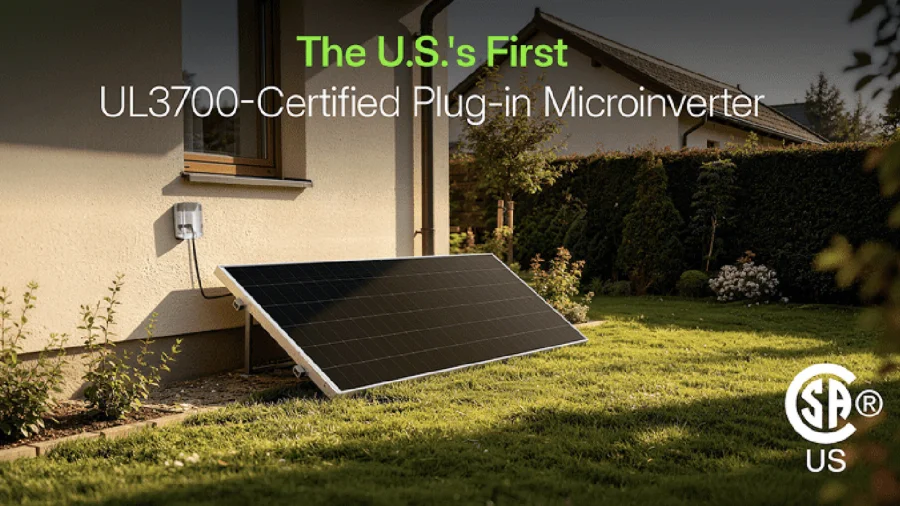
For millions of Americans who rent apartments or live in homes without suitable roofs, solar energy has long felt like a distant luxury. That barrier just got a little smaller. The first UL 3700-compliant plug-in solar microinverter is now available in the US, offering a way to generate solar power by simply plugging a panel into a standard wall outlet.
What the UL 3700 Certification Means for Plug-In Solar
UL 3700 is a safety standard specifically designed for plug-in solar devices—microinverters that convert DC power from solar panels into AC power safe for household circuits. Until now, most plug-in solar products lacked this certification, raising concerns about electrical safety, fire hazards, and grid compatibility. This new microinverter meets UL 3700 requirements, meaning it has passed rigorous testing for overcurrent protection, grounding, and anti-islanding (automatic shutdown during grid outages). For consumers, this certification signals that the device is safe to use without professional electrical work.
Why This Matters for Renters and Small Homeowners
The biggest promise of this product is accessibility. Traditional rooftop solar installations require ownership of the property, structural assessments, permits, and often thousands of dollars in upfront costs. Renters, apartment dwellers, and those with shaded or unsuitable roofs have been largely excluded. A plug-in microinverter changes that equation. Users can place a solar panel on a balcony, patio, or even a window mount, plug it into an outdoor outlet, and start offsetting their electricity consumption immediately. It’s a step toward making alternative energy accessible on a smaller, renter-friendly scale.
How the Plug-In Solar Microinverter Works
The device is a compact microinverter that connects directly to a solar panel. It converts the panel’s DC output into 120V AC power, which can be fed into a home’s electrical system through a standard outlet. The UL 3700 certification ensures the inverter automatically disconnects from the grid during a power outage, preventing backfeed that could endanger utility workers. Users can monitor energy production via a smartphone app, tracking savings in real time. The system is designed for easy installation—no electrician required—though users are advised to check local building codes and utility policies before plugging in.
Who Stands to Benefit Most
This product is aimed at a broad but underserved demographic: the roughly 35% of US households that rent, plus homeowners with limited roof space or shading issues. Students in off-campus housing, urban apartment residents, and even RV owners could use the system to reduce electricity bills. For those who cannot commit to a long-term solar installation, a plug-in microinverter offers a low-risk entry point. It also appeals to environmentally conscious consumers who want to participate in the clean energy transition without major financial or logistical hurdles.
Safety and Regulatory Landscape
While UL 3700 certification addresses electrical safety, users must still navigate local regulations. Some states and utilities have restrictions on plug-in solar devices, particularly regarding net metering—the ability to sell excess power back to the grid. In some jurisdictions, plug-in solar may be treated as a “generator” requiring permits or utility notification. The manufacturer recommends checking with local authorities and utility companies before installation. The National Electrical Code (NEC) also has specific requirements for plug-in solar systems, including the use of GFCI-protected outlets and proper grounding.
Confirmed Facts vs What Remains Unclear
Confirmed: The product is UL 3700-certified and available for purchase in the US. It is designed for plug-and-play installation with standard 120V outlets. The certification covers safety features like anti-islanding and overcurrent protection. Unclear: The exact manufacturer, pricing, and availability details are not specified in the available information. It is also unclear how many states or utilities currently allow plug-in solar without additional permits. The long-term durability and performance of the microinverter under various weather conditions remain to be independently verified.
Risks and Balanced View
Plug-in solar microinverters are not without limitations. They typically produce less power than rooftop systems—often 300–600 watts per panel—meaning savings are modest. Users must also ensure their outlet is properly rated and protected. There is a risk of overloading circuits if multiple panels are plugged into the same branch. Additionally, some utility companies may impose fees or restrictions on plug-in solar, potentially reducing financial benefits. Critics argue that while plug-in solar democratizes access, it may also create safety risks if users ignore local codes or use substandard equipment. The UL 3700 certification mitigates these risks but does not eliminate the need for responsible installation.
Wider Trend: The Rise of Decentralized Solar
This product fits into a broader shift toward decentralized, consumer-owned renewable energy. Community solar programs, portable solar panels, and battery storage systems are all growing in popularity. Plug-in microinverters represent the next logical step: making solar as easy as plugging in a toaster. As technology improves and costs fall, small-scale solar could become a mainstream option for millions of households that previously had no way to participate in the clean energy transition.
Practical Guidance for Potential Buyers
If you are considering a plug-in solar microinverter, start by checking your local building codes and utility policies. Look for UL 3700 certification on any product you purchase. Ensure your outlet is GFCI-protected and rated for the panel’s output. Start with a single panel to test performance and savings. Monitor your energy production via the app to understand your offset. Be aware that plug-in solar is not a substitute for a full rooftop system—it is a supplement for small-scale, personal use.
Future Outlook
The availability of the first UL 3700-compliant plug-in microinverter could accelerate adoption of plug-and-play solar across the US. As more manufacturers seek certification, prices are likely to drop and options to expand. Regulatory frameworks may also evolve to accommodate this new category of solar device. However, widespread adoption will depend on consumer awareness, utility cooperation, and continued safety innovation. For now, this product represents a meaningful step toward making solar energy accessible to everyone—not just homeowners with deep pockets.
Our Take
The arrival of a UL 3700-compliant plug-in solar microinverter is a quiet but significant milestone. It addresses a real gap in the solar market: accessibility for renters and small-space dwellers. While the power output is modest, the symbolic value is large. It signals that the solar industry is finally designing for the 35% of Americans who rent, not just the 65% who own. The challenge now is ensuring that safety standards keep pace with innovation and that utilities do not create unnecessary barriers. If done right, plug-in solar could become the entry point for a new generation of clean energy users.
Frequently Asked Questions
What is a UL 3700-compliant plug-in solar microinverter?
It is a device that connects a solar panel to a standard household outlet, converting DC power to AC power safely. UL 3700 certification means it meets safety standards for plug-and-play solar, including anti-islanding and overcurrent protection.
Can I install a plug-in solar microinverter myself?
Yes, the device is designed for DIY installation—no electrician required. However, you must check local building codes and utility policies, and ensure your outlet is GFCI-protected and properly rated.
How much power can a plug-in solar microinverter generate?
Typically, a single panel with a microinverter produces 300–600 watts, enough to offset small appliances or electronics. Savings are modest compared to full rooftop systems.
Is plug-in solar legal in all US states?
Not necessarily. Some states and utilities have restrictions or require permits. Always check with your local utility and building department before installing a plug-in solar system.