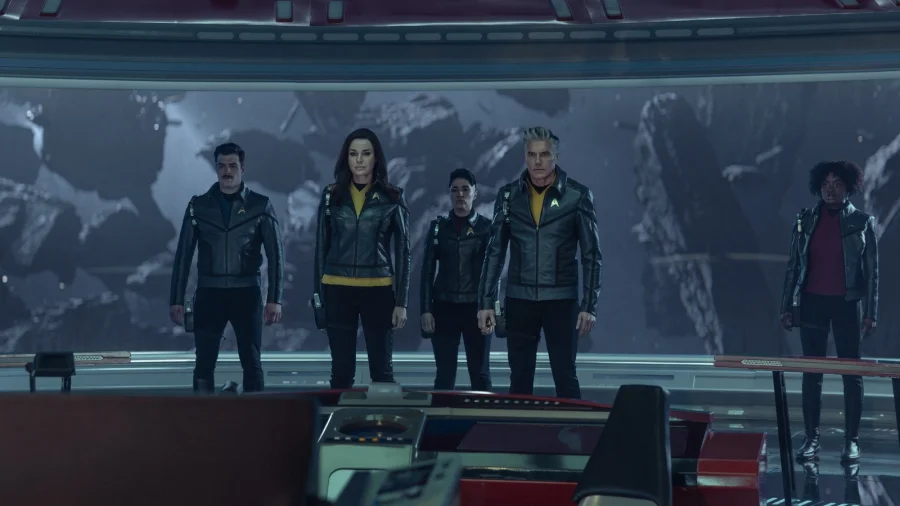
For a franchise that has often played it safe, 'Star Trek: Strange New Worlds' season 4 is taking risks that feel both exhilarating and bewildering. The show, which has been praised for its return to episodic storytelling, is now being described as "uneven in tone, erratic in quality and sometimes gratuitous." But when it works, it works so well that fans are willing to forgive the missteps.
A Season of Creative Gambles
The fourth season reportedly swings between genres and moods with abandon. One episode might be a lighthearted musical homage, while the next plunges into dark psychological territory. This tonal whiplash has left some critics frustrated, but others argue it’s exactly what Star Trek needs to stay relevant in a crowded streaming landscape.
Why the Tonal Shifts Matter for Fans
For viewers who grew up on the steady, philosophical cadence of 'The Next Generation,' the erratic quality of season 4 can feel jarring. But for a new generation raised on anthology-style storytelling and genre-bending shows like 'The Mandalorian,' this unpredictability is a feature, not a bug. The show’s willingness to experiment—even when it fails—signals a creative confidence that many long-running franchises lack.
How We Got Here: The Evolution of Strange New Worlds
Since its debut, 'Strange New Worlds' has been celebrated for returning to the classic Star Trek formula of self-contained episodes with moral dilemmas. Season 1 and 2 were praised for their balance of action, character development, and philosophical depth. Season 3 began to push boundaries with more serialized arcs and genre experiments. Season 4 appears to be the culmination of that trajectory—a season that fully embraces creative chaos.
Who Is Affected by These Creative Choices
Longtime Star Trek fans who value consistency may feel alienated by the season’s erratic quality. Casual viewers, however, might find the variety refreshing. The show’s cast—led by Anson Mount as Captain Pike—continues to deliver strong performances, grounding even the wildest episodes in emotional truth. For the actors, this season offers a chance to stretch their range, but also risks exhausting the audience’s patience.
What the Showrunners Have Said
While no official statement has been released about the season’s reception, showrunners Akiva Goldsman and Henry Alonso Myers have previously emphasized their commitment to taking risks. In interviews, they’ve described the show as a "laboratory" for Star Trek storytelling, where failure is acceptable as long as the ambition is genuine. This philosophy explains why season 4 feels like a series of experiments rather than a cohesive narrative.
What the Uneven Quality Really Means
The erratic quality of season 4 is not necessarily a sign of decline. Instead, it reflects a deliberate strategy: the show is testing what works and what doesn’t in real time. The episodes that succeed—often the ones that lean into character-driven drama or clever genre twists—are among the best in the franchise’s recent history. The ones that fail tend to overreach, trying to cram too many ideas into a single episode.
Confirmed Facts vs What Remains Unclear
What we know: Season 4 is airing and has been described as uneven in tone and quality by multiple critics. What remains unclear: whether this creative direction will continue into a potential season 5, or if the show will course-correct based on fan feedback. The long-term impact on the Star Trek franchise is also uncertain, as Paramount has not announced any major shifts in its streaming strategy.
Risks and Balanced View
The biggest risk of season 4’s approach is alienating the core fanbase that made the show a success. Critics have pointed out that some episodes feel "gratuitous," leaning into spectacle at the expense of substance. On the other hand, the show’s willingness to take big swings could attract new viewers who are tired of formulaic sci-fi. The balance between these two outcomes will determine whether season 4 is remembered as a bold reinvention or a misstep.
A Wider Trend in Franchise Storytelling
'Strange New Worlds' season 4 is part of a broader trend in franchise television: the move toward genre-blending and tonal experimentation. Shows like 'WandaVision,' 'The Last of Us,' and 'Andor' have proven that audiences are hungry for stories that defy easy categorization. Star Trek, a franchise that has always been about exploration, is now exploring its own narrative boundaries.
What Fans Should Do Now
For viewers who are struggling with the season’s uneven quality, the best approach is to watch with an open mind. Skip episodes that don’t resonate, but don’t give up on the season entirely. The highs are worth the lows. For those who love the experiments, engage with the show online—fan discussions often reveal layers of meaning that aren’t immediately obvious.
What Could Come Next
If season 4’s experiments prove successful, future seasons of 'Strange New Worlds' could become even more adventurous. If they fail, the show may return to a more traditional format. Either way, the franchise is likely to continue evolving, with spin-offs and new series drawing on the lessons learned from this season.
Our Take
'Strange New Worlds' season 4 is a fascinating case study in creative risk-taking. It’s messy, frustrating, and occasionally brilliant—much like Star Trek itself. The show’s willingness to fail in pursuit of something great is exactly what the franchise needs to stay alive. Not every swing will connect, but the ones that do remind us why we fell in love with Star Trek in the first place.
Frequently Asked Questions
Is 'Strange New Worlds' season 4 worth watching?
Yes, if you’re open to a season that varies wildly in quality. The best episodes are among the best in the franchise, but you may need to skip a few duds.
Why is season 4 so uneven in tone?
The showrunners are deliberately experimenting with different genres and storytelling styles, from musical episodes to dark psychological dramas. This creates a season that feels like a collection of creative experiments.
Will there be a season 5 of 'Strange New Worlds'?
As of now, Paramount has not officially confirmed a fifth season. The show’s future likely depends on viewership and critical reception of season 4.
How does season 4 compare to earlier seasons?
Season 4 is more erratic than its predecessors, which were praised for their consistency. However, its best episodes reach heights that earlier seasons didn’t achieve.