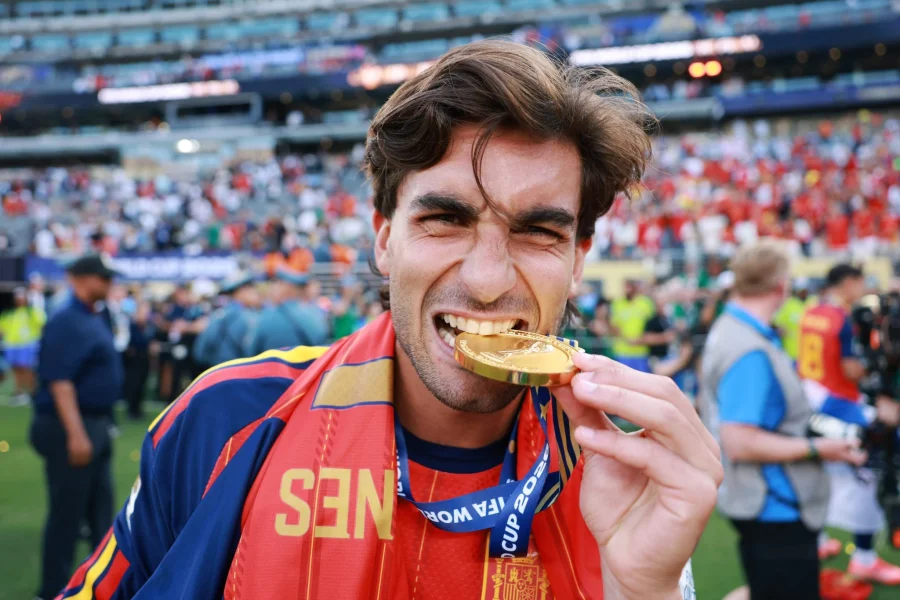
Four years ago, Ferran Torres was in a “bottomless pit,” unable to see a way out. On Sunday night, he scored the goal that made Spain world champions.
The 25-year-old forward’s 106th-minute strike in a dramatic extra-time thriller against Argentina sealed a 2-1 victory for La Roja, capping off a tournament that will now be remembered as much for his personal redemption as for Spain’s triumph.
The goal that changed everything
With the score locked at 1-1 after a grueling 90 minutes, Torres found space in the box, controlled a cross from Dani Olmo, and fired past the Argentine goalkeeper. The stadium erupted. Spain had their hero.
But for Torres, the moment was not just about football. It was the culmination of a journey that began in darkness.
The ‘bottomless pit’ of 2022
In 2022, Torres was a 21-year-old struggling under the weight of expectation. His €55 million ($62.8 million) move from Manchester City to Barcelona had come with a heavy price tag—both financially and mentally.
“I found myself in a bottomless pit, and I could not see a way out,” Torres later revealed in an interview. He was grappling with a mental health crisis, compounded by a preseason leg injury and a crushing Europa League loss to Eintracht Frankfurt.
The pressure of living up to his talent’s high price tag had become unbearable. He sought therapy, a decision he now credits with saving his career.
How therapy changed his trajectory
Torres began working with a sports psychologist, learning to manage the anxiety and self-doubt that had consumed him. He described the process as “learning to breathe again.”
“Therapy gave me tools I didn’t know I needed,” he said. “I had to accept that I was struggling, and that was the hardest part.”
His teammates and coaches at Barcelona noticed the change. Slowly, the spark returned. By the 2023-24 season, Torres was back to his best, scoring crucial goals and regaining his place in the Spain squad.
From rock bottom to world champion
Sunday’s final was the ultimate test. Argentina, led by Lionel Messi, had dominated much of the match. Spain’s equalizer came late in the second half, setting the stage for Torres’s extra-time heroics.
After the goal, Torres ran to the corner flag, tears streaming down his face. In the stands, his family—who had been with him through the darkest days—were overcome with emotion.
“This is for everyone who struggled,” he said after the match. “You can come back. You can find the light.”
What this means for mental health in sports
Torres’s story is part of a growing conversation about mental health in professional football. Players like him, along with others who have spoken openly about their struggles, are helping to break the stigma.
“Athletes are not machines,” said Dr. Elena Martinez, a sports psychologist who has worked with several La Liga players. “Ferran’s willingness to share his journey will encourage others to seek help without shame.”
Confirmed facts vs what remains unclear
Confirmed: Torres scored the winning goal in the World Cup final. He was in therapy in 2022 after a mental health crisis linked to his transfer to Barcelona. He has spoken publicly about feeling trapped in a “bottomless pit.”
Unclear: The exact duration of his therapy and whether he continues to see a psychologist. The full details of his recovery timeline have not been disclosed.
Risks and balanced view
While Torres’s story is inspiring, mental health recovery is not linear. Experts caution that public narratives of triumph can sometimes oversimplify the ongoing nature of such struggles.
“It’s important to remember that recovery is a process, not a destination,” said Dr. Martinez. “Ferran’s success is wonderful, but it doesn’t mean the challenges disappear forever.”
Wider trend: Athletes speaking out
Torres joins a growing list of athletes—including Naomi Osaka, Simone Biles, and Michael Phelps—who have prioritized mental health. In football, players like Dele Alli and Aaron Lennon have also shared their experiences.
The trend is slowly changing how clubs and federations approach player welfare, with more teams now employing full-time psychologists.
Practical guidance for young athletes
For young players facing similar pressures, Torres’s journey offers a clear message: seeking help is a sign of strength, not weakness.
• Talk to a trusted coach, parent, or counselor if you feel overwhelmed.
• Understand that a bad season or a difficult transfer does not define your career.
• Prioritize mental health as much as physical training.
Future outlook
Torres is now expected to be a key figure for Spain in the coming years. His World Cup-winning goal has cemented his place in the nation’s football history, but his legacy may be even bigger off the pitch.
His openness about therapy could inspire a new generation of athletes to prioritize their mental well-being, changing the culture of professional sports for the better.
Our Take
Ferran Torres’s story is not just about football. It is a reminder that success and struggle often coexist, and that the path to glory is rarely a straight line. In a world that often celebrates only the final result, his willingness to share the journey—including the darkest parts—makes his triumph even more meaningful. This is a story that will resonate far beyond the stadium.
Frequently Asked Questions
What happened to Ferran Torres in 2022?
In 2022, Ferran Torres experienced a severe mental health crisis after his €55 million move to Barcelona. He felt trapped in a “bottomless pit” and sought therapy to cope with the pressure and anxiety.
How did Ferran Torres score the winning goal in the World Cup final?
Torres scored in the 106th minute of extra time against Argentina, controlling a cross from Dani Olmo and firing past the goalkeeper to give Spain a 2-1 victory.
Is Ferran Torres still in therapy?
Torres has not publicly confirmed whether he continues therapy, but he has credited it with helping him recover and return to top form.
Why is Ferran Torres’s story important for mental health awareness?
His openness about seeking therapy and overcoming a mental health crisis helps break the stigma in professional sports, encouraging other athletes to prioritize their mental well-being.