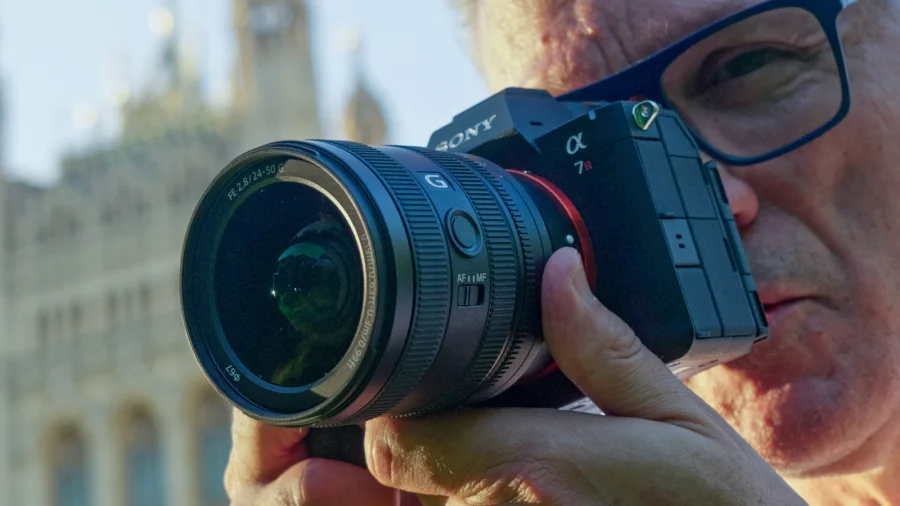
Walk into any camera store in India and you will hear the same sentence: "Sir, this one has the bigger number, so it is better." It is one of the most expensive misunderstandings in photography — and it costs buyers tens of thousands of rupees every year.
Sony's camera names are not a ladder. They are a set of labels, each pointing to a different kind of photographer.
The Letter Is the Job Description, Not the Rank
In Sony's Alpha lineup, the letter after the number tells you what the camera was engineered to do. The A7 is the generalist. The A7R is built around resolution. The A7S is built around sensitivity and video in low light. The A7C is the compact, travel-friendly body.
None of these is "above" the others. A wedding photographer and a wildlife photographer can both shoot on an A7-series body and still need completely different letters.
Why the Number Is a Generation, Not a Grade
The Roman numeral — II, III, IV, V — marks how many times that specific line has been refreshed. An A7 IV is the fourth generation of the standard A7. An A7R V is the fifth generation of the high-resolution A7R.
This is where buyers slip. An A7R V is not "better than" an A7 IV in any universal sense. It is newer within its own family and built for a different job.
What Each Sony Line Is Actually For
The A7R line prioritises megapixels — useful for landscape, architecture and studio work where cropping and large prints matter. The A7S line deliberately keeps resolution lower to gain cleaner low-light performance and stronger video capability.
The A7C line trades some controls and viewfinder size for a smaller body. The ZV series is aimed at vloggers, with features tuned for solo creators rather than stills professionals.
The A1 and A9 sit at the top of Sony's speed and flagship tiers, while the FX and Cinema Line bodies are built for professional video production. These are different tools, not higher rungs on one ladder.
The Buyer Who Pays Twice for the Wrong Letter
A vlogger who buys an A7R body for its high resolution may end up with large files, heavier editing loads and no real benefit for talking-head video. A landscape shooter who buys an A7S for its low-light reputation may find the resolution limiting for large prints.
Both buyers spent more. Neither got the camera their work actually needed.
What Sony Has and Has Not Said
Sony has not published a single consolidated document explaining its naming logic in plain language. The pattern is visible in how the company positions each line in its own product pages and launch materials.
That gap is exactly why the "bigger number" myth survives in showrooms and comment sections.
Confirmed Facts vs What Remains Unclear
Confirmed: Sony uses distinct letter designations for distinct product lines, and Roman numerals for generational updates within a line. This is consistent across its Alpha, ZV and Cinema Line ranges.
Unclear: Sony has not stated publicly whether the naming system will stay stable as new lines are added, or whether future models will break the current pattern. Any claim about future naming should be treated as speculation.
Where Sony's Real Advantage Sits
Sony's strength is not one camera. It is the ecosystem around the E-mount — a shared lens mount across Alpha, ZV and Cinema Line bodies, plus a deep third-party lens market.
That means a buyer who picks the right letter today can keep their lenses when they upgrade the generation later. The naming system, confusing as it is, is what makes that ecosystem navigable.
The Case Against Reading Too Much Into Names
Critics of Sony's naming argue it is unnecessarily opaque compared to rivals who use clearer tier labels. A first-time buyer has no way of knowing from the box alone whether an A7C II outranks an A7 III.
There is also a real risk of paying a flagship premium for features a hobbyist will never use. Newer and more expensive does not automatically mean better suited.
A Pattern Across the Camera Industry
Sony is not alone. Canon, Nikon, Fujifilm and Panasonic all use alphanumeric schemes that mix category and generation. The industry-wide problem is that none of these systems is designed for a first-time buyer standing in a shop.
The practical shift is that buyers are increasingly researching the letter before the number — a change driven by YouTube reviews and forum threads rather than brand marketing.
How to Choose Without Getting Lost
Start with the work, not the model. If you shoot landscapes or print large, look at the R line. If you shoot events in dim light or focus on video, look at the S line. If you travel and want something light, look at the C line.
Once the letter is settled, buy the newest generation within that line that your budget allows. That order — letter first, number second — is the single most useful habit a Sony buyer can build.
What Could Change Next
Sony has continued to expand its line-up across stills, vlogging and cinema. Whether it simplifies the naming for new buyers is unknown, and the company has not signalled any such plan publicly.
Until then, the safest assumption is that the letters will keep meaning jobs, and the numbers will keep meaning generations.
Our Take
The "bigger number is better" belief is not a Sony problem — it is a symptom of a naming system built for people who already know the lineup. That is a real barrier for a market like India, where a first camera is often a significant financial decision.
The fix is not a new naming scheme. It is better explanation at the point of sale. A buyer who understands the letter will almost always spend less and shoot more.
Frequently Asked Questions
Is a higher Sony model number always a better camera?
No. Sony's numbers indicate the generation within a specific line, not overall quality. An A7R V is newer within the R line, but it is not automatically better than an A7 IV for every type of photography.
What is the difference between Sony A7, A7R, A7S and A7C?
The A7 is the general-purpose line. The A7R focuses on high resolution. The A7S focuses on low-light sensitivity and video. The A7C is a more compact body for travel and everyday use.
Which Sony camera is best for beginners?
There is no single answer, because it depends on what you shoot. A beginner focused on video and vlogging would typically look at the ZV line, while a beginner shooting a mix of stills and video would typically look at the standard A7 or A7C line.
Does the Roman numeral on a Sony camera mean it is an upgrade?
It means the line has been refreshed that many times. A higher numeral usually brings newer processing and features, but it does not change what the letter stands for.