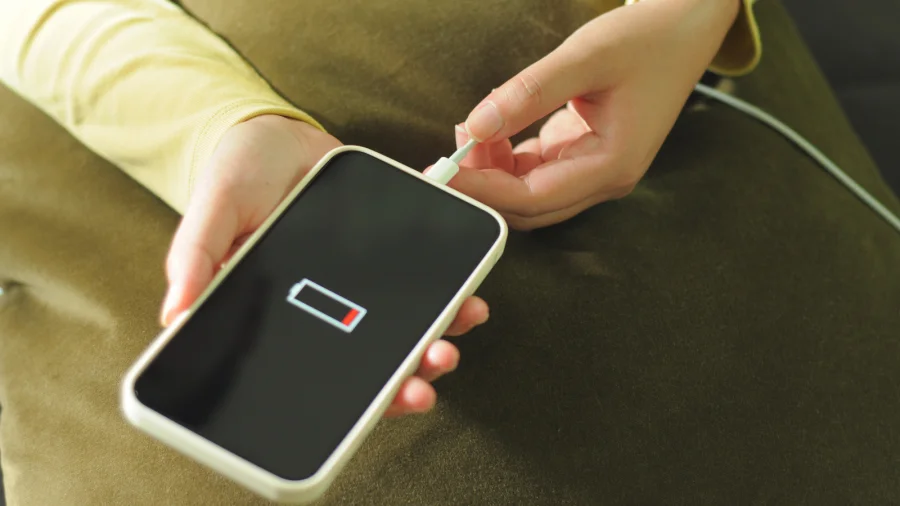
Two phones. Both say 5,000 mAh on the box. One lasts a full day of heavy use. The other dies by evening. That gap is the difference between battery capacity and battery life — and it confuses almost everyone buying a phone.
Capacity Is a Tank Size, Not a Mileage Figure
Battery capacity is the total amount of electrical charge a battery can store. It's measured in milliampere-hours, or mAh. Think of it as the size of a fuel tank.
Battery life is something else entirely. It's how long your device actually runs before it needs a charge — the mileage you get from that tank. A bigger tank usually helps, but it doesn't guarantee you'll go further.
Why the Same mAh Number Gives Different Results
How fast a phone drains its battery depends on what's pulling power. A bright, high-refresh-rate screen, a demanding processor, 5G radios, and background apps all consume charge at different rates.
Software matters too. A well-optimised phone can squeeze more hours out of a smaller battery than a poorly optimised one with a larger cell. This is why two devices with identical capacity can behave very differently in daily use.
How the Two Ideas Got Blurred Together
Marketing plays a part. Capacity is easy to print on a spec sheet — a clean, comparable number. Battery life is messy, because it changes with every user, every app, and every network condition.
So buyers learned to scan for the biggest mAh figure, assuming it meant longer runtime. That shortcut is convenient, but it skips the factors that actually decide how long a charge lasts.
Who This Actually Affects
Anyone choosing a phone, laptop, or earbuds based on a single number. Students, travellers, and people working long shifts are often the most sensitive to real battery life — and the most likely to be misled by capacity alone.
It also matters for people holding onto a device for years. Battery health degrades over time, so a phone that once lasted a day may not by year three, regardless of its original capacity.
What Manufacturers and Testers Say
There is no single official standard that defines "good battery life," because it depends on usage. Reviewers and testing labs typically run controlled scenarios — video playback, web browsing, gaming — to compare devices fairly.
Those tests often show that efficiency, not raw capacity, separates the best performers from the rest. Analysts and reviewers generally advise looking at real-world runtime tests rather than the mAh figure alone.
The Deeper Point: Efficiency Beats Raw Size
A larger battery adds weight and cost. A more efficient chip, a smarter display, and tighter software can deliver similar or better runtime without the bulk.
That's why the industry conversation is shifting. Capacity still matters, but it's one variable in a system — not the whole story.
Confirmed Facts vs What Remains Unclear
Confirmed: capacity is measured in mAh; battery life is runtime; both are influenced by hardware, software, and usage. Unclear: there is no universal benchmark that predicts exactly how long any given phone will last for you, because individual habits vary so widely.
Risks and a Balanced View
Capacity is not meaningless. A larger battery generally gives you more headroom, especially under heavy load. The risk is treating it as the only metric — which can lead to disappointment when a high-mAh phone underperforms in daily use.
The opposite risk also exists: dismissing capacity entirely. For power users, a bigger cell often does translate into more hours, even if efficiency isn't perfect.
The Wider Pattern
This is part of a broader shift in consumer tech: from spec-sheet numbers to real-world experience. Buyers are increasingly weighing efficiency, software support, and battery health over headline figures — a change that pushes manufacturers to compete on substance, not just size.
Practical Guidance for Buyers
Look beyond mAh. Check independent runtime tests, screen-on time reports, and charging speed. Consider your own habits — gaming, video, or navigation drain batteries faster than messaging and calls.
If longevity matters, prioritise devices with strong battery health features and long software support, since those affect how the battery performs over years, not just on day one.
What Could Happen Next
Expect more emphasis on efficiency gains — better chips, smarter power management, and faster charging — rather than a race for the biggest capacity number. The metric that wins buyers may slowly shift from mAh to measured hours.
Our Take
Capacity tells you how much energy a battery can hold. Battery life tells you how far that energy takes you. Confusing the two is easy, and it costs buyers real money. The smarter move is to treat capacity as one clue — and real-world runtime as the answer.
Frequently Asked Questions
Is battery capacity the same as battery life?
No. Capacity is how much charge a battery can store, measured in mAh. Battery life is how long your device actually runs on that charge, which depends on usage, hardware, and software.
Does a higher mAh always mean longer battery life?
Not always. A higher mAh generally helps, but a power-hungry screen or processor can drain a large battery faster than an efficient phone with a smaller one.
Why does my phone's battery life drop over time?
Batteries chemically degrade with charge cycles and age. Capacity shrinks gradually, so runtime shortens even if your usage stays the same.
What should I check before buying a phone for battery life?
Look at independent real-world runtime tests, screen-on time, charging speed, and software support — not just the mAh figure on the spec sheet.