Two deaths near the Punjab border have turned into a diplomatic summons. Pakistan said it called in India's envoy to register what it described as a "strong protest" over the alleged killing of two men by India's Border Security Force — a move that instantly raises the temperature along one of the world's most heavily guarded frontiers.
A Summons, Not a Statement: What Pakistan Actually Did
According to the original report, Pakistan's Foreign Office summoned the Indian envoy to formally convey its objection. A summons of this kind is a deliberate diplomatic signal — it is not a routine communication but a step reserved for moments Islamabad wants the world to notice.
The protest was framed as "strong," language Pakistan typically uses when it wants to signal seriousness without immediately escalating beyond the diplomatic channel.
Why a Border Shooting Becomes a National Issue
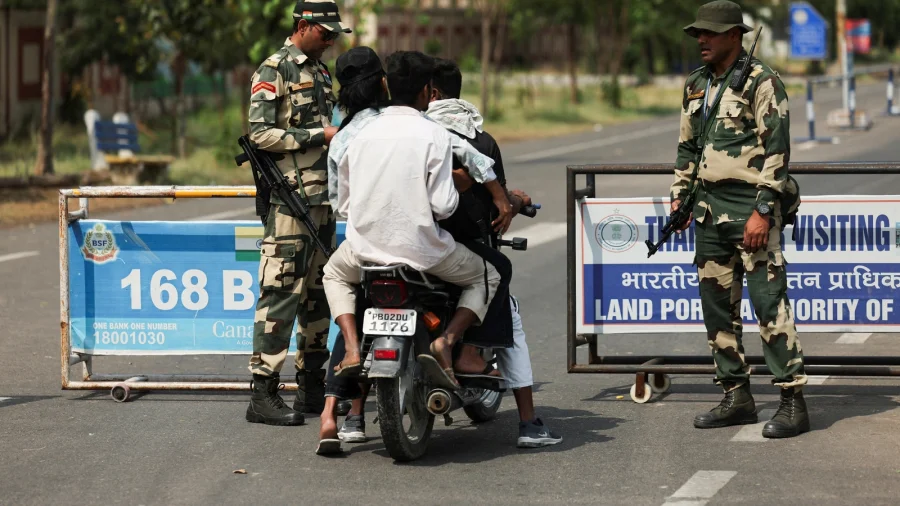
The India-Pakistan border near Punjab is not just a line on a map. It runs through farmland, villages, and families split by history. When shots are fired there, the consequences travel far beyond the fence.
For Pakistan, the alleged deaths of two men are being presented as a violation that demands accountability. For India, the absence of an immediate public response leaves room for the official version to emerge later — a pattern common in such incidents.
How the Story Reached This Point
The sequence, as reported, is straightforward: two men were allegedly shot dead by the BSF near the Punjab border, and Pakistan responded by summoning India's envoy. What is not yet clear is the identity of the men, the exact location, or the circumstances under which the shooting occurred.
Without those details, the incident sits in a familiar grey zone — serious enough to trigger a diplomatic protest, but not yet fully documented in the public domain.
Who Feels This First: Border Communities
The people most affected are rarely the ones issuing statements. Villagers living near the border on both sides deal with restricted movement, sudden firing incidents, and the constant uncertainty of living beside a militarised line.
For them, a summons in Islamabad or a statement in Delhi changes little on the ground — but it does determine whether the next weeks bring calm or heightened patrols.
What India Has Said — and What It Hasn't
Based on the available source material, India has not issued a public confirmation or denial of the Pakistani account. That silence is not unusual in the early hours of such incidents, but it leaves the narrative temporarily one-sided.
Pakistan's protest, meanwhile, has been formally registered — meaning the diplomatic record now carries Islamabad's version of events.
Reading the Signal Behind the Protest
Summoning an envoy is a calibrated act. It allows a government to register anger without recalling an ambassador or suspending talks. Pakistan's choice of this tool suggests it wants the incident acknowledged — not necessarily to trigger a crisis.
Whether India responds in kind, downplays the claim, or offers its own account will determine if this remains a diplomatic footnote or becomes a larger story.
Confirmed Facts vs What Remains Unclear
Confirmed: Pakistan summoned India's envoy and lodged a "strong protest" over the alleged killing of two men near the Punjab border.
Unclear: The identities of the deceased, the precise location, the sequence of events, and India's official position. Any claim beyond the protest itself should be treated as unverified until either government releases details.
Risks and the Balanced View
Border incidents are frequently contested, and both countries have historically offered differing accounts of the same event. Pakistan's protest reflects its position; India's silence does not confirm or deny it.
The risk is not an immediate escalation — it is the slow accumulation of unresolved grievances that make future incidents harder to contain.
A Pattern, Not an Isolated Moment
This summons fits a longer pattern of border-related protests exchanged between the two neighbours over the years. Each incident is treated as its own story, but together they form a steady background of friction that rarely disappears.
What changes is the tone — and this one, so far, has stayed diplomatic.
What Readers Should Watch Next
Watch for two things: a statement from India's Ministry of External Affairs, and any follow-up from Pakistan's Foreign Office detailing the identities or circumstances of the deceased. Those two pieces will decide whether this remains a brief protest or becomes a sustained diplomatic dispute.
What Could Happen From Here
If India issues a clarifying statement, the row may cool quickly. If it does not, Pakistan is likely to keep the issue alive through further diplomatic channels. Either way, the border itself — and the people living beside it — will remain the real test.
Our Take
This is a story about two deaths that became a diplomatic event. The protest matters because it signals that Pakistan wants the incident on record. What matters more is what comes next — because on this border, silence and statements both carry weight.
Frequently Asked Questions
Why did Pakistan summon India's envoy?
Pakistan summoned India's envoy to lodge a "strong protest" over the alleged killing of two men by India's Border Security Force near the Punjab border.
Has India responded to Pakistan's protest?
Based on the available source material, India has not issued a public confirmation or denial of Pakistan's account.
Where exactly did the incident happen?
The incident is reported to have occurred near the Punjab border, but the precise location has not been independently confirmed in the source material.
Does this mean India-Pakistan tensions are escalating?
Not necessarily. A diplomatic summons is a calibrated step. Whether tensions escalate depends on how India responds and whether further incidents follow.