

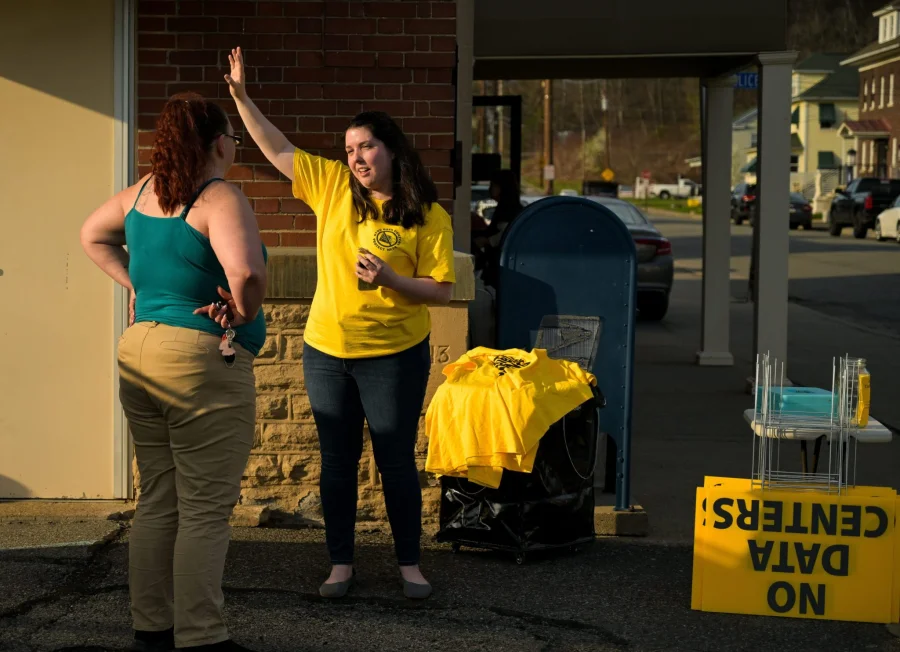
Erika Cook knew about NorthPoint Development's plans for a 1,300-acre data center years before her neighbors in Hazle Township, Pennsylvania, received a letter in June. That letter outlined a potential $10,000 payday for eligible households—if they agreed to let the developer build a 15-building campus at the foot of the Poconos.
The offer, first reported by The Wall Street Journal, has turned this rural community into an unlikely battleground over eminent domain, Big Tech's shadow, and what it means to sell your silence.
A $165 Million Promise—With Strings Attached
NorthPoint Development's proposal to Hazle Township, dubbed Project Hazelnut, promised a $165 million investment. Beyond the $10,000 payouts to eligible households in the township's 4,500-property area, the letter also mentioned funding for a local police department.
But the money was contingent on residents allowing the developer to build. That condition has sparked outrage among some homeowners who see it as a buyout, not a benefit.
Why This Fight Matters Beyond Pennsylvania
Data centers are the backbone of the AI boom, powering everything from Amazon Web Services to ChatGPT. But they require massive land, water, and electricity—resources that rural communities often have in abundance and little power to protect.
Hazle Township's struggle mirrors dozens of similar fights across the U.S., where residents are waking up to find their quiet towns targeted for industrial-scale tech infrastructure.
How the Letter Landed—and What It Said
According to the letter viewed by Fortune, NorthPoint's offer was straightforward: eligible households that agreed to the data center's construction would receive $10,000. The letter also outlined the broader investment, including the police department funding.
Erika Cook had known about the plans for years, but many residents only learned in June. The Wall Street Journal was first to report the story, bringing national attention to the township's dilemma.
The 'Mini Erin Brockoviches' Leading the Charge
Some residents have embraced the label "mini Erin Brockoviches," a nod to the legal clerk who took on a powerful utility and won. They're organizing, asking questions, and demanding transparency about what the data center would mean for their water, air, and property values.
For them, the $10,000 is not a windfall—it's a wedge. Accepting it, they argue, could pave the way for eminent domain seizures if holdouts refuse to sell.
What NorthPoint and Amazon Have Said—and Haven't
NorthPoint Development has not issued a public statement beyond the proposal submitted to Hazle Township. Amazon, which has been linked to the project's shadow, has not confirmed any involvement.
The lack of clarity has only fueled speculation. Residents want to know: Who is the end user? What guarantees exist against eminent domain? And why the rush?
Confirmed Facts vs. What Remains Unclear
Confirmed: NorthPoint proposed a 15-building, 1,300-acre data center campus called Project Hazelnut. The letter offered $10,000 to eligible households contingent on construction approval. The investment totals $165 million and includes police department funding.
Unclear: Whether Amazon or another tech giant is the end customer. Whether eminent domain would be used if residents refuse. What environmental impact the data center would have on local water and power grids.
The Data Center Land Rush—and Its Discontents
Hazle Township is not alone. From Virginia to Oregon, rural communities are being courted—and sometimes coerced—by data center developers promising jobs and tax revenue. But the promises often come with hidden costs: noise, water depletion, and rising electricity rates.
The tension reflects a broader question: In the race for AI dominance, who gets to decide what happens to the land?
What Residents Can Do Now
For Hazle Township homeowners, the immediate step is to read the letter carefully and seek legal advice before signing anything. Accepting the $10,000 may waive certain rights or signal consent to the project.
Residents can also attend township meetings, request public records about the proposal, and organize collectively to negotiate better terms or oppose the project outright.
What Happens Next
The project's fate hinges on township approvals and resident response. If enough households reject the offer, NorthPoint may need to revise its approach—or pursue eminent domain, which would trigger a lengthy legal battle.
For now, Hazle Township remains a microcosm of a national dilemma: progress versus preservation, profit versus people.
Our Take
This story is not just about a data center. It's about power—who has it, who doesn't, and what happens when a $10,000 check arrives in the mail with strings attached. The "mini Erin Brockoviches" of Hazle Township are asking the questions every community should ask before signing away their future.
Frequently Asked Questions
What is Project Hazelnut?
Project Hazelnut is NorthPoint Development's proposed 1,300-acre, 15-building data center campus in Hazle Township, Pennsylvania. The $165 million project includes a $10,000 payout offer to eligible households.
Why are residents opposed to the data center?
Residents fear eminent domain, environmental damage, and the loss of their rural way of life. Some see the $10,000 offer as a tactic to buy consent.
Is Amazon involved in the Hazle Township data center?
Amazon has not confirmed involvement. The headline references the "shadow of Amazon," but no verified link has been established.
What is eminent domain, and could it be used here?
Eminent domain is the government's power to take private property for public use with compensation. If NorthPoint or local authorities pursue it, residents could face legal battles to keep their homes.