The absence of Iran's new Supreme Leader Mojtaba Khamenei from his father's state funeral has sent a powerful signal about the fragility of leadership at the top of the Islamic Republic. As millions of mourners filled the streets of Tehran to bid farewell to Ayatollah Ali Khamenei, the man who was supposed to succeed him was nowhere to be seen — raising urgent questions about security, stability, and the future of Iran's leadership.
A Funeral Without the Successor
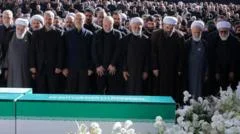
Mojtaba Khamenei, who assumed the role of supreme leader after his father's death in a recent attack, did not attend the elaborate state funeral held on Saturday. Senior Iranian officials — including military commanders, political figures, and religious leaders — were present to lead the ceremonies, but the new supreme leader's chair remained empty. The absence was immediately noticed by the massive crowds and global observers alike.
Why the New Leader Stayed Away
The decision to keep Mojtaba Khamenei away from the funeral appears driven by extreme security concerns. According to reports, his request to attend his father's funeral was denied amid fears he could be targeted. The attack that killed Ayatollah Khamenei occurred at the onset of the US-Israel war with Iran, and the security environment remains volatile. For a new and untested leader, a public appearance at such a large, uncontrolled gathering would present an unacceptable risk.
How the Succession Unfolded
Ayatollah Ali Khamenei, who led Iran for decades, was killed in an attack that marked a dramatic escalation in the conflict with the US and Israel. His son, Mojtaba Khamenei, was swiftly named as his successor, but he has not been seen in public since the attack. The transition of power, always a sensitive process in Iran's theocratic system, is now unfolding under the shadow of war and internal uncertainty.
What This Means for Ordinary Iranians
For the millions of Iranians who turned out to mourn, the absence of the new leader is deeply unsettling. It signals that even the highest office in the land is not safe from the conflict raging around them. The funeral, meant to be a moment of national unity and continuity, has instead become a reminder of the precariousness of life under an escalating war. Many citizens are left wondering who is truly in charge and what comes next for a country under siege.
Official Silence and Public Speculation
Iranian authorities have not provided an official explanation for Mojtaba Khamenei's absence. Senior officials at the funeral avoided direct questions about the new leader's whereabouts. The lack of transparency has fueled speculation, with some analysts suggesting the absence may also reflect internal power struggles or a deliberate strategy to keep the new leader's movements secret. What is clear is that the decision was made at the highest levels of security and political command.
The Security Calculus Behind the No-Show
The decision to keep the new supreme leader away from the funeral is a stark admission of the threat level facing Iran's leadership. In a normal succession, the new leader would be expected to appear publicly to consolidate authority and demonstrate continuity. That Mojtaba Khamenei could not do so suggests that Iranian security forces assessed the risk of an assassination attempt as too high. This is an extraordinary measure for a regime that prides itself on stability and control.
Confirmed Facts vs What Remains Unclear
Confirmed: Mojtaba Khamenei did not attend the state funeral of his father, Ayatollah Ali Khamenei, in Tehran on Saturday. Senior Iranian officials led the funeral ceremonies. Massive crowds of mourners attended. The new supreme leader has not been seen in public since the attack that killed his father.
Unclear: The exact security reasons for his absence have not been officially confirmed. Whether his absence was voluntary or ordered by security officials is not publicly known. His current location and security arrangements remain undisclosed. The long-term implications for his authority and the stability of the succession are uncertain.
Risks and Concerns for Iran's New Leadership
The absence carries significant risks for Mojtaba Khamenei's legitimacy. A leader who cannot appear in public, even at his own father's funeral, may struggle to project the authority needed to lead a nation at war. Critics within Iran's political and religious establishment may question his fitness for the role. The absence also feeds narratives of vulnerability, potentially emboldening Iran's adversaries. On the other hand, supporters argue that the decision demonstrates prudent security management in a time of crisis.
A Leadership Crisis in the Midst of War
This story is not just about one funeral — it is about the broader crisis of leadership in Iran at a moment of existential conflict. The war with the US and Israel has already reshaped the region, and the death of the long-serving supreme leader has created a power vacuum at the worst possible time. The absence of the new leader from public view is a symptom of a deeper instability that could have profound consequences for Iran's political future and its role in the region.
What Iranians and the World Should Watch For
For those following the situation, the key indicators to watch are: whether Mojtaba Khamenei makes any public appearance in the coming days or weeks; how Iranian state media handles his absence; and whether any internal dissent emerges within the regime. For ordinary Iranians, the practical advice is to stay informed through reliable sources and to be prepared for further instability. For international observers, the absence is a signal that Iran's leadership transition is far from smooth.
What Comes Next for Iran's Supreme Leader
The immediate future likely involves Mojtaba Khamenei remaining in secure, undisclosed locations while the security situation is assessed. A carefully controlled public appearance may be arranged once authorities are confident in the safety measures. However, the longer he remains invisible, the more questions will grow about his ability to lead. The succession, already complicated by war, now faces an additional layer of uncertainty that could shape Iran's trajectory for years to come.
Our Take
The absence of Iran's new supreme leader from his father's funeral is more than a security precaution — it is a window into the fragility of the Islamic Republic at a moment of maximum pressure. A leadership transition that was supposed to signal continuity has instead exposed vulnerability. For a regime that has long projected strength and control, this visible gap in leadership is a significant blow. The coming weeks will reveal whether Mojtaba Khamenei can emerge from the shadows and consolidate power, or whether this absence marks the beginning of a deeper crisis. Either way, the world is watching a pivotal moment in Iran's history unfold.
Frequently Asked Questions
Why was Iran's supreme leader absent from the funeral?
Mojtaba Khamenei did not attend his father's funeral due to extreme security concerns. His request to attend was reportedly denied amid fears he could be targeted in an attack, given the ongoing war with the US and Israel.
Who attended the funeral in his place?
Senior Iranian officials, including military commanders, political leaders, and religious figures, attended the funeral and led the ceremonies. The event was also marked by massive crowds of public mourners.
Has Mojtaba Khamenei been seen in public since becoming supreme leader?
No. Mojtaba Khamenei has not been seen in public since the attack that killed his father and led to his assumption of the role of supreme leader. His absence from the funeral is the most prominent example of his continued invisibility.
What does this absence mean for Iran's leadership stability?
The absence raises serious questions about the stability and security of Iran's new leadership. It suggests that even the highest office is vulnerable, and it could fuel internal power struggles or public doubt about the new leader's authority.