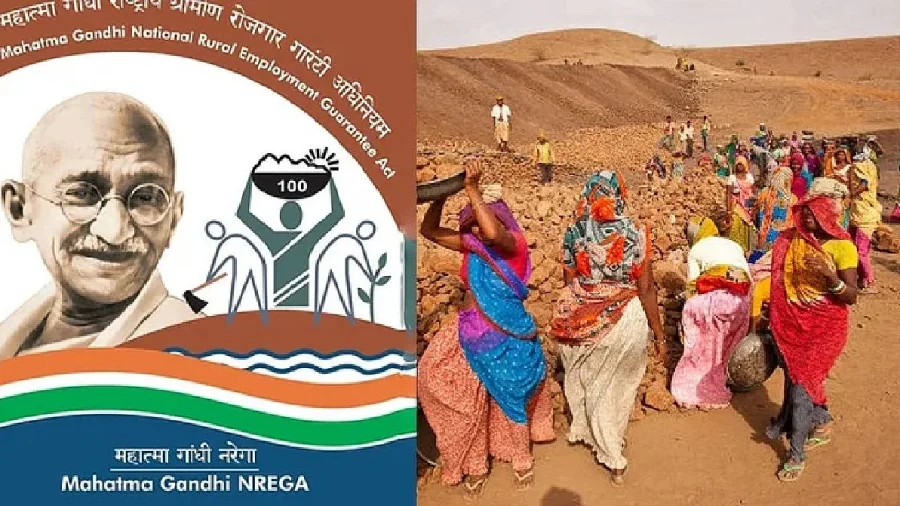
For nearly two decades, MGNREGA has been the backbone of rural India — a lifeline that guaranteed 100 days of work for millions of families when nothing else was available. Now, that lifeline is being redesigned.
The Centre on Saturday released the draft rules for the Viksit Bharat – Guarantee for Rozgar and Ajeevika Mission (Gramin) Act, 2025 — the law that will officially replace MGNREGA. The nationwide rollout is set for July 1, 2026, and the government has invited public feedback on the draft rules until June 21, 2026.
For the nearly 15 crore rural households that depend on this scheme, the changes are not just administrative. They could reshape how work is allocated, how wages are paid, and how many days of employment a family can actually expect.
What the New Draft Rules Actually Say
The draft rules, framed under Section 33 of the VB-G RAM G Act, lay out the institutional, financial, and administrative framework for the new programme. Officials in the Ministry of Rural Development said the rules are designed to ensure a smooth transition from the old system to the new one.
Key provisions in the draft include:
- 125 days of guaranteed employment per rural household per year — up from 100 days under MGNREGA.
- Stronger focus on durable assets like check dams, rural roads, and irrigation canals, rather than temporary work.
- Transparency mechanisms to track work allocation, wage payments, and asset creation in real time.
- Skill development components integrated into the work programme.
- Grievance redressal systems with defined timelines for resolution.
- Wage payment and unemployment allowance rules to ensure workers are paid on time.
The draft also covers transitional arrangements — how existing MGNREGA projects will be migrated to the new framework, and how pending payments will be cleared.
Why This Matters Right Now
This is not a minor tweak. MGNREGA is one of India's largest social security programmes, touching the lives of nearly 70% of rural households. Changing its structure means changing how millions of families plan their finances, their seasons, and their survival.
The shift from 100 to 125 guaranteed days is significant — but only if the implementation matches the promise. Past experience with MGNREGA has shown that delays in wage payments, corruption in job card issuance, and poor asset quality have often undermined the scheme's intent.
The new rules attempt to address these weaknesses. But the real test will begin on July 1, when the scheme actually rolls out across all states and Union Territories.
How the Transition From MGNREGA to VB-G RAM G Unfolded
The VB-G RAM G Act was passed by Parliament in 2025, after years of debate about MGNREGA's effectiveness. The government argued that the old scheme needed a complete overhaul — not just incremental fixes.
Key criticisms of MGNREGA included:
- Wage payments often delayed by months.
- Work allocated was frequently unskilled and created little long-term value.
- Corruption in job card distribution and muster rolls.
- Lack of skill development or career progression for workers.
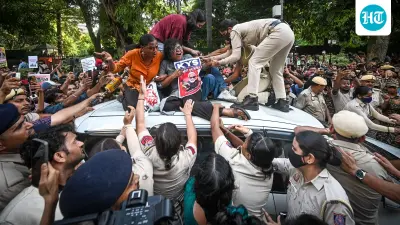
The new law was designed to address these issues. But critics have pointed out that the guarantee of 125 days is still not legally enforceable in the same way the 100-day guarantee was under MGNREGA — raising questions about whether workers will actually get the promised days.
The draft rules released on Saturday are the first detailed look at how the government plans to operationalise the law. They cover everything from how funds will flow from the Centre to states, to how panchayats will prepare annual plans, to how workers will register for the new scheme.
Who Is Affected and What Officials Are Saying
The primary affected group is clear: every rural household that currently relies on MGNREGA for supplementary income. That includes landless labourers, small and marginal farmers, women, and Scheduled Caste and Scheduled Tribe families who form the bulk of MGNREGA workers.
Officials in the Ministry of Rural Development have said the draft rules are designed to be "worker-centric" and "transparent." They have emphasised that the transition will be smooth, with existing job cards and bank accounts remaining valid under the new scheme.
"The rules are designed to establish the institutional, financial and administrative framework necessary for implementing the new rural employment programme across all States and Union Territories." — Ministry of Rural Development official
However, state governments — especially those with large rural populations — have expressed concerns about the financial burden of the new scheme. The Centre has assured that funding will be adequate, but the exact cost-sharing formula between Centre and states is still being finalised.
What We Know So Far — and What Remains Unclear
What we know:
- The draft rules are in the public domain for consultation until June 21, 2026.
- The nationwide rollout is scheduled for July 1, 2026.
- The new scheme guarantees 125 days of employment per household per year.
- Existing MGNREGA job cards and bank accounts will remain valid.
- The rules cover wage payments, grievance redressal, and asset creation norms.
What remains unclear:
- Whether the 125-day guarantee is legally enforceable or just a target.
- How the wage rate will be determined — will it be higher than MGNREGA's current rate?
- How the skill development component will actually work on the ground.
- What happens to workers who were promised 100 days under MGNREGA but never received them — will they get back pay?
- How states with weak administrative capacity will manage the transition.
Risks, Concerns, and the Balanced View
Any major policy overhaul carries risks. For VB-G RAM G, the biggest concern is implementation.
Supporters argue:
- 125 days is a meaningful increase that can improve rural incomes.
- The focus on durable assets will create long-term infrastructure.
- Transparency mechanisms can reduce corruption.
- Skill development can help workers move into better-paying jobs.
Critics warn:
- The guarantee may not be legally enforceable, leaving workers vulnerable.
- Wage rates may not keep pace with inflation.
- The transition could cause disruptions, especially in states with weak governance.
- The skill development component may be poorly implemented, as similar efforts under MGNREGA largely failed.
- There is no clear mechanism to ensure that women — who form a large share of MGNREGA workers — are not left behind.
The truth likely lies somewhere in between. The scheme has potential, but its success will depend entirely on how well it is executed at the grassroots level.
Why Similar Reforms Are Happening Across the World
India is not alone in rethinking its rural employment guarantee. Countries like Brazil, South Africa, and Ethiopia have all experimented with variants of workfare programmes. The global trend is moving toward linking employment guarantees with skill development and asset creation — moving away from purely "make-work" schemes.
India's shift from MGNREGA to VB-G RAM G fits this pattern. But the scale of India's rural population — and the complexity of its governance — makes this one of the most ambitious such reforms anywhere in the world.
What Rural Workers and Families Should Know Now
If you are a rural worker currently enrolled in MGNREGA, here is what you need to do:
- Do not discard your job card. Existing job cards will remain valid under the new scheme.
- Keep your bank account details updated. Wage payments will continue to be made through direct benefit transfer.
- Check with your local panchayat about how to register for the new scheme if you are not already enrolled.
- Submit feedback on the draft rules before June 21, 2026, if you have concerns. The government has placed the rules in the public domain specifically for this purpose.
- Be aware of the 125-day guarantee. If you are promised work but do not receive it, you may be entitled to an unemployment allowance — though the exact rules are still being finalised.
What Could Happen Next
The next few weeks are critical. The government will review public feedback on the draft rules and finalise them before the July 1 rollout. State governments will need to prepare their own implementation plans, train officials, and set up grievance redressal mechanisms.
If the rollout goes smoothly, VB-G RAM G could become a model for rural employment programmes globally. If it stumbles, the consequences will be felt by millions of families who have no other safety net.
The real test will come in the first few months after July 1 — when workers actually apply for work, and the system either delivers or fails.
Our Take: Why This Story Matters Beyond One Scheme
MGNREGA was never just a jobs programme. It was a statement — that the state has a responsibility to provide work when the market cannot. The shift to VB-G RAM G represents a philosophical shift as well as an administrative one.
The new scheme promises more days, better assets, and skill development. But it also carries the risk of being less of a guarantee and more of a target. The difference between a legal guarantee and a policy aspiration is the difference between a worker getting paid and a worker being told to wait.
For now, the draft rules are a step in the right direction — they show that the government is thinking seriously about implementation. But the proof will be in the payment. And for millions of rural families, that proof cannot come soon enough.
FAQs
What is the new scheme replacing MGNREGA?
The new scheme is called the Viksit Bharat – Guarantee for Rozgar and Ajeevika Mission (Gramin) Act, 2025, or VB-G RAM G for short. It replaces MGNREGA and guarantees 125 days of rural employment per household per year, with a focus on durable assets and skill development.
When will the MGNREGA replacement take effect nationwide?
The nationwide rollout is scheduled for July 1, 2026. The government has released draft rules for the new scheme and is inviting public feedback until June 21, 2026, before finalising them.
Will existing MGNREGA job cards remain valid under the new scheme?
Yes. Officials have confirmed that existing MGNREGA job cards and bank account details will remain valid under VB-G RAM G. Workers do not need to re-register from scratch.
How can I give feedback on the draft rules for VB-G RAM G?
The draft rules have been placed in the public domain by the Ministry of Rural Development. You can submit your feedback — either as an individual or through a panchayat or organisation — before the deadline of June 21, 2026. Check the ministry's website for the specific submission process.