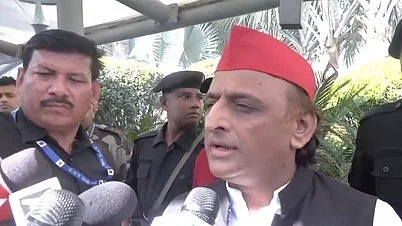
Samajwadi Party president Akhilesh Yadav has directly challenged the Election Commission's constitutional integrity, accusing the poll panel of functioning in a manner that betrays its mandate. His remarks, made to reporters on Tuesday, came just before INDIA bloc MPs marched to the EC headquarters — a rare, coordinated show of opposition force aimed squarely at the institution that conducts India's elections.
Akhilesh's Charge: EC Is Not Working According to the Constitution
Speaking before the demonstration, Yadav said concerns about the poll panel's conduct had been raised repeatedly and that it was failing to function in accordance with the Constitution. He claimed the Commission was favouring the BJP — a serious allegation that goes to the heart of the Election Commission's credibility as a neutral arbiter.
Yadav also raised concerns over alleged booth capturing and the ongoing SIR (Special Intensive Revision) of electoral rolls, framing them as part of a broader pattern of electoral manipulation.
Why the INDIA Bloc March to the EC Matters
The decision to march to the Election Commission's headquarters is not routine political theatre. It signals that the opposition alliance has decided to make electoral integrity a central battleground — and to confront the poll panel directly rather than through parliamentary channels alone.
For ordinary voters, the stakes are straightforward: if trust in the Election Commission erodes, it undermines confidence in the entire democratic process. The SIR exercise, which involves revising electoral rolls, has already generated controversy in several states, with opposition parties alleging that legitimate voters are being deleted or flagged unfairly.
How the Confrontation Escalated
The INDIA bloc's protest did not emerge in isolation. Opposition parties have been building pressure on the Election Commission for weeks over the SIR process, alleging discrepancies and lack of transparency. Yadav's remarks on Tuesday represented the sharpest public articulation yet of that frustration.
By timing his comments immediately before the march, Yadav ensured maximum visibility — and placed the EC's neutrality at the centre of the political narrative.
Who Is Affected — and Why It Matters to Real People
The SIR exercise directly affects millions of voters whose names appear on electoral rolls. If eligible citizens are wrongly excluded, they lose their fundamental right to vote. If the process is perceived as biased, it damages faith in election outcomes — a consequence that extends far beyond any single party.
For opposition parties, the issue is existential: they argue that a flawed roll revision could tilt the electoral playing field. For the Election Commission, the challenge is to demonstrate that its processes are transparent, fair, and constitutionally sound.
What the Election Commission Has Said — and What Remains Unanswered
At the time of reporting, there was no immediate official response from the Election Commission or Chief Election Commissioner Gyanesh Kumar to Yadav's specific allegations. The EC has previously defended the SIR exercise as a routine administrative measure aimed at cleaning up electoral rolls.
However, the Commission has not publicly addressed the broader charge of political bias — a question that now hangs over the institution as the INDIA bloc escalates its protest.
Confirmed Facts vs What Remains Unclear
Confirmed: Akhilesh Yadav made the remarks on Tuesday. The INDIA bloc marched to the EC headquarters. The protest concerns the SIR exercise and allegations of EC partiality.
Unclear: Whether the EC will issue a formal response. Whether the SIR process will be paused or modified. Whether other opposition parties will join similar protests. The specific evidence behind Yadav's booth-capturing allegations has not been independently verified in this report.
Risks and the Balanced View
The opposition's allegations are serious, but they remain allegations. The Election Commission has historically maintained that its processes are designed to ensure free and fair elections, and it has legal backing for roll revisions. Critics of the INDIA bloc argue that protesting at the EC's doorstep could be seen as pressure tactics rather than constructive engagement.
At the same time, the EC's silence on the bias charge does little to reassure those who question its neutrality. The burden of proof now rests on both sides — the opposition to substantiate its claims, and the Commission to demonstrate its impartiality.
A Wider Pattern: Opposition vs Institutions
This is not the first time the Election Commission has faced accusations of partisanship. In recent years, opposition parties across the spectrum have questioned the EC's decisions on everything from poll dates to model code enforcement. The INDIA bloc's march is the latest chapter in a longer story about declining institutional trust — a trend that should concern anyone who values democratic accountability.
What Readers Should Watch For
Voters should pay attention to how the EC responds to these allegations. If the Commission issues a detailed, transparent rebuttal, it could restore some confidence. If it remains silent, the opposition's narrative may gain traction.
For citizens in states undergoing SIR, the practical advice is simple: verify your name on the electoral roll, keep your documents ready, and follow official EC updates rather than unverified social media claims.
Future Outlook
The INDIA bloc is unlikely to back down after this protest. Expect further pressure on the EC, possibly through legal challenges or parliamentary disruptions. The Commission, for its part, may choose to clarify its position or accelerate transparency measures. Either way, the battle over electoral integrity is far from over.
Our Take
Akhilesh Yadav's decision to question the Election Commission's neutrality in such direct terms reflects a deeper anxiety among opposition parties about the fairness of the electoral machinery. Whether or not one agrees with his allegations, the fact that a major national party feels compelled to march to the EC's door is itself a signal that trust is fraying. The Election Commission's response — or lack of it — will shape how this story evolves. For democracy, the stakes could hardly be higher.
Frequently Asked Questions
What did Akhilesh Yadav say about the Election Commission?
Akhilesh Yadav accused the Election Commission of failing to function in accordance with the Constitution and alleged it was favouring the BJP. He also raised concerns over alleged booth capturing and the SIR electoral-roll revision.
Why is the INDIA bloc protesting against the EC?
The INDIA bloc is protesting against the SIR (Special Intensive Revision) exercise and demanding accountability from the Election Commission. The opposition alleges that the process could unfairly exclude eligible voters and lacks transparency.
What is the SIR exercise?
SIR stands for Special Intensive Revision. It is an electoral-roll revision exercise conducted by the Election Commission to update voter lists. Opposition parties have alleged that it is being used to target certain communities or voters.
Has the Election Commission responded to the allegations?
At the time of reporting, there was no immediate official response from the Election Commission or Chief Election Commissioner Gyanesh Kumar to Akhilesh Yadav's specific allegations. The EC has previously defended the SIR exercise as a routine administrative measure.