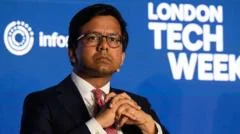
Greater Manchester Mayor Andy Burnham has handed Kanishka Narayan a cabinet-level AI brief — but the promotion comes with a catch. The technology secretary role and its department have been abolished, leaving Narayan with influence but no dedicated machinery to execute policy.
What the reshuffle actually changes
Narayan, previously the region’s technology secretary, will now attend cabinet meetings as AI minister. The title change is significant: it signals AI is being treated as a cross-cutting priority rather than a standalone portfolio. But the loss of the technology department means Narayan no longer commands a budget or team specifically for tech policy.
Why Burnham chose this structure
Burnham’s office described the move as a “more integrated approach” to artificial intelligence. Instead of a separate technology silo, AI responsibilities will be distributed across existing departments — transport, health, housing, and economic development. Narayan’s role becomes one of coordination and oversight rather than direct delivery.
How the AI minister role evolved
Narayan was appointed technology secretary in Burnham’s first cabinet in 2021. Over the past three years, the portfolio expanded from digital infrastructure to include AI ethics, data governance, and smart city projects. The new title reflects that evolution — but the departmental axe suggests a strategic pivot away from a dedicated tech ministry.
Who is affected by the change
For businesses and tech startups in Greater Manchester, the restructuring creates uncertainty. A dedicated technology department provided a single point of contact for digital policy, funding, and regulation. Without it, companies may need to navigate multiple departments for AI-related queries. Public sector AI projects — from NHS data sharing to transport automation — will now be managed within existing departmental structures.
Burnham’s office defends the decision
A spokesperson for the Mayor said: “This is about making AI work across every part of Greater Manchester’s government, not confining it to one department. Kanishka’s cabinet rank ensures AI has a seat at the top table.” The office declined to comment on whether any staff from the former technology department would be redeployed or made redundant.
What the restructuring really means
The move reflects a broader debate in government: should AI have its own ministry, or be embedded across all functions? Burnham has chosen the latter. Supporters argue this prevents AI from being siloed and encourages adoption in every policy area. Critics warn that without a dedicated department, AI initiatives may lack coordination, funding, and accountability.
Confirmed facts vs what remains unclear
Confirmed: Kanishka Narayan is AI minister with cabinet rank. Confirmed: The technology secretary role and department are abolished. Unclear: Whether any staff have been reassigned or let go. Unclear: How AI policy coordination will work in practice without a central department. Unclear: Whether this model will be replicated by other metro mayors or remain unique to Greater Manchester.
Risks and balanced view
The restructuring carries several risks. Without a dedicated department, AI policy may lose visibility and momentum. Coordination across multiple departments could become bureaucratic and slow. There is also the risk that AI becomes a secondary priority in departments focused on core services like transport or health. On the other hand, embedding AI across government could lead to more practical, real-world applications rather than theoretical policy work.
Wider trend in regional AI governance
Greater Manchester is not alone in rethinking how to govern AI. The UK government’s central AI Safety Institute operates as a standalone body, while the Scottish government has an AI strategy coordinated by its digital directorate. Internationally, Canada has a dedicated AI minister, while the EU embeds AI regulation within broader digital policy. Burnham’s model — cabinet rank without a department — is relatively unusual.
What businesses and residents should know
For businesses: expect AI-related queries to be handled by the relevant department (e.g., transport AI to transport, health AI to health). For residents: AI projects affecting public services will continue, but accountability lines may be less clear. For tech startups: the loss of a single point of contact may require more effort to navigate government.
What happens next
Narayan’s first task will be to establish coordination mechanisms across departments. Burnham’s office is expected to publish a new AI governance framework within the next quarter. The model will be watched closely by other metro mayors and regional authorities considering similar restructures.
Our Take
Burnham’s reshuffle is a bet that AI is too important to be left to a single department — but also a risk that without one, it may become everyone’s and no one’s priority. Giving Narayan cabinet rank is a smart signal of intent. But stripping the department removes the very machinery needed to turn intent into action. The success of this model will depend entirely on whether Narayan can coordinate effectively without a dedicated team. If it works, other regions may follow. If it fails, Greater Manchester’s AI ambitions could stall.
Frequently Asked Questions
What is Kanishka Narayan’s new role?
Kanishka Narayan has been appointed AI minister in Greater Manchester, with the right to attend cabinet meetings. He previously served as technology secretary.
Why was the technology department axed?
Mayor Andy Burnham’s office says the change reflects a more integrated approach to AI, distributing responsibilities across existing departments rather than housing them in a standalone ministry.
Does Narayan still have a team or budget?
No. The technology department has been abolished, meaning Narayan no longer commands a dedicated budget or team for AI policy. He will coordinate across departments instead.
How will this affect AI projects in Greater Manchester?
AI initiatives will now be managed within individual departments — for example, transport AI under transport, health AI under health. Businesses may need to engage multiple departments rather than one central tech office.