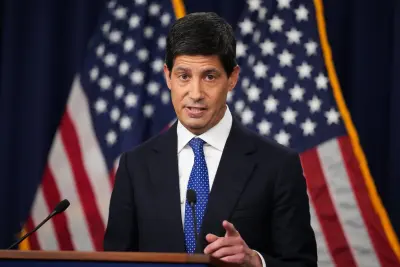


Darren Ellis remembers the moment he realised university wasn't a level playing field. He was the first in his family to go—his mum worked in a school kitchen, his dad in a factory. Many of his classmates arrived from somewhere else entirely.
"If it wasn't for the fact I played sport at a high level, I'm not sure I would have had the confidence to interact with the people on my course," says Ellis, now Standard Chartered's chief financial officer for Europe, Americas, Africa and Middle East. "Other people won't have that."
That single admission cuts to the heart of banking's class problem. It's not just about who gets hired—it's about who feels they belong once they're there.
The Confidence Gap That Divides Banking's Talent Pool
Ellis's story isn't unusual in its origins. It's unusual in its outcome. For every working-class student who climbs into a senior finance role, many more stall at the entry point—not because of ability, but because of the unwritten codes of elite professional spaces.
Sport gave Ellis a shared language with his peers. Without it, he suggests, the gap would have been harder to bridge. That's a fragile lifeline to depend on.
Why Standard Chartered Is Speaking About Class Now
Banks have spent years talking about gender and ethnicity in hiring. Class has been slower to enter the conversation—partly because it's harder to measure, partly because it's uncomfortable for an industry that recruits heavily from a narrow set of universities and postcodes.
Standard Chartered's willingness to put a senior executive forward on this issue signals a shift. The bank operates across some of the world's most unequal markets, from India to parts of Africa and the Middle East. Its workforce spans vastly different socioeconomic realities.
What Ellis's Rise Reveals About Banking's Hidden Filters
Ellis understood money early. "If I broke something, it did not get replaced," he says. That lesson shaped a belief in hard work as the bedrock of success.
But hard work alone doesn't explain who reaches the top. Networks, confidence, and the ability to navigate unspoken social rules matter just as much—and those are unevenly distributed.
The Real Cost of Class Exclusion in Finance
When banks recruit from a narrow pool, they miss talent. They also risk groupthink—an industry that looks and thinks the same way is slower to spot risks and quicker to repeat mistakes.
For young people from working-class backgrounds, the message has long been that finance isn't for them. Ellis's visibility challenges that, but one executive's story isn't a systemic fix.
What Standard Chartered Has Actually Committed To
The bank has framed this as part of a broader push on social mobility. Specific targets or policy changes haven't been detailed in the source material, and it's unclear how far the commitment extends beyond public messaging.
What is clear: the conversation is happening at a senior level. That's a starting point, not a solution.
Confirmed Facts vs What Remains Unclear
Confirmed: Ellis is a senior Standard Chartered executive. He was the first in his family to attend university. His parents worked in a school kitchen and a factory. He credits sport with giving him confidence at university.
Unclear: What specific programs Standard Chartered has launched to address class barriers. Whether hiring targets exist. How the bank measures progress on socioeconomic diversity.
Why This Matters Beyond One Bank
Banking's class problem isn't unique to Standard Chartered. It's an industry-wide issue that shapes who gets opportunities and who gets overlooked. Ellis's story is a reminder that talent is distributed evenly—opportunity is not.
What Young People From Working-Class Backgrounds Should Know
Ellis's path shows that entry is possible, but it often requires finding an edge—a skill, a sport, a network—that bridges the confidence gap. That shouldn't be necessary, but it's the current reality.
For those already in the industry, the onus is on institutions to change, not just individuals to adapt.
What Could Change Next
If Standard Chartered translates this conversation into measurable action—targeted recruitment, mentorship, transparent progression data—it could set a benchmark. If not, it risks being another bank that talked about class without shifting it.
Our Take
Ellis's story is compelling precisely because it's still rare. The banking industry has made progress on some diversity metrics, but class remains the barrier it's least willing to name. Standard Chartered putting a senior leader forward is a signal—but signals aren't systems. The real test is whether the next Darren Ellis doesn't need sport, luck, or exceptional confidence to get through the door.
Frequently Asked Questions
What is the class problem in banking?
It refers to the way socioeconomic background—not just talent—shapes who gets hired, promoted, and feels comfortable in finance. Working-class candidates often face barriers in networks, confidence, and unwritten cultural codes.
Who is Darren Ellis?
Darren Ellis is Standard Chartered's chief financial officer for Europe, Americas, Africa and Middle East. He was the first in his family to attend university and has spoken about the confidence gap he experienced.
What is Standard Chartered doing about social mobility?
The bank has highlighted the issue through Ellis's story, but specific programs, targets, or policy changes have not been detailed in the source material.
Why does class diversity matter in banking?
Diverse backgrounds bring different perspectives, reduce groupthink, and ensure talent isn't overlooked because of postcode or accent. It also makes the industry more representative of the societies it serves.