

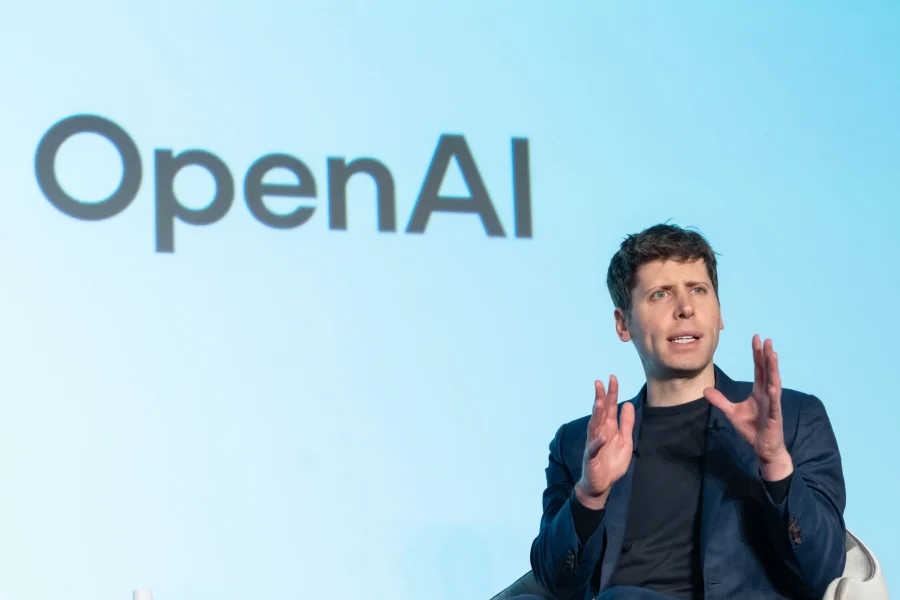
OpenAI has done something unusual for a company preparing to go public: it admitted it expected its confidential IPO filing to leak. The admission, reported by CNBC, is a rare moment of transparency — or a calculated move to control a narrative that could shape the biggest public listing in history.
The $1 trillion filing that was never supposed to be secret
OpenAI confidentially filed for an IPO with the Securities and Exchange Commission on June 8, 2026, according to CNBC’s Ashley Capoot and Kate Rooney. The confidential filing — known as a “draft registration statement” — allows companies to keep financial details private while the SEC reviews them. But OpenAI’s statement that it expected the news to leak has raised eyebrows. “We expected it to leak,” the company reportedly said, signaling that the filing’s existence was always going to become public knowledge. The question is whether this was a strategic leak or a genuine admission of a broken process.
Why OpenAI’s narrative control matters for investors
For investors, the admission is significant. It suggests OpenAI is actively managing market expectations ahead of what could be a $1 trillion IPO — a valuation that would make it one of the most valuable companies in the world. By acknowledging the leak in advance, OpenAI is essentially saying: “We know you know, and we’re fine with it.” This is a departure from the typical Silicon Valley playbook, where companies often try to keep IPO filings under wraps until they are ready to control the public narrative. For retail and institutional investors alike, the message is clear: OpenAI is setting the terms of its own story.
The three-way race for IPO history
OpenAI’s filing comes at a remarkable moment for public markets. Just days before, Elon Musk’s SpaceX was set to start trading, and a week earlier, rival AI firm Anthropic had also filed confidentially with the SEC. The three companies could end up leading the three largest IPOs on record, according to CNBC. This creates an unprecedented competition for investor capital. SpaceX, with its space exploration and Starlink revenue, offers a tangible business model. Anthropic, backed by Amazon, is positioning itself as the “safe” AI bet. OpenAI, meanwhile, is the household name — but it also carries the most narrative baggage, from its governance controversies to its massive capital requirements.
What the confidential filing hides — and reveals
The confidential filing means OpenAI’s financial details are not yet public. But the company’s revenue trajectory has been a subject of intense speculation. Earlier reports from Inc. noted that OpenAI had missed some revenue targets, which could spook investors. The company’s massive spending on computing infrastructure and talent has also raised questions about profitability. The public version of the S-1 filing, expected in the coming months, will reveal whether OpenAI can justify its $1 trillion valuation. Key metrics to watch: revenue growth, gross margins, customer concentration, and the cost of training and running its AI models.
Who is affected by OpenAI’s IPO narrative
The impact extends beyond Wall Street. For AI developers and startups, OpenAI’s public listing will set a benchmark for how the market values AI companies. For regulators, it raises questions about how to oversee a company whose technology could reshape entire industries. For everyday users of ChatGPT and other OpenAI products, the IPO could mean changes in pricing, access, or product direction as the company faces pressure to deliver shareholder returns. And for employees holding equity, the IPO represents a potential liquidity event — but also the risk of being locked into a company under intense public scrutiny.
OpenAI’s official stance and the market’s response
OpenAI has not commented publicly beyond acknowledging the leak. The SEC filing process is confidential, so the company is limited in what it can say. CNBC reported that the filing was made on June 8, 2026, and that OpenAI is working with major investment banks to underwrite the offering. Market reaction has been mixed. Some analysts see the $1 trillion valuation as ambitious but achievable given OpenAI’s brand recognition and first-mover advantage. Others warn that the AI hype cycle may be peaking, and that investors could be overpaying for a company that has yet to prove it can generate sustainable profits.
The strategy behind frontrunning the narrative
By publicly stating it expected the leak, OpenAI is doing something that public relations experts call “narrative inoculation.” The idea is to acknowledge a potential negative story — in this case, that the company’s confidential filing was leaked — and frame it as expected or even intentional. This reduces the impact of any subsequent reporting that might paint the leak as a sign of internal chaos or poor security. It also allows OpenAI to control the timing and framing of the news. Instead of reacting to a leak, the company is proactively shaping how the story is told.
Confirmed facts vs what remains unclear
Confirmed: OpenAI confidentially filed for an IPO with the SEC on June 8, 2026. The company acknowledged it expected the filing to leak. SpaceX and Anthropic have also filed for IPOs in the same period. Unclear: The exact valuation OpenAI is seeking. The timeline for the public offering. The company’s current financial performance. Whether the leak was genuinely accidental or strategically orchestrated. The terms of the underwriting agreement with investment banks.
OpenAI’s moat: why this company matters
OpenAI’s competitive advantage rests on three pillars: brand recognition, technological leadership, and ecosystem lock-in. ChatGPT has become a household name, giving OpenAI a distribution advantage that rivals like Anthropic and Google DeepMind struggle to match. The company’s GPT models are widely considered state-of-the-art, and its partnerships with Microsoft provide access to massive computing resources and enterprise distribution. OpenAI also benefits from a network effect: the more developers build on its platform, the harder it becomes to switch to a competitor. However, this moat is not unassailable. Open-source models like Meta’s Llama are closing the gap, and regulatory scrutiny could limit OpenAI’s ability to monetize its technology.
Risks and balanced view
Investors should be cautious. OpenAI faces significant risks: the cost of training and running AI models is enormous, and the company has yet to prove it can generate consistent profits. The departure of key executives, including co-founder Ilya Sutskever, has raised questions about governance and stability. Regulatory risks are also mounting, with governments around the world considering new AI laws that could limit OpenAI’s business model. Additionally, the competitive landscape is intensifying. Anthropic, Google, and open-source alternatives are all vying for market share. The $1 trillion valuation assumes OpenAI will maintain its leadership position — but in AI, leadership can shift quickly.
The wider trend: AI companies racing to public markets
OpenAI’s IPO is part of a broader trend of AI companies seeking public listings. Anthropic, Cohere, and others are also preparing to go public, while established tech giants like Microsoft and Google are investing heavily in AI. This wave of AI IPOs reflects a market that is betting big on artificial intelligence as the next transformative technology. But it also raises questions about whether the hype is outpacing reality. The dot-com era saw a similar rush to public markets, and many companies failed to live up to their valuations. The AI IPO wave could follow a similar pattern — or it could mark the beginning of a new era of technological and economic transformation.
What investors and observers should do now
For investors: wait for the public S-1 filing before making any decisions. Focus on revenue growth, gross margins, and customer concentration. Pay attention to the risk factors section, which will outline the biggest threats to the business. For AI developers: watch how OpenAI’s IPO affects pricing and access to its APIs. A public company under pressure to deliver profits may raise prices or restrict free tiers. For regulators: the IPO will bring OpenAI’s finances into the open, providing a clearer picture of the company’s market power and potential risks. For everyone else: the OpenAI IPO is a bellwether for the AI industry. If it succeeds, it could trigger a wave of AI listings. If it fails, it could cool investor enthusiasm for the sector.
Future outlook
The next few months will be critical. OpenAI will likely release a public version of its S-1 filing, revealing its financials for the first time. The company will also embark on a roadshow to pitch investors, during which analysts will scrutinize its growth story and valuation. The timing of the IPO — possibly later in 2026 — will depend on market conditions and the SEC’s review process. If the IPO succeeds, it could set a new benchmark for AI company valuations. If it stumbles, it could signal that the AI hype cycle has peaked. Either way, the OpenAI IPO will be one of the most closely watched financial events of the decade.
Our take
OpenAI’s admission that it expected its IPO filing to leak is a masterclass in narrative control — or a sign of a company that knows its secrets won’t stay secret for long. Either way, it underscores the immense scrutiny the company faces as it prepares for a historic public listing. The $1 trillion valuation is ambitious, but not impossible. OpenAI has the brand, the technology, and the ecosystem to justify a high valuation. But it also carries significant risks: massive costs, regulatory uncertainty, and fierce competition. Investors should approach with caution, but the story of OpenAI’s IPO is also the story of AI’s transition from a research project to a mainstream industry. That transition will be messy, unpredictable, and fascinating to watch.
Frequently Asked Questions
What does it mean that OpenAI filed confidentially for an IPO?
A confidential IPO filing, also known as a draft registration statement, allows a company to submit its financial details to the SEC without making them public immediately. This gives the company time to work through regulatory questions before releasing the information to the public. OpenAI used this process to file for its IPO on June 8, 2026.
Why did OpenAI say it expected its IPO filing to leak?
OpenAI publicly stated it expected the confidential filing to leak, which analysts interpret as a strategic move to control the narrative. By acknowledging the leak in advance, the company reduces the impact of any negative reporting and frames the news as expected rather than a security breach or sign of internal chaos.
How does OpenAI’s IPO compare to SpaceX and Anthropic’s IPOs?
All three companies have filed for IPOs in a remarkably short period. SpaceX is set to start trading days after OpenAI’s filing, while Anthropic filed a week earlier. Together, they could lead the three largest IPOs on record. The competition for investor capital is unprecedented, with each company offering a different value proposition: SpaceX has tangible revenue from Starlink, Anthropic positions itself as the safe AI bet, and OpenAI is the household name with the most narrative baggage.
What should investors look for in OpenAI’s public S-1 filing?
Key metrics to watch include revenue growth, gross margins, customer concentration, and the cost of training and running AI models. Investors should also pay close attention to the risk factors section, which will outline the biggest threats to the business, including regulatory risks, competition, and governance challenges.