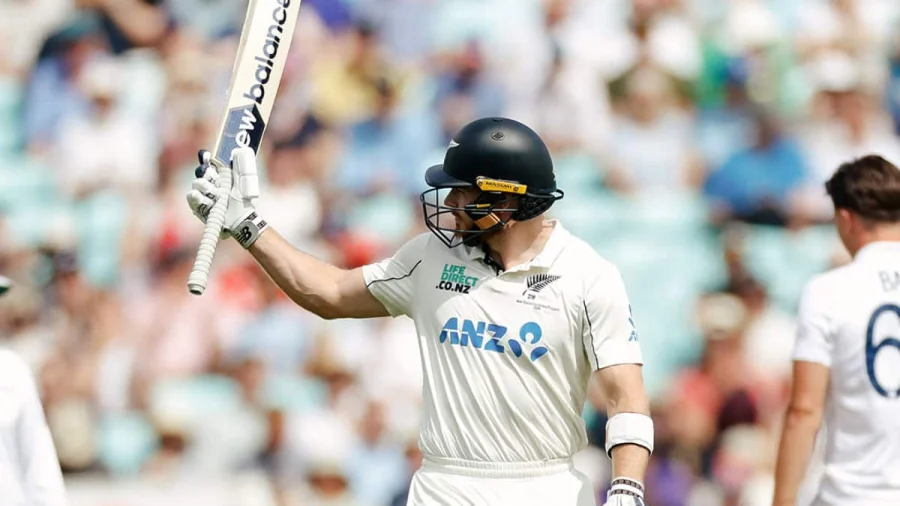
The moment Glenn Phillips raised his bat to acknowledge the crowd at The Oval, the Kennington stands rose as one. It was not just a century — it was a statement of defiance. On June 17, the New Zealand all-rounder reached his maiden Test hundred against England, scoring exactly 100 runs from 135 deliveries. The ovation that followed was not merely polite applause; it was a recognition of grit, determination, and a knock that came at a time when his team needed it most.
The Knock That Changed the Momentum
Phillips walked in with New Zealand under pressure. England's bowling attack, led by the raw pace of Jofra Archer, had been relentless. But Phillips did not flinch. He played with a mix of caution and aggression, picking his moments to attack while defending resolutely. His innings included crisp drives, well-timed cuts, and the occasional lofted shot that brought the crowd to its feet.
The century came off 135 balls — a strike rate that reflected both the difficulty of the conditions and the quality of the bowling. It was not a flashy knock; it was a gritty, hard-fought innings that earned every run.
Why This Century Matters for New Zealand
For New Zealand, this was more than a personal milestone. The team entered the second Test at The Oval looking to recover from a difficult start to the series. Phillips' innings provided a much-needed anchor. It gave the dressing room belief that they could compete against a formidable England side on their home turf.
For Phillips himself, the century was a long time coming. The all-rounder had shown flashes of his talent in earlier matches but had not converted starts into big scores. This knock proved that he belongs at the Test level.
The Jofra Archer Challenge
Facing Jofra Archer on a lively Oval pitch is no easy task. Archer's pace, bounce, and ability to generate movement made him a constant threat. Phillips, however, stood his ground. He used his footwork to counter Archer's short-pitched deliveries and showed excellent judgment outside off stump.
One of the standout moments of the innings was Phillips wearing goggles while facing Archer — a visual reminder of the intensity of the contest. It was a moment that captured the imagination of fans and highlighted the physical demands of Test cricket.
The Standing Ovation: A Crowd's Tribute
When Phillips reached his century, the crowd at The Oval rose to their feet. It was a rare moment of cross-team appreciation — English fans acknowledging the effort of a visiting player. The ovation was not just for the runs; it was for the spirit in which they were scored.
Videos of the moment quickly circulated on social media, with fans and commentators alike praising Phillips' resilience. The standing ovation became a symbol of what Test cricket values most: courage, patience, and the will to fight.
What Happened After the Century
Phillips was dismissed shortly after reaching his hundred, caught for exactly 100. It was a bittersweet end to a memorable innings. While he could not add further to his score, the impact of his knock had already been felt.
New Zealand will now look to build on Phillips' foundation. The innings has given them a platform to push for a competitive total and potentially level the series.
Confirmed Facts vs What Remains Unclear
Confirmed: Glenn Phillips scored his maiden Test century on June 17 at The Oval, reaching exactly 100 runs off 135 balls. He received a standing ovation from the crowd. Jofra Archer was part of the England bowling attack.
Unclear: The exact match situation at the time of Phillips' dismissal and the final outcome of the Test match are not fully detailed in available sources. The broader series context and New Zealand's final total remain to be seen.
What This Means for Test Cricket
Phillips' innings is a reminder of why Test cricket remains the ultimate format. It is not just about big scores; it is about the battles within the game — the contest between bat and ball, the mental fortitude required to succeed, and the moments of individual brilliance that define matches.
In an era of T20 cricket, knocks like Phillips' century reaffirm the value of patience and technique. They show that the longest format still has the power to captivate audiences.
Practical Takeaways for Cricket Fans
For fans watching the match, Phillips' innings offers a lesson in resilience. It shows that even against the best bowling attacks, a determined batsman can find a way. For young cricketers, it is a reminder that hard work and patience eventually pay off.
Future Outlook
Phillips will hope to build on this innings in the remainder of the series. For New Zealand, the challenge now is to convert individual brilliance into team success. The Oval Test could be a turning point in the series if the visitors can capitalize on Phillips' foundation.
Our Take
Glenn Phillips' maiden Test century is more than a personal milestone — it is a story of grit, determination, and the spirit of Test cricket. The standing ovation from the crowd at The Oval was a fitting tribute to an innings that embodied everything the format stands for. In a world of quick runs and instant gratification, Phillips reminded us that some things are worth waiting for.
Frequently Asked Questions
When did Glenn Phillips score his maiden Test century?
Glenn Phillips scored his maiden Test century on June 17, 2025, during the second Test between New Zealand and England at The Oval in London.
How many runs did Glenn Phillips score in his maiden Test century?
Phillips scored exactly 100 runs off 135 deliveries before being dismissed.
Who was bowling when Glenn Phillips scored his century?
Phillips faced a relentless England bowling attack led by Jofra Archer, who tested him with pace and bounce throughout the innings.
Did the crowd give Glenn Phillips a standing ovation?
Yes, the crowd at The Oval gave Phillips a standing ovation after he reached his maiden Test century, recognizing the grit and determination of his innings.
Why did Glenn Phillips wear goggles while batting?
Phillips wore goggles while facing Jofra Archer as a precautionary measure against the extreme pace and bounce of Archer's bowling, which was a standout moment of the innings.