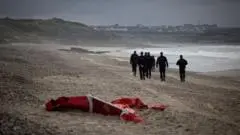
The United States and Iran are set to hold talks in Switzerland on Sunday, a diplomatic gamble that comes after Tehran’s military announced it had closed the Strait of Hormuz — a move the US has publicly disputed. The development injects fresh uncertainty into global energy markets and raises the stakes for negotiations that were already fraught with tension.
Why the Strait of Hormuz closure claim matters
The Strait of Hormuz, a narrow waterway between Iran and Oman, is a critical artery for global oil and gas shipments. Roughly one-fifth of the world’s petroleum passes through it daily. Iran’s claim that it has shut the strait — reportedly in response to Israeli attacks in Lebanon — is a dramatic escalation. The US has pushed back, saying the waterway remains open, but the mere threat of disruption has already rattled markets and drawn international concern.
How the situation escalated
Iran’s military said the closure was a direct response to what it called “US-Israeli violations” of a ceasefire in Lebanon. The timing is significant: the talks in Switzerland were already scheduled, but Tehran’s announcement appears to be a pressure tactic ahead of negotiations. The US has not confirmed any actual disruption to shipping, and analysts caution that Iran’s claim may be more rhetorical than operational — but the risk of miscalculation is high.
Who is affected by a potential closure
If the Strait of Hormuz were to be effectively closed, the impact would be immediate and global. Oil prices would spike, hitting consumers at the pump and inflating costs for industries worldwide. Countries like Japan, India, South Korea, and China — major importers of Gulf crude — would be most vulnerable. For ordinary people, the ripple effect could mean higher fuel, food, and transport costs within weeks.
What the US and Iran are saying
The US has publicly disputed Iran’s claim, with officials stating that the waterway remains open to navigation. Iran, for its part, has framed the closure as a defensive measure. Neither side has provided independent verification. The talks in Switzerland are expected to address the strait’s status directly, though both nations enter the room with sharply different narratives.
What the talks in Switzerland mean
The talks, reportedly set for Sunday, are the first direct engagement between the two countries in months. While the agenda has not been officially confirmed, the Strait of Hormuz closure claim is likely to dominate discussions. The US is expected to demand an immediate reversal of any blockade, while Iran may seek concessions related to the Lebanon conflict and broader sanctions relief. The outcome is far from certain.
Confirmed facts vs what remains unclear
Confirmed: Iran’s military has publicly stated it closed the Strait of Hormuz. The US has disputed this claim. Talks are scheduled in Switzerland. Unclear: Whether the strait is actually closed to shipping. Whether Iran has the capability to enforce a full blockade. What specific “violations” Iran is citing. The exact agenda of the talks. All claims about the strait’s status remain unverified by independent sources.
Risks and balanced view
The situation carries significant risks. A miscalculation — whether by Iran, the US, or Israel — could trigger a broader conflict. Critics of Iran’s move argue it is a dangerous escalation that threatens global economic stability. Supporters of Iran’s position say it is a justified response to what they see as violations of Lebanese sovereignty. The US faces a delicate balancing act: projecting strength without provoking a wider war. The talks may succeed in de-escalation, or they may fail, leaving the region on a knife’s edge.
Wider pattern of Gulf tensions
This is not the first time the Strait of Hormuz has been at the center of a standoff. Iran has threatened to close the waterway in past crises, including during the Iran-Iraq war and in response to US sanctions. What is different this time is the direct link to the conflict in Lebanon and the involvement of Israel. The pattern suggests that Iran sees the strait as its most powerful bargaining chip — one it is willing to use when it feels cornered.
What should readers and investors watch for
For readers, the key indicators to watch are oil price movements, official statements from the US and Iranian governments, and reports from shipping agencies tracking vessel traffic through the strait. Investors should prepare for volatility in energy markets. For those directly affected — such as importers or businesses reliant on Gulf oil — contingency planning is advisable. Stay informed through verified news sources and avoid unsubstantiated claims on social media.
What could happen next
The most likely near-term scenario is that the talks in Switzerland produce a temporary de-escalation, with Iran backing away from its closure claim in exchange for some form of assurance. However, if talks fail, the risk of a real blockade — or a military response — increases. A prolonged closure would trigger a global energy crisis. The situation remains fluid, and the next 48 hours will be critical.
Our Take
This is a moment where rhetoric and reality are dangerously blurred. Iran’s claim of closing the Strait of Hormuz may be more about leverage than actual capability, but the fact that it was made at all signals a willingness to escalate. The US response — disputing the claim while still showing up for talks — suggests a desire to avoid conflict while not appearing weak. The real story here is not just about a waterway; it is about how two adversaries navigate a crisis where every word and action carries the weight of potential war. The talks in Switzerland are a test of whether diplomacy can still work in a region where trust has all but evaporated.
Frequently Asked Questions
Has the Strait of Hormuz actually been closed?
Iran’s military has claimed it closed the strait, but the United States disputes this. Independent verification is not yet available. Shipping agencies have not reported a full blockade, but the situation is being closely monitored.
Why is the Strait of Hormuz important?
It is a narrow waterway through which about 20% of the world’s oil and a significant share of liquefied natural gas pass. A closure would disrupt global energy supplies and cause prices to spike.
What are the US-Iran talks about?
The talks in Switzerland are expected to address the Strait of Hormuz closure claim, as well as broader tensions related to the conflict in Lebanon and US sanctions on Iran. The exact agenda has not been officially confirmed.
What happens if the talks fail?
If diplomacy fails, the risk of a real blockade or military confrontation increases. Oil prices would likely surge, and the region could see further escalation. Both sides have incentives to avoid war, but miscalculation remains a real danger.