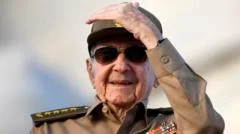
For nearly three decades, the families of four men have waited for a moment like this. On Wednesday, the United States government delivered it — charging former Cuban President Raúl Castro with murder for ordering the 1996 downing of two civilian planes, an act that killed four people and sent shockwaves through the Cuban-American community.
The indictment, unsealed in a federal court in Florida, accuses the 94-year-old Castro and five others of conspiracy to kill U.S. nationals, murder, and destruction of aircraft. It is the first time a former Cuban head of state has faced criminal charges in the United States, and it marks a dramatic escalation in the long and bitter history between the two nations.
What Happened: The 1996 Downing of Brothers to the Rescue Planes
The charges stem from an incident that occurred on February 24, 1996. Two small civilian planes operated by Brothers to the Rescue, a U.S.-based humanitarian organization, were shot down by Cuban fighter jets over international waters north of Cuba.
The group, founded by Cuban-American pilot José Basulto, was known for flying missions to search for Cuban rafters attempting to flee the island. On that day, the Cuban military fired missiles at the unarmed Cessna 337 Skymaster aircraft, killing all four men aboard: Carlos Costa, Mario de la Peña, Pablo Morales, and Armando Alejandre Jr.
According to the indictment, the attack was ordered at the highest levels of the Cuban government. Prosecutors allege that Raúl Castro, then the head of Cuba's armed forces, and his brother Fidel Castro, the country's longtime leader, gave the direct order to shoot down the planes.
Why This Matters Right Now
This is not just a legal filing. It is a political earthquake. The charges come at a time when U.S.-Cuba relations are already at their lowest point in decades. The Trump administration has aggressively tightened sanctions, restricted travel, and labeled Cuba a state sponsor of terrorism.
For the Cuban-American community in South Florida, the indictment is deeply personal. Many have waited 30 years for accountability. For the families of the four victims, it is a moment of validation — but also a reminder that justice, when it comes, can take a lifetime.
For Raúl Castro, now 94 and living in Cuba, the charges are largely symbolic. He is unlikely to ever face a U.S. courtroom. But the indictment sends a clear message: the United States has not forgotten, and it will not let time erase what happened.
How the Charges Unfolded
The indictment was unsealed on Wednesday, May 20, 2026, at a press conference in Miami led by Acting Attorney General Todd Blanche. Standing alongside federal prosecutors and FBI officials, Blanche described the 1996 attack as a "cold-blooded murder" and vowed to pursue justice for the victims.
"These charges make clear that the United States will never forget the four men who lost their lives, and we will hold those responsible accountable — no matter how long it takes or how powerful they are," Blanche said.
The five other individuals charged alongside Castro include high-ranking Cuban military and intelligence officials, though their names have not yet been publicly released. The indictment alleges that all six defendants conspired to kill U.S. nationals and destroy civilian aircraft.
Who Is Affected and What Officials Are Saying
The primary victims are the families of the four men killed. For them, the indictment is a long-awaited step. "We never gave up hope," said a family member of one victim, speaking on condition of anonymity. "We always believed that one day, someone would be held accountable."
U.S. officials have framed the charges as a matter of justice and deterrence. "This sends a message to any regime that thinks it can attack American citizens with impunity," a senior Justice Department official said.
In Cuba, the government has not yet officially responded. However, analysts expect a sharp condemnation, with Havana likely calling the charges a politically motivated act of aggression by the Trump administration.
What We Know So Far — and What Remains Unclear
What we know:
- Raúl Castro and five others have been indicted on federal charges in Florida.
- The charges include conspiracy to kill U.S. nationals, murder, and destruction of aircraft.
- The indictment stems from the February 24, 1996, downing of two Brothers to the Rescue planes.
- Four men were killed in the attack.
- The charges were unsealed on May 20, 2026.
What remains unclear:
- Whether the U.S. will seek extradition of any of the accused — a near-impossible task given Cuba's refusal to cooperate.
- The full list of co-defendants and their specific roles.
- How the Cuban government will formally respond.
- Whether the charges will have any practical legal consequences, given that Castro is unlikely to ever appear in a U.S. court.
Risks, Concerns, and the Balanced View
While the indictment is a powerful symbolic move, it also carries risks. Critics argue that the charges are largely performative, designed to score political points rather than achieve actual justice. "This is a press release masquerading as a prosecution," said one legal analyst. "There is zero chance Raúl Castro will ever stand trial in the United States."
Others worry that the indictment could further destabilize U.S.-Cuba relations, making it even harder for diplomats to engage with Havana on issues like migration, trade, and human rights.
On the other hand, supporters say the charges are necessary to uphold the rule of law and send a message that attacks on American citizens will not be forgotten. "Justice is not just about punishment — it's about acknowledgment," said a human rights advocate. "The families deserve to know that their government has not abandoned them."
Why Similar Trends Are Growing
The indictment fits a broader pattern of the U.S. using legal tools to target foreign leaders accused of human rights abuses. In recent years, the Justice Department has brought charges against figures from countries like Venezuela, Iran, and Syria, often using statutes that allow prosecution for crimes against U.S. nationals abroad.
This approach has been criticized as "lawfare" by some, but it has also been embraced by victims' families and human rights groups as a way to hold powerful individuals accountable when diplomatic avenues fail.
"These charges make clear that the United States will never forget the four men who lost their lives, and we will hold those responsible accountable — no matter how long it takes or how powerful they are." — Acting Attorney General Todd Blanche
What Readers, Users, or Investors Should Know Now
For the general public, the key takeaway is that this is a historic but largely symbolic legal action. Raúl Castro is 94 years old and living in Cuba, which has no extradition treaty with the United States. The chances of him ever facing a U.S. jury are virtually zero.
However, the indictment could have practical consequences for U.S.-Cuba relations. Travel restrictions may tighten further, and any remaining diplomatic channels could close. For Cuban-Americans, the charges may deepen the emotional divide between those who support engagement with Havana and those who demand accountability.
For investors or businesses with interests in Cuba, the indictment is a reminder that the political environment remains highly volatile. Any hopes of normalized relations are likely on hold for the foreseeable future.
What Could Happen Next
In the short term, expect a strong condemnation from the Cuban government, possibly accompanied by new restrictions on U.S. diplomats or journalists in Havana. The Trump administration may use the indictment to justify further sanctions or to push for a tougher stance on Cuba at the United Nations.
In the long term, the charges are unlikely to result in any actual prosecution of Castro. But they could set a precedent for future cases against foreign leaders, and they will almost certainly become a rallying point for the Cuban-American community in the 2026 midterm elections.
Our Take: Why This Story Matters Beyond One Incident
This indictment is about more than four men who died 30 years ago. It is about the limits of justice, the power of memory, and the enduring pain of a community that has been waiting for accountability for three decades.
Whether or not Raúl Castro ever faces a courtroom, the charges serve as a reminder that the United States has not forgotten. And for the families of the victims, that acknowledgment — however delayed — matters deeply.
But the story also raises uncomfortable questions. Is symbolic justice enough? Can legal charges against a foreign leader who will never be extradited truly be called justice? Or is this simply a political gesture, designed to appeal to a key voting bloc in a swing state?
The answer, as with most things in U.S.-Cuba relations, is complicated. But one thing is clear: the memory of February 24, 1996, is not going away. And neither is the demand for accountability.
FAQs
What is Raúl Castro charged with in the US?
Raúl Castro has been indicted on charges of conspiracy to kill U.S. nationals, murder, and destruction of aircraft in connection with the 1996 downing of two civilian planes operated by Brothers to the Rescue.
Why is the US charging Raúl Castro now, 30 years later?
The charges were unsealed in May 2026 as part of the Trump administration's ongoing pressure campaign against the Cuban government. Officials say the timing reflects a commitment to justice, regardless of how much time has passed.
Will Raúl Castro ever be extradited to the US to face trial?
It is extremely unlikely. Cuba has no extradition treaty with the United States, and Raúl Castro remains a powerful figure in Cuba. The charges are largely symbolic, though they carry significant political weight.
What happened to the four men killed in the 1996 plane downing?
The four men — Carlos Costa, Mario de la Peña, Pablo Morales, and Armando Alejandre Jr. — were members of Brothers to the Rescue, a humanitarian group that searched for Cuban rafters. Their planes were shot down by Cuban fighter jets over international waters.