Hundreds of suspected cases are piling up in central Africa — but a World Health Organization doctor has just issued a chilling warning: the Ebola outbreak may be spreading far faster than anyone first realized. And the number of people already infected could be much, much higher than official reports suggest.
For weeks, health officials have been racing to contain what initially appeared to be a manageable cluster of infections. But now, with the WHO doctor's stark admission, the situation has taken a deeply worrying turn. The question on everyone's mind: how bad could this get?
What the WHO Doctor Is Saying About the Ebola Outbreak
The warning comes directly from a senior WHO doctor on the ground in central Africa. Speaking to reporters, the doctor expressed serious concern that the outbreak is not only larger than officially reported but is also spreading faster than containment efforts can keep up with.
"We are seeing signs that transmission is accelerating," the doctor said, according to reports. "The number of suspected cases is rising rapidly, and we fear the actual number of infections may be significantly higher than what we have confirmed."
The doctor's comments mark a significant escalation in the public health messaging around this outbreak. Until now, officials had been cautiously optimistic about containment. That tone has now shifted to one of urgent alarm.
Why This Matters Right Now
This is not just another health update. This warning matters because Ebola is one of the deadliest viruses known to humanity. With a fatality rate that can exceed 50% in some outbreaks, every undetected case represents a potential chain of new infections — and a risk of the outbreak spiraling out of control.
For people living in affected regions, the fear is immediate and personal. For the global community, the concern is that a rapidly spreading outbreak in central Africa could overwhelm already fragile health systems, trigger cross-border transmission, and require a major international emergency response.
The WHO doctor's warning also raises uncomfortable questions: if the outbreak is spreading faster than thought, what else are officials missing? And how prepared is the world to respond?
How the Outbreak Unfolded — and What Changed
The current outbreak was first detected several weeks ago in a remote region of central Africa. Initial reports suggested a small number of cases, and health authorities moved quickly to isolate patients and trace contacts.
But over the past week, the situation has deteriorated. The number of suspected cases has climbed into the hundreds. Health workers on the ground report that new cases are appearing in areas that were previously considered safe. Testing capacity remains limited, meaning many suspected cases cannot be confirmed quickly.
The WHO doctor's warning reflects a growing realization among health experts that the outbreak may have been spreading silently for longer than initially believed — and that the window for containment may be closing.
Who Is Affected and What Officials Are Saying
The outbreak is centered in a rural part of central Africa, but the exact location and affected communities have not been fully detailed in available reports. What is clear is that the most vulnerable populations — those with limited access to healthcare, clean water, and reliable information — are bearing the brunt of the crisis.
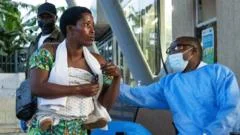
Health workers on the frontlines are reporting exhaustion and fear. Many are working around the clock with limited resources. The WHO has deployed additional teams to the region, but the scale of the response may need to increase dramatically if the outbreak continues to accelerate.
Officials have not yet declared a Public Health Emergency of International Concern (PHEIC), but the WHO doctor's warning suggests that such a declaration may be under serious consideration.
What We Know So Far — and What Remains Unclear
What we know:
- Hundreds of suspected Ebola cases have been reported in central Africa.
- A WHO doctor has publicly warned that the outbreak may be spreading faster than first thought.
- Health officials fear the actual number of cases may be much higher than confirmed reports.
- Containment efforts are underway but facing significant challenges.
What remains unclear:
- The exact number of confirmed cases and deaths.
- The specific geographic spread of the outbreak.
- Whether the outbreak has crossed international borders.
- The strain of Ebola virus involved (Zaire, Sudan, or another).
- The timeline for a potential PHEIC declaration.
This uncertainty is itself a cause for concern. In past outbreaks, delays in understanding the true scale of an epidemic have led to catastrophic consequences.
Risks, Concerns, and the Balanced View
The risks are clear and serious. A fast-spreading Ebola outbreak in a region with weak health infrastructure could lead to thousands of infections, hundreds of deaths, and a prolonged humanitarian crisis. The psychological toll on affected communities — fear, stigma, mistrust of health authorities — can also hamper response efforts.
However, it is important to note that the situation is still evolving. The WHO doctor's warning is based on early indicators, not confirmed data. Some experts caution that the perceived acceleration could be due to improved surveillance and reporting rather than a genuine increase in transmission.
Still, the cautious view is that it is better to overreact now than to underreact later. The history of Ebola outbreaks — including the devastating 2014–2016 West Africa epidemic — shows that early warnings, even if imperfect, save lives.
Why Similar Trends Are a Growing Concern
This is not the first time an Ebola outbreak has surprised health officials. In 2014, the virus spread silently for months before the world realized the scale of the crisis. In 2018, an outbreak in the Democratic Republic of Congo was complicated by conflict and community mistrust.
The pattern is troubling: each new outbreak seems to reveal gaps in surveillance, response capacity, and international coordination. The WHO doctor's warning is a reminder that despite advances in vaccines and treatments, the fundamental challenge of detecting and containing Ebola in remote, resource-limited settings remains.
"We are seeing signs that transmission is accelerating. The number of suspected cases is rising rapidly, and we fear the actual number of infections may be significantly higher than what we have confirmed." — WHO doctor on the ground in central Africa
What Readers, Communities, and Health Officials Should Know Now
For people in affected regions, the most important steps are to follow public health guidance: report symptoms immediately, avoid contact with bodily fluids of infected individuals, and support contact tracing efforts. Vaccination campaigns, if available, should be prioritized for frontline workers and high-risk communities.
For the global community, this warning is a call to action. Increased funding, logistical support, and technical assistance are urgently needed. The window for containment may be narrowing, but it is not yet closed.
For readers everywhere, this story is a reminder that infectious diseases do not respect borders. What happens in central Africa today can affect global health security tomorrow.
What Could Happen Next
In the coming days and weeks, several developments are possible:
- Escalation of the response: The WHO may declare a PHEIC, triggering a larger international mobilization.
- Increased case numbers: As surveillance improves, confirmed case counts are likely to rise significantly.
- Cross-border spread: Neighboring countries may report their first cases, raising the stakes for regional containment.
- Vaccine and treatment deployment: Experimental vaccines and therapeutics may be rushed to the region, though logistical challenges remain.
The next few weeks will be critical. If the outbreak is truly spreading faster than thought, the decisions made now will determine whether this becomes a contained crisis or a full-blown epidemic.
Our Take: Why This Story Matters Beyond One Outbreak
The WHO doctor's warning is not just about one outbreak in one region. It is a test of the global health system's ability to detect, respond to, and contain emerging infectious diseases. In an era of climate change, deforestation, and increased human-animal contact, the risk of new outbreaks is only growing.
This story matters because it forces us to confront an uncomfortable truth: despite all our technological advances, we are still vulnerable to a virus that was first identified nearly 50 years ago. The lessons of past outbreaks — invest in surveillance, build trust with communities, act fast — are being tested once again.
For now, the world watches and waits. But the WHO doctor's warning is a clear signal: the time for complacency is over.
FAQs
Is the Ebola outbreak really spreading faster than first thought?
According to a WHO doctor on the ground in central Africa, yes. The doctor has warned that the outbreak may be spreading faster than initially believed, with hundreds of suspected cases and fears the actual number could be much higher.
How many Ebola cases have been reported so far?
Hundreds of suspected cases have been reported, but the exact number of confirmed cases has not been fully disclosed. Health officials fear the true number of infections may be significantly higher than official reports suggest.
What is the WHO doing about the Ebola outbreak?
The WHO has deployed additional teams to the affected region and is working with local health authorities to contain the outbreak. The organization is also considering whether to declare a Public Health Emergency of International Concern (PHEIC).
Should people outside central Africa be worried about this Ebola outbreak?
While the immediate risk to people outside the affected region is low, the WHO doctor's warning highlights the potential for the outbreak to spread if not contained quickly. Global health security depends on rapid and effective response to outbreaks wherever they occur.