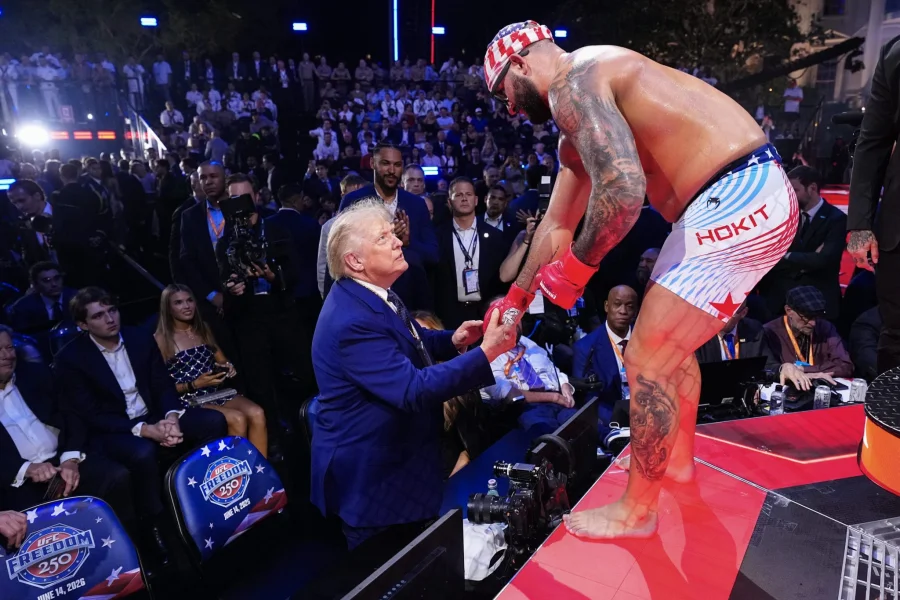
When UFC fighters stepped into the octagon on the White House South Lawn for Trump’s “Freedom 250” birthday spectacle, they expected a historic payday. What they didn’t expect was the currency: instead of U.S. dollars, the winners received bonuses in USD1 stablecoins — a digital token issued by World Liberty Financial, the Trump family’s cryptocurrency venture.
How the White House UFC Crypto Payment Worked
The event, held on the South Lawn, featured a series of fights that drew national attention. Winners received record bonuses, but the payout method raised immediate questions. The USD1 stablecoin is designed to maintain a 1:1 peg with the U.S. dollar, but it’s issued and managed by World Liberty Financial — a business co-founded by the Trump family. Fighters were reportedly given instructions on how to set up wallets to receive the tokens.
Why This Payment Structure Raises Ethics Red Flags
Richard Painter, who served as chief White House ethics lawyer under President George W. Bush, told reporters the arrangement would be illegal for most federal officials. “If a Treasury secretary had a financial interest in World Liberty and then participated in any government matter that benefited that business, that would be a crime,” Painter said. The gap, he explained, is that the fighters are private individuals, not government employees — so the usual conflict-of-interest laws don’t apply to them. But the event itself was held on White House grounds, with the president present, creating an unprecedented overlap of government ceremony and family business promotion.
The Legal Gap That Allows This Arrangement
Federal ethics laws — including the Ethics in Government Act and criminal conflict-of-interest statutes — are designed to prevent government officials from using their positions for personal financial gain. However, these laws don’t clearly extend to private individuals who receive payments from a president’s family business during a White House event. Painter noted that the arrangement exploits what he calls a “blind spot” in the law: the fighters aren’t federal employees, so the usual prohibitions don’t apply, even though the event’s location and presidential involvement create an appearance of impropriety.
What This Means for Fighters and the UFC
For the fighters, receiving crypto instead of cash introduces practical complications. They must set up digital wallets, manage private keys, and potentially pay capital gains taxes if the stablecoin’s value fluctuates before conversion to dollars. The UFC, which has a long-standing relationship with Trump dating back to his casino days, did not comment on whether fighters were given the option to receive U.S. dollars instead. Some fighters may have been unaware of the payment method until after the event.
World Liberty Financial and the Trump Family Crypto Business
World Liberty Financial launched in 2024 as a decentralized finance platform backed by Donald Trump Jr., Eric Trump, and other family members. The USD1 stablecoin is its flagship product, designed to compete with established stablecoins like USDC and USDT. The White House event provided an unprecedented marketing opportunity — placing the token directly in the hands of high-profile athletes on national television.
Confirmed Facts vs What Remains Unclear
Confirmed: Fighters received bonuses in USD1 stablecoins issued by World Liberty Financial. The event was held on the White House South Lawn. Richard Painter has publicly stated the arrangement exploits a legal gap. Unclear: Whether fighters were given a choice of payment method. Whether any White House ethics review was conducted before the event. Whether the Trump family directly profited from the payments. Whether any federal agency will investigate the arrangement.
Risks and Balanced View
Supporters of the arrangement argue that private businesses have the right to sponsor events and choose payment methods, and that fighters voluntarily accepted the terms. Critics, including Painter, say the location and presidential involvement create an unavoidable conflict of interest. The broader concern is that the arrangement sets a precedent for future White House events tied to family businesses — potentially normalizing what would be illegal for any other administration.
Wider Pattern: Trump Family Business and Government Events
This isn’t the first time Trump family businesses have intersected with official government events. During his first term, Trump faced criticism for hosting political and diplomatic events at his hotels and golf clubs. The UFC crypto payment represents a new frontier — using a digital asset tied directly to a family venture as currency at a White House function. Ethics watchdogs say the pattern raises systemic questions about the separation between the presidency and private enterprise.
What Fighters and Event Participants Should Know
For athletes or performers invited to future White House events, experts recommend clarifying payment methods in writing before participation. Crypto payments carry tax implications, volatility risk (even for stablecoins), and technical complexity. Fighters who received USD1 should consult tax professionals about reporting requirements and consider converting to U.S. dollars promptly to avoid exposure to any de-pegging risk.
Future Outlook: Could the Law Change?
Painter and other ethics experts have called for Congress to close the legal gap by extending conflict-of-interest rules to cover private individuals who receive payments from a president’s family businesses during official events. However, with the current administration controlling both chambers, such legislation appears unlikely in the near term. The issue may resurface if a future administration with different political alignment revisits ethics reform.
Our Take
The White House UFC crypto payment is a textbook case of a legal gap being exploited for commercial gain. While the fighters may not have broken any laws, the arrangement undermines public trust in the separation between government functions and private business interests. The fact that the payment method — a stablecoin from a family venture — was chosen over standard U.S. dollars makes the intent difficult to defend. This story matters not because of the amount paid, but because of the precedent it sets for how presidential power can intersect with family commerce in the digital age.
Frequently Asked Questions
Did UFC fighters actually receive Trump family stablecoins at the White House?
Yes. Fighters at the “Freedom 250” event on the White House South Lawn received bonuses in USD1 stablecoins issued by World Liberty Financial, the Trump family’s cryptocurrency business, instead of U.S. dollars.
Why is this arrangement considered an ethics issue?
Former White House ethics lawyer Richard Painter says the payment would be illegal for federal officials because it directly benefits a president’s family business. However, a gap in the law means private individuals like fighters aren’t covered by the same conflict-of-interest rules.
What is USD1 stablecoin?
USD1 is a synthetic dollar or stablecoin issued by World Liberty Financial, a decentralized finance platform backed by the Trump family. It is designed to maintain a 1:1 value with the U.S. dollar.
Could the fighters have chosen to be paid in U.S. dollars instead?
It is unclear whether fighters were given a choice. The UFC and World Liberty Financial have not publicly commented on whether alternative payment methods were offered.