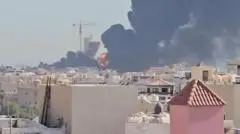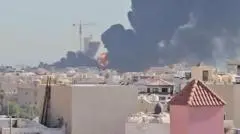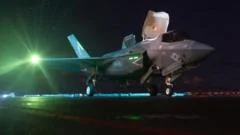
President Donald Trump has confirmed that US military strikes targeted Iran in honour of American soldiers killed in previous attacks, escalating tensions across the Middle East. The announcement came as Iran retaliated with attacks in Syria and Jordan, and two ships reportedly exploded in the strategic Strait of Hormuz — a critical chokepoint for global oil shipments.
What Trump Said About the Strikes
Trump said the strikes were carried out as a tribute to American soldiers who lost their lives in earlier incidents linked to Iranian-backed forces. "We hit them in honour of our fallen heroes," he stated, without specifying the exact targets or scale of the operation. The statement marks a rare direct acknowledgment of US military action against Iran.
Iran's Retaliation: Attacks in Syria and Jordan
In response, Iran launched attacks targeting positions in Syria and Jordan, according to initial reports. The strikes appear to be a coordinated retaliation, though details on casualties or damage remain unverified. The choice of targets suggests Iran is seeking to expand the conflict beyond direct US-Iran confrontation.
Strait of Hormuz Explosions — What Happened
Two ships reportedly exploded in the Strait of Hormuz, a vital waterway for global oil trade. The cause of the explosions is unclear, but the timing — coinciding with the US-Iran escalation — raises concerns about potential disruption to energy supplies. No group has claimed responsibility, and investigations are ongoing.
Who Is Affected and Why It Matters
The escalation directly threatens regional stability and global energy markets. The Strait of Hormuz sees about 20% of the world's oil pass through daily. Any sustained disruption could spike oil prices, affecting consumers and economies worldwide. Civilians in Syria, Jordan, and Iran face heightened risk of collateral damage.
Official Responses and Unverified Claims
US officials have not released detailed operational updates. Iran's government has condemned the US strikes but not confirmed its own retaliation. Independent verification of the Strait of Hormuz explosions is pending. Both sides have a history of propaganda, so caution is warranted.
What This Means for US-Iran Relations
The strikes represent a significant escalation in the long-running shadow war between the US and Iran. Trump's framing — honouring fallen soldiers — may be intended to justify military action domestically, but it risks triggering a broader regional conflict. Iran's retaliation suggests it will not back down easily.
Confirmed Facts vs What Remains Unclear
Confirmed: Trump stated US strikes hit Iran in honour of killed soldiers. Iran responded with attacks in Syria and Jordan. Two ships exploded in the Strait of Hormuz. Unclear: Exact targets, casualties, damage, and whether the Strait explosions are directly linked to the strikes. All claims about casualties are unverified.
Risks and Balanced View
The situation carries high risks of miscalculation. Critics warn that honour-based justifications for military action can escalate conflicts without clear strategic goals. Supporters argue the strikes deter future attacks on US personnel. The Strait of Hormuz explosions could be accidental or unrelated, but the timing fuels suspicion.
Wider Pattern of US-Iran Tensions
This is not the first time the US has struck Iranian targets. Previous administrations have targeted Iranian-backed militias in Iraq and Syria. Trump's direct mention of Iran marks a shift from proxy warfare to open confrontation, mirroring his earlier decision to kill Qasem Soleimani in 2020.
What Should Readers Do Now
Monitor official updates from the US Department of Defense and Iran's Foreign Ministry. Avoid unverified social media claims. For those in the region, follow local safety advisories. Investors should watch oil price movements and geopolitical risk assessments.
Future Outlook
The next 48 hours are critical. If Iran escalates further, the US may respond with additional strikes. Diplomatic channels remain open but strained. The Strait of Hormuz situation could trigger international naval intervention. A full-scale war is not inevitable, but the risk is higher than in years.
Our Take
This is a dangerous moment. Trump's honour-based framing may resonate with his base but does not reduce the risk of unintended escalation. Iran's retaliation shows it is willing to expand the battlefield. The Strait of Hormuz explosions — whether linked or not — highlight how quickly a regional crisis can become a global one. The world is watching, and the stakes could not be higher.
Frequently Asked Questions
Why did Trump say the US strikes hit Iran in honour of soldiers?
Trump framed the strikes as a tribute to American soldiers killed in previous attacks linked to Iranian-backed forces, aiming to justify the military action as a moral obligation.
What did Iran do in response to the US strikes?
Iran launched attacks in Syria and Jordan, according to reports. The exact targets and casualties are unverified, but the retaliation signals a direct escalation.
What happened in the Strait of Hormuz?
Two ships reportedly exploded in the Strait of Hormuz, a critical oil shipping route. The cause is unclear, and no group has claimed responsibility. Investigations are ongoing.
Is this leading to a war between the US and Iran?
Not necessarily, but the risk of a broader conflict has increased significantly. Both sides have shown willingness to escalate, but diplomatic options remain available.