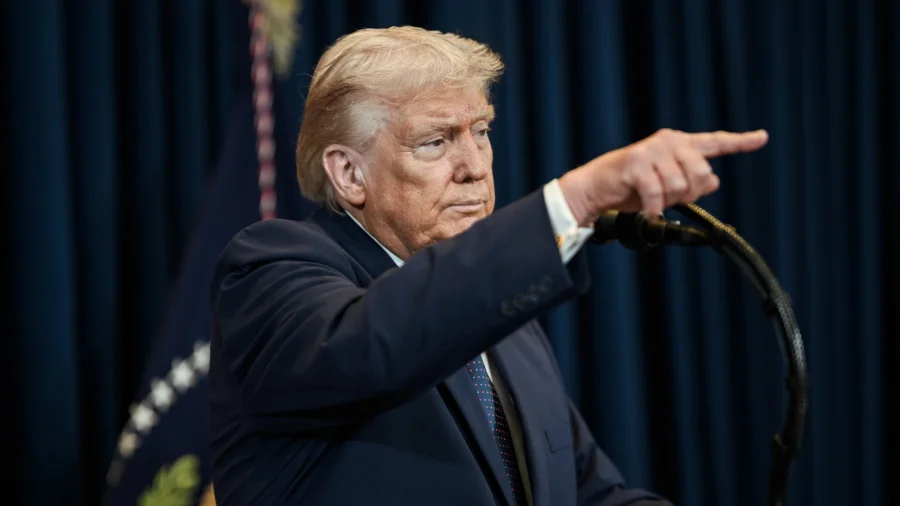
In a move that has sent ripples through the tech industry and beyond, President Donald Trump has postponed the signing of an executive order that would have given the U.S. government significant new powers to oversee advanced artificial intelligence models. The decision, confirmed by multiple sources including Reuters and The New York Times, comes after what reports describe as last-minute pressure from industry leaders who argued the rules could slow America's edge in the global AI race.
For millions of Americans who use AI tools daily — from chatbots to image generators — and for investors watching the sector's explosive growth, this delay is more than a political footnote. It signals a deepening debate about how to balance innovation with safety, and who gets to decide the rules for one of the most transformative technologies of our time.
Why This Matters Right Now
This isn't just a procedural delay. The postponed executive order was designed to create a voluntary framework where AI developers would engage with the U.S. government before releasing advanced models to the public. In plain terms, it was an attempt to build a safety net — a way for regulators to understand what powerful AI systems could do before they were unleashed on the world.
By postponing it, the administration has effectively paused that process. For consumers, this means no new federal guardrails are imminent. For companies like OpenAI, Google, and Meta, it's a clear signal that the current regulatory environment remains hands-off. And for critics of unchecked AI development, it's a worrying sign that profit and speed are being prioritized over caution.
How the Decision Unfolded
According to reports from The Wall Street Journal and Bloomberg, the executive order was initially scheduled for a signing ceremony. However, President Trump postponed it, stating that the order could slow the U.S. in the artificial-intelligence race. The White House has not released a detailed public statement, but the president's comments suggest a core tension: the desire to lead the world in AI versus the need to manage its risks.
The New York Times reported that the order would have given the government power to evaluate AI models before their release. The delay, sources say, followed intense lobbying from tech executives who argued that such oversight would stifle innovation and hand an advantage to competitors like China.
Who Is Affected and What Officials Are Saying
The immediate impact is felt across multiple groups. AI developers now face continued uncertainty about future regulations. Investors, who have poured billions into AI startups, are watching closely — a lighter regulatory touch could boost short-term valuations, but it also raises long-term risks of public backlash or catastrophic failures.
For the average user, the practical effect is subtle but real. Without a government review framework, there is no formal mechanism to assess whether a new AI model is safe, biased, or prone to generating harmful content before it reaches millions of devices. Officials have not commented extensively, but the president's stated reason — avoiding a slowdown in the AI race — frames the decision as a strategic one.
What We Know So Far — and What Remains Unclear
What we know: President Trump postponed the executive order. The order would have created a voluntary pre-release review process for advanced AI models. Industry leaders reportedly pushed for the delay. The president cited competitiveness concerns.
What remains unclear: Whether the order is permanently shelved or merely delayed. What specific changes industry leaders demanded. Whether any alternative regulatory approach is being considered. And how this decision aligns with other AI-related actions from the White House, including a previous order focused on eliminating state-level obstacles to national AI policy.
Risks, Concerns, and the Balanced View
The postponement has drawn sharp reactions. Supporters of the delay argue that heavy-handed regulation could kill innovation before it matures. They point to the rapid advances in AI from U.S. companies and warn that any slowdown could cede leadership to nations with fewer regulatory constraints.
Critics, however, see a dangerous gamble. Without oversight, they warn, companies may release systems with unknown vulnerabilities — from spreading disinformation to enabling cyberattacks or making biased decisions in hiring and healthcare. The absence of a government review process, they argue, leaves the public exposed to risks that developers themselves may not fully understand.
The balanced view is that both sides have valid points. The U.S. does face intense global competition in AI. But history shows that unchecked technological deployment can lead to crises that ultimately invite far more restrictive regulation. The question is whether a middle ground — voluntary, flexible oversight — can be achieved before a major incident forces a more draconian response.
Why Similar Trends Are Growing
This delay is part of a broader global pattern. Governments worldwide are struggling to keep pace with AI's breakneck development. The European Union has passed its AI Act, a comprehensive regulatory framework. China has implemented strict controls on algorithm and data use. The U.S., by contrast, has taken a more fragmented approach, with some states passing their own laws while the federal government remains largely hands-off.
The postponement of this executive order reinforces that fragmented approach. It suggests that, for now, the U.S. is prioritizing speed and industry leadership over establishing a unified national framework for AI safety. This could create a patchwork of rules — or no rules at all — as AI systems become more powerful and integrated into daily life.
- The EU's AI Act imposes strict requirements on high-risk AI systems, including transparency and human oversight.
- China's regulations require AI algorithms to be registered and reviewed for alignment with state values.
- The U.S. currently has no comprehensive federal AI law, relying instead on voluntary commitments and sector-specific rules.
"President Trump postponed the signing of an executive order that would have given the government more oversight over the artificial-intelligence industry." — The Wall Street Journal, via Facebook post
What Readers, Users, and Investors Should Know Now
For now, the regulatory landscape remains unchanged. Companies will continue to develop and release AI models without a federal pre-review requirement. Users should remain aware that the AI tools they use may not have been independently evaluated for safety or bias.
Investors should watch for signals about whether the order is permanently abandoned or merely delayed. Any future announcement of a revised order — or a complete shift toward deregulation — could significantly impact AI stocks and startup valuations. For concerned citizens, this is a moment to pay attention: the debate over AI oversight is far from over, and public opinion could shape what comes next.
What Could Happen Next
Several scenarios are possible. The administration could revive a modified version of the executive order, perhaps with weaker requirements. Alternatively, Congress could step in with its own legislation, though that process is slow and politically fraught. There is also the possibility that nothing happens — and the U.S. continues with no federal AI oversight for the foreseeable future.
Industry self-regulation may fill some of the gap, but voluntary commitments have a mixed track record. The coming months will reveal whether the delay was a tactical pause or a fundamental shift in the White House's approach to one of the most consequential technologies of the 21st century.
Our Take: Why This Story Matters Beyond One Incident
The postponement of this AI oversight executive order is not just a Washington story. It is a story about power, speed, and safety in an era where technology is outpacing policy. Every day, AI systems make decisions that affect people's lives — from loan approvals to medical diagnoses to the news they see. Who checks those systems? Who decides if they are safe?
This delay suggests that, for now, the answer is: the companies themselves. Whether that is a recipe for innovation or for disaster will depend on what happens next. But one thing is clear: the conversation about AI regulation is not going away. It is only getting louder.
FAQs
What did Trump's postponed AI executive order aim to do?
The order would have created a voluntary framework requiring AI developers to engage with the U.S. government before releasing advanced AI models to the public, giving regulators a chance to evaluate potential risks.
Why did President Trump delay the AI oversight executive order?
President Trump stated that the order could slow the U.S. in the global artificial-intelligence race. Reports also indicate that industry leaders applied last-minute pressure to postpone the signing.
What does the delay mean for AI regulation in the United States?
The delay means there is no immediate federal framework for reviewing advanced AI models before release. The U.S. continues to rely on voluntary industry commitments rather than binding government oversight.
Is the AI executive order permanently canceled or just postponed?
It is currently unclear whether the order is permanently shelved or merely delayed. No official announcement has been made about a revised timeline or alternative regulatory approach.