
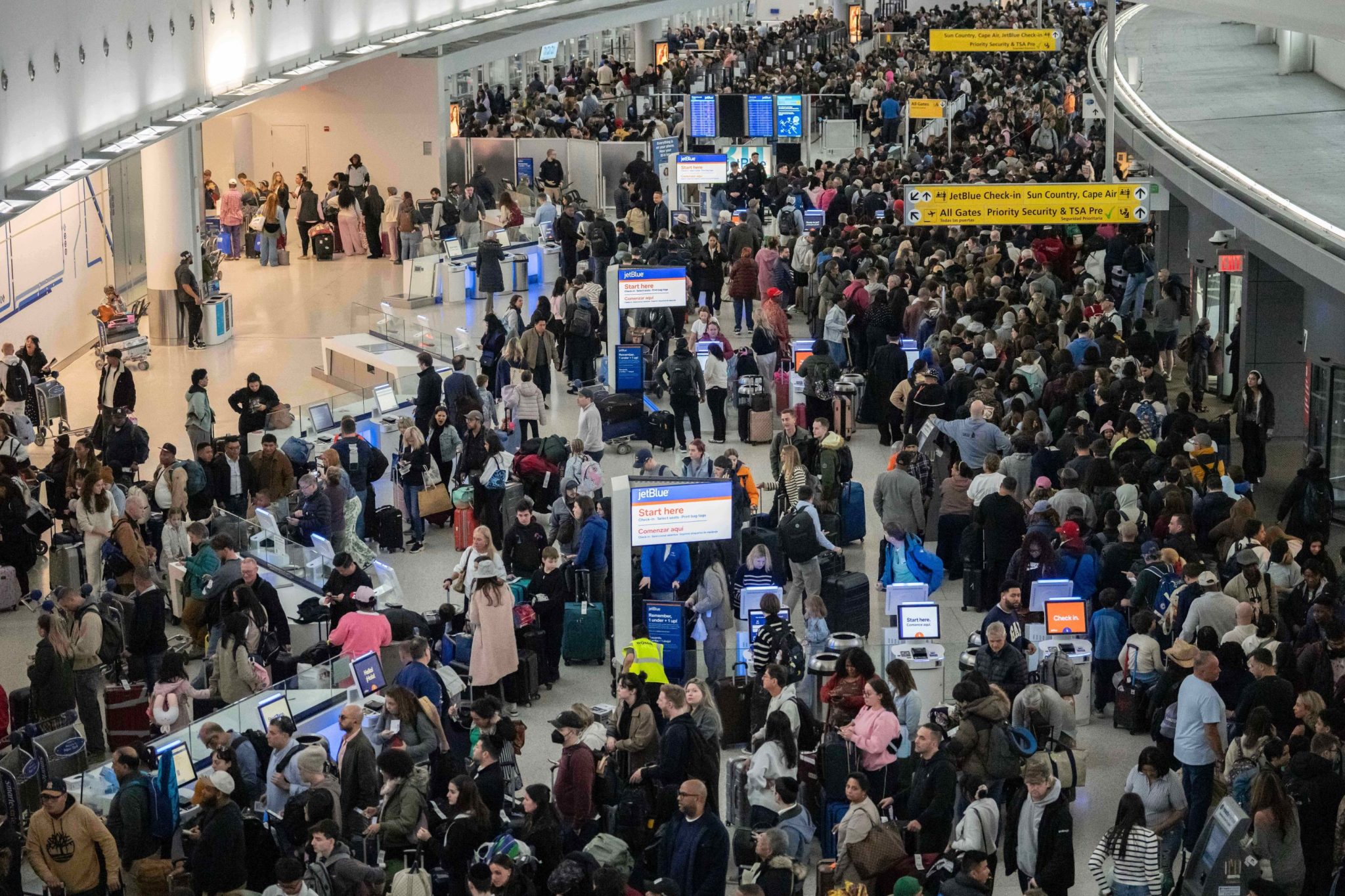
President Donald Trump ordered federal immigration agents to US airports on March 23, 2026, to guard exits and check IDs, aiming to reduce three-hour security lines caused by a government funding fight that left TSA workers without pay. Border Czar Tom Homan said these officers will take over basic tasks so unpaid screeners can focus on bag checks. This move comes as travelers at major hubs like Atlanta and New York face massive crowds and missed flights.
ICE agents to take over exit lanes and ID checks
White House border czar Tom Homan announced that U.S. Customs and Immigration Enforcement (ICE) agents will begin their new airport duties immediately. These agents will not run X-ray machines or search bags because they do not have the specific technical training for those tasks. Instead, they will stand at exit lanes to stop people from entering the wrong way and check passenger identification at the start of security lines.
Homan told CNN and Fox News that he is working with leaders from both ICE and the Transportation Security Administration (TSA) to decide which airports need the most help. He said the priority is large airports where travelers currently wait for three hours or more. Homan described the immigration officers as a "force multiplier" who can free up TSA staff to handle the actual screening of passengers and luggage.
Trump confirmed the plan on social media, stating that ICE agents will help TSA workers who have stayed on the job despite the lack of pay. The president blamed Democrats for the situation, as the two parties remain stuck in a fight over the Department of Homeland Security budget. Homan said he would have a final list of which agents are going to which airports by the end of the day on Sunday.
Budget fight leaves TSA workers without paychecks
The current crisis started last month when Congress failed to renew funding for the Department of Homeland Security (DHS). This funding gap affected hundreds of thousands of workers, including those in the TSA, the Secret Service, and the Coast Guard. While these employees are required to work because their jobs are essential for safety, they have not received a paycheck since the funding expired.
Democrats in Congress have refused to pass a new budget unless the administration changes how immigration agents behave during enforcement actions. This standoff has led to a leadership shuffle within the DHS. Senator Markwayne Mullin, a Republican from Oklahoma, is currently moving through the confirmation process to become the next DHS secretary. He is expected to replace Kristi Noem, whose time leading the agency was marked by frequent changes and internal tension.
Mullin has told senators that he intends to provide a steady hand for the agency during this period of high stress. The Senate held a rare weekend session to move his nomination forward, with a final vote expected as early as Monday night. Until a new secretary is confirmed and a budget is passed, the agency must find ways to operate with limited resources and an angry workforce.
Three-hour waits at Atlanta and JFK airports
The impact of the unpaid workforce is most visible at the nation's busiest travel hubs. At Hartsfield-Jackson International Airport in Atlanta, security lines wrapped from one end of the building to the other on Sunday morning. Travelers like 43-year-old Blake Wilbanks arrived more than two hours early for flights, hoping to make it through the crowds in time to board.
At John F. Kennedy International Airport in New York, the scene was described by witnesses as chaotic. Large groups of anxious passengers pushed toward checkpoints, forcing TSA staff to use megaphones to maintain order. Some travelers reported that they did not know if they should arrive two hours early or four hours early because wait times changed so quickly throughout the day.
Transportation Secretary Sean Duffy said the uncertainty is one of the biggest problems for the American public. He noted that the president wants to take away the "leverage point" that Democrats have by making travel easier despite the budget fight. By moving ICE agents into the airports, the administration hopes to stabilize wait times and reduce the pressure on the remaining TSA staff.
How ICE agents will change the screening process
The arrival of ICE agents will change the physical flow of airport security. Under the new plan, an ICE officer will stand at the document check station where passengers show their boarding passes and government IDs. This is a task that requires law enforcement oversight but does not require the specialized training used for detecting explosives or prohibited items in carry-on bags.
Another group of ICE agents will be stationed at the "exit breach" points. These are the lanes where arriving passengers leave the secure area of the airport. Normally, TSA agents must watch these lanes to ensure no one walks into the secure zone without being screened. By having ICE agents perform this guard duty, the TSA can move those officers back to the metal detectors and X-ray stations.
Homan noted that ICE agents are already present at many airports to investigate smuggling and other crimes. He argued that moving them into these public-facing roles is a logical use of their law enforcement background. However, the agents will remain in their ICE uniforms, which may be a new sight for domestic travelers who are used to seeing only TSA blue at the checkpoints.
Democrats warn of untrained agents at security gates
House Democratic leader Hakeem Jeffries of New York has criticized the plan, calling it a mistake to put ICE agents in these roles. He argued that the American people do not need "untrained" immigration officers managing airport security. Jeffries pointed to recent complaints about ICE conduct during operations in Minnesota and other states as a reason for concern.
There are also worries about how the presence of immigration agents might affect travelers who are in the country on various types of visas or those with pending immigration cases. While Homan said the agents are there to help with lines, their primary job is immigration enforcement. This creates a risk that the security line could become a site for immigration questioning, though the administration has not stated that this is the goal.
Homan himself admitted there are limits to what these agents can do. He stated clearly that he does not want ICE agents looking at X-ray machines because they lack the specific training to identify dangerous items on a screen. This admission suggests that if TSA staffing levels continue to drop because of the pay freeze, the ICE agents may not be able to fill the most critical safety gaps.
Senate moves to confirm Markwayne Mullin for DHS
The next major step in resolving the airport crisis is the confirmation of Senator Markwayne Mullin. The Senate is expected to vote on his nomination late Monday. If confirmed, Mullin will take over a department that is currently running without a budget and facing low morale among its thousands of employees. His first task will be to negotiate with Congress to get the DHS funded again.
Homan is also expected to release a detailed list of which airports will receive ICE reinforcements first. Travelers flying out of major cities like Chicago, Los Angeles, and Miami should expect to see these changes in effect by Tuesday morning. The administration has not said how long the ICE agents will remain at the airports, but Homan suggested they will stay as long as the lines remain a problem.
For now, the Department of Transportation is advising all travelers to check wait times online before leaving for the airport. Secretary Duffy warned that even with the extra help from ICE, the system is under heavy strain. Passengers should continue to arrive much earlier than usual to ensure they do not miss their flights during the transition.
Key Numbers and Facts
The confirmed figures behind this story at a glance.
Key Fact Detail Main person leading effortTom Homan, White House Border Czar Main action takenDeploying ICE agents to airport security lines Start dateMonday, March 23, 2026 Reported wait timesUp to 3 hours at major hubs Previous status of ICEFocused on criminal and smuggling investigations Current status of TSAWorking without pay due to budget impasse Primary effectICE guards exits and checks IDs to free up TSA Next confirmed stepSenate vote on Markwayne Mullin for DHS Secretary
A shift from criminal work to crowd control
Moving immigration agents from criminal investigations to guarding airport exits shows how much the budget fight has disrupted basic government functions. These officers are trained to track smugglers and handle complex legal cases, but they are now being used to manage lines and watch doors. This change may shorten wait times for travelers, but it also pulls law enforcement away from their primary duties at a time when border security remains a top political issue. The sight of ICE uniforms at domestic security gates will serve as a daily reminder to the public that the fight in Washington has reached the very start of their travel plans.
Frequently Asked Questions
Will ICE agents search my bags at the airport?
No, ICE agents will not be operating X-ray machines or searching carry-on bags. Border Czar Tom Homan stated that immigration officers do not have the specific technical training required for those tasks. Their roles are limited to guarding exit lanes and checking passenger identification at the start of the security line.
Why are airport security lines so long right now?
Lines are long because TSA workers have been working without pay since the Department of Homeland Security budget expired last month. This has led to staffing shortages and lower morale, causing wait times to reach three hours at some major airports. The deployment of ICE agents is an attempt to move more TSA staff to the actual screening stations.
Is it safe to travel while ICE agents are at the checkpoints?
The administration states that the ICE agents are there to increase security and act as a "force multiplier" for the TSA. However, Democratic leaders have raised concerns that these agents are not specifically trained for airport environments. Travelers should expect a heavy law enforcement presence and should continue to arrive at least three hours early for their flights.