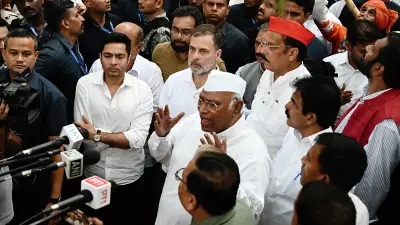


The split in the Trinamool Congress became formal on Sunday, but not in the way many expected. Instead of merging directly with the BJP, the party's rebel MPs have joined the Nationalist Citizens Party of India (NCPI), a little-known political outfit from Tripura. The move gives the obscure party, founded only in 2023, an unexpected foothold in West Bengal and a sizeable presence in Parliament overnight.
Why the NCPI route instead of a direct BJP merger?
The decision follows days of speculation over the future of the dissident MPs. While many expected them to join the BJP or seek recognition as a separate Trinamool faction, the rebels instead chose the NCPI route. This is widely seen as a way of avoiding legal complications under the anti-defection law while maintaining political proximity to the BJP-led NDA.
How the anti-defection law shaped this move
Under the anti-defection law, MPs who leave their party can be disqualified unless they merge with another party and at least two-thirds of the party's legislators agree. By joining the NCPI, the rebels may be attempting to create a legal shield, arguing that they have not directly joined the BJP but have instead formed a new political alignment. However, legal experts caution that the move could still face scrutiny if it is seen as a ruse to circumvent the law.
Who are the NCPI and what do they stand for?
The Nationalist Citizens Party of India (NCPI) was founded in 2023 and has so far had a limited presence in Tripura and Assam. The party's ideology and platform remain largely unclear, and it has not contested any major elections. The sudden influx of TMC rebels gives the NCPI an immediate parliamentary presence, but it also raises questions about the party's identity and future direction.
What this means for West Bengal politics
For West Bengal, the move signals a deepening of the political divide within the Trinamool Congress. The rebels, who were once part of the ruling party in the state, are now aligned with a party that has no grassroots presence in Bengal. This could create a new political dynamic, with the NCPI potentially acting as a vehicle for anti-Mamata Banerjee sentiment in the state.
Official response and political reactions
The Trinamool Congress has not yet issued an official statement on the development, but party insiders have described the move as a "betrayal" and a "desperate attempt" by the rebels to stay relevant. The BJP has also remained cautious, with no official comment on whether it will welcome the NCPI into the NDA fold. Political analysts believe the BJP may be waiting to see how the legal situation unfolds before making any moves.
The legal grey area: Is this a violation of the anti-defection law?
Legal experts are divided on whether the move violates the anti-defection law. Some argue that the rebels have effectively left the Trinamool Congress and joined another party, which could trigger disqualification proceedings. Others contend that the merger of a faction with another party is permissible under the law if it meets the two-thirds threshold. The matter may ultimately have to be decided by the Speaker of the Lok Sabha or the courts.
Confirmed facts vs what remains unclear
Confirmed: The rebel TMC MPs have formally joined the NCPI. The NCPI was founded in 2023 and has a limited presence in Tripura and Assam. The move is seen as a way to avoid direct merger with the BJP.
Unclear: Whether the move violates the anti-defection law. Whether the NCPI will align with the NDA. What the long-term political strategy of the rebels is. The exact number of MPs who have joined the NCPI.
Risks and balanced view
The move carries significant risks for the rebels. If the anti-defection law is invoked, they could face disqualification from Parliament. Additionally, joining an obscure party with no ideological clarity could alienate their voter base in West Bengal. On the other hand, the move allows them to maintain political proximity to the BJP without the legal baggage of a direct merger. Critics argue that the move is a "political gimmick" that undermines democratic accountability.
Wider trend: The rise of political realignments in India
This development is part of a broader trend of political realignments in India, where parties and factions are increasingly using legal and procedural maneuvers to navigate the anti-defection law. Similar moves have been seen in Maharashtra, Karnataka, and other states, where factions have merged with smaller parties to avoid disqualification. The trend raises questions about the effectiveness of the anti-defection law in preventing political defections.
What this means for voters in West Bengal
For voters in West Bengal, the move creates confusion about the political loyalties of their elected representatives. The rebels were elected on a Trinamool Congress ticket, and their decision to join an obscure party from Tripura may be seen as a betrayal of the mandate. Voters who supported the Trinamool Congress may feel disenfranchised, while those opposed to the party may see the move as a step towards a broader anti-Mamata alliance.
Future outlook: What could happen next
The coming weeks will be crucial. The Speaker of the Lok Sabha may decide on the disqualification petitions, if any are filed. The NCPI may seek to align with the NDA, which could give the rebels a formal place in the ruling coalition. Alternatively, the rebels could face legal challenges that could derail their plans. The situation remains fluid, and much depends on the political calculations of the BJP and the Trinamool Congress.
Our Take
The move by the TMC rebels to join the NCPI is a clever legal maneuver, but it is also a reflection of the growing instability in Indian politics. While the rebels may have found a way to avoid the anti-defection law, they have also raised questions about the integrity of the electoral mandate. For voters, the move is a reminder that political loyalties can shift overnight, often at the expense of democratic accountability. The story is far from over, and the legal and political battles ahead will determine whether this gamble pays off.
Frequently Asked Questions
What is the NCPI?
The Nationalist Citizens Party of India (NCPI) is a political party founded in 2023, with a limited presence in Tripura and Assam. It has not contested any major elections and its ideology remains unclear.
Why did the TMC rebels join the NCPI instead of the BJP?
The move is widely seen as a way to avoid legal complications under the anti-defection law while maintaining political proximity to the BJP-led NDA. A direct merger with the BJP could have triggered disqualification proceedings.
Does this move violate the anti-defection law?
Legal experts are divided. Some argue that the rebels have effectively left the Trinamool Congress and joined another party, which could trigger disqualification. Others contend that the merger of a faction with another party is permissible if it meets the two-thirds threshold.
What happens next for the rebel MPs?
The Speaker of the Lok Sabha may decide on any disqualification petitions. The NCPI may seek to align with the NDA, or the rebels could face legal challenges. The situation remains fluid.
How does this affect voters in West Bengal?
Voters who supported the Trinamool Congress may feel disenfranchised, as their elected representatives have joined an obscure party from another state. The move creates confusion about political loyalties and raises questions about democratic accountability.