

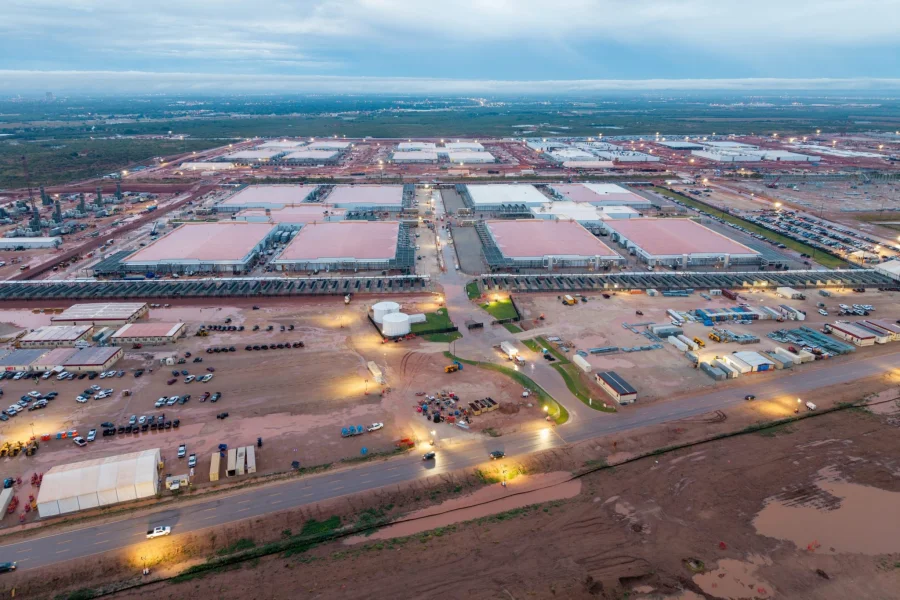
This summer has already produced three answers to questions the data center industry would have preferred to leave theoretical. In May, PJM Interconnection—the grid operator serving data-center-dense northern Virginia—received emergency authorization from the Energy Department to curtail power to data centers because of “atypically hot mid-May weather conditions.” In France, temperatures of 44.3° C forced nuclear plants to shut down—the same plants Macron called the “heart” of France’s AI ambitions. And on Monday, Zurich Insurance disclosed that severe weather is now the leading cause of loss in its U.S. data center portfolio.
Why this summer is a live test the industry didn’t want
The questions are no longer theoretical: Can data centers actually hold up in a warming world? And has the industry priced that in? Data centers are massive consumers of electricity—they need constant power for servers and even more for cooling systems. When heat waves strain grids and push temperatures beyond design limits, the entire model faces pressure.
PJM’s emergency move in Virginia: a warning signal
Northern Virginia is the world’s largest data center market, hosting a concentration of cloud and AI infrastructure. PJM’s emergency authorization to curtail power in May—during what the operator called “atypically hot mid-May weather conditions”—was a rare step. It signals that even before peak summer, the grid was struggling to balance demand from data centers with residential and commercial needs.
France’s nuclear paradox: heat shuts down AI’s power source
In France, temperatures hit 44.3°C, forcing nuclear plants to shut down. These are the same plants President Macron described as the “heart” of France’s AI ambitions. Nuclear power requires large amounts of water for cooling, and extreme heat can make river water too warm for safe operation. The shutdowns create a paradox: the very infrastructure meant to power AI is vulnerable to the climate conditions AI is helping to predict and mitigate.
Zurich Insurance: severe weather now top cause of data center losses
Zurich Insurance disclosed on Monday that severe weather has become the leading cause of loss in its U.S. data center portfolio. This is a significant shift. Historically, data center losses were driven by equipment failure, human error, or cyber incidents. The rise of weather-related claims—from heat, storms, and flooding—is forcing insurers to reassess risk models and premiums.
What this means for the industry’s expansion plans
Data center operators are racing to build new facilities to meet AI demand. But this summer’s events raise hard questions about location, design, and cost. Building in cooler climates or with more resilient cooling systems adds expense. Relying on grids already under stress introduces operational risk. And insurance costs may rise as weather losses accumulate.
Confirmed facts vs what remains unclear
Confirmed: PJM received emergency authorization to curtail power in May. Confirmed: French nuclear plants shut down at 44.3°C. Confirmed: Zurich Insurance says severe weather is now the top cause of U.S. data center losses. Unclear: How many data centers were actually curtailed by PJM. Unclear: Whether the French nuclear shutdowns directly affected AI data center operations. Unclear: How insurers will adjust premiums going forward.
Risks and balanced view
Critics argue that the data center industry has been slow to adapt to climate risks, prioritizing speed of deployment over resilience. Supporters point to investments in liquid cooling, renewable energy, and backup power systems. The tension is real: AI demand is growing faster than the industry can retrofit for a warming world. Some analysts warn that without adaptation, data center outages could become more frequent, affecting everything from cloud services to AI model training.
Wider trend: climate stress testing critical infrastructure
Data centers are not alone. Grids, nuclear plants, and insurance models across sectors are being tested by extreme weather. What makes data centers unique is their concentration—both geographically (northern Virginia) and in terms of power demand. The summer of 2025 may be remembered as the moment when the industry’s climate vulnerability became impossible to ignore.
Practical guidance for stakeholders
For data center operators: review cooling system design limits, diversify geographic locations, and stress-test backup power for extreme heat scenarios. For investors: examine insurance costs, grid reliability in key markets, and regulatory risks. For policymakers: consider grid modernization and emergency protocols that balance data center demand with residential needs during heat waves.
Future outlook
If this summer’s pattern continues, more emergency curtailments and weather-related losses are likely. The industry may accelerate adoption of liquid cooling, microgrids, and locations in cooler regions. Insurance premiums for data centers in heat-prone areas could rise significantly. The questions the industry preferred to leave theoretical are now being answered in real time.
Our take
This summer is not an anomaly—it is a preview. The data center industry built for a world that no longer exists. The combination of AI’s insatiable power demand and a warming climate creates a stress test that will only intensify. The companies that adapt fastest—by redesigning cooling, diversifying locations, and securing resilient power—will have a competitive advantage. Those that don’t may face operational disruptions, higher costs, and investor skepticism. The story is not about one heat wave; it is about whether an entire industry can keep its cool as the planet heats up.
Frequently Asked Questions
Why are data centers vulnerable to heat?
Data centers generate enormous heat from servers and require constant cooling. Extreme heat reduces the efficiency of air conditioning and can push cooling systems beyond their design limits, risking equipment failure or shutdown.
What happened with PJM and data centers in Virginia?
In May, PJM Interconnection received emergency authorization from the U.S. Energy Department to curtail power to data centers in northern Virginia due to “atypically hot mid-May weather conditions,” signaling grid stress.
How did France’s heat wave affect AI infrastructure?
Temperatures of 44.3°C forced nuclear plants to shut down. These plants were called the “heart” of France’s AI ambitions by President Macron, creating a direct link between heat vulnerability and AI power supply.
What did Zurich Insurance say about data center losses?
Zurich disclosed that severe weather is now the leading cause of loss in its U.S. data center portfolio, a shift from historical patterns where equipment failure or cyber incidents dominated.