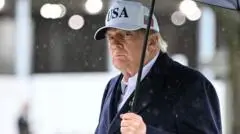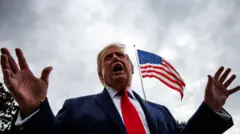
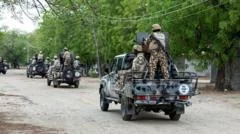
In a major blow to the Islamic State's global network, a senior leader of the terror group has been eliminated in a joint operation by United States and Nigerian forces. President Donald Trump confirmed the strike, identifying the target as Abu-Bilal al-Minuki, whom he described as the "second in command of ISIS globally" and the "most active terrorist in the world." The operation, carried out in West Africa, marks one of the most significant counterterrorism successes against the group in recent years.
Who Was Abu-Bilal al-Minuki and Why He Was a Priority Target
Abu-Bilal al-Minuki was not just any militant. According to US intelligence assessments, he was the operational mastermind behind several ISIS-linked plots across Africa and beyond. His role as the global second-in-command placed him at the heart of the group's strategic planning, recruitment, and regional expansion. Nigerian authorities had long identified him as a key figure in the Islamic State's West Africa Province (ISWAP), the faction responsible for some of the deadliest attacks in the Lake Chad Basin region. His elimination removes a leader who was actively coordinating attacks and inspiring new cells.
How the Joint US-Nigeria Operation Unfolded
While specific operational details remain classified, both US and Nigerian officials confirmed that the mission was a carefully coordinated effort involving intelligence sharing, surveillance, and precision strikes. The operation is believed to have taken place in a remote area of northern Nigeria, where ISWAP has maintained a significant presence despite years of military pressure. President Trump praised the collaboration, stating that the operation demonstrated the strength of the US-Nigeria security partnership. Nigerian President Bola Tinubu also confirmed the success, calling it a "victory for global peace and security."
Who Is Affected and Why This Matters Globally
The killing of al-Minuki sends a powerful message to ISIS networks worldwide. For local communities in northeastern Nigeria, where ISWAP has terrorized villages, kidnapped civilians, and disrupted livelihoods for years, this operation offers a glimmer of hope. For the international community, it represents a critical disruption of ISIS's ability to project power from its African strongholds. As the group has lost territory in the Middle East, it has increasingly turned to its African affiliates to sustain its global jihad. Removing a leader of al-Minuki's stature weakens that strategy significantly.
What US and Nigerian Authorities Said
President Donald Trump, in a statement, called the operation "a decisive blow against the enemies of civilization." He emphasized that the US would continue to work with partners to hunt down remaining ISIS leaders. Nigerian President Bola Tinubu described the operation as a "testament to the unwavering commitment of our armed forces and their American counterparts to rid the world of terrorism." The Pentagon later confirmed that no US or Nigerian personnel were harmed during the mission.
"This operation eliminates the most active terrorist in the world. We will never stop until the threat of ISIS is completely eradicated." — President Donald Trump
Legal and Policy Implications of the Strike
The operation raises important questions about the legal framework for cross-border counterterrorism strikes. The US has long maintained the authority to target senior terrorist leaders under the 2001 Authorization for Use of Military Force (AUMF). However, the strike in Nigeria, a sovereign nation with its own military capacity, highlights the evolving nature of counterterrorism partnerships. Legal experts note that such joint operations, when conducted with host nation consent, generally fall within accepted international law. The operation also underscores the growing reliance on intelligence-driven, precision strikes over large-scale ground deployments.
Why Similar Trends in ISIS Activity Are Growing in Africa
The elimination of al-Minuki comes amid a worrying trend: ISIS affiliates in Africa are becoming more active and more dangerous. According to recent UN reports, the Islamic State in West Africa Province (ISWAP) and the Islamic State in the Greater Sahara (ISGS) have expanded their operations, exploiting weak governance, poverty, and local conflicts. The group has shifted its focus from holding territory to guerrilla warfare, kidnappings, and attacks on military outposts. The killing of a senior leader like al-Minuki is a tactical victory, but analysts warn that the ideological appeal of ISIS remains potent, and new leaders will likely emerge.
- ISWAP has been responsible for thousands of deaths in Nigeria's northeast since 2015.
- The group has increasingly targeted humanitarian workers and aid convoys.
- ISIS global leadership has been actively directing African affiliates through encrypted communications.
What Readers Should Know Now
For the average reader, this operation is a reminder that the fight against global terrorism is far from over, but it is evolving. The success of the US-Nigeria partnership shows that intelligence sharing and joint operations remain effective tools. For those concerned about global security, this strike reduces, at least temporarily, the operational capacity of one of the world's most dangerous terror networks. It also highlights the importance of continued international cooperation in regions where instability can breed extremism.
What Could Happen Next
While the death of al-Minuki is a significant victory, counterterrorism experts expect ISIS to attempt a swift succession. The group's decentralized structure means that regional commanders may step up to fill the void. In the short term, there may be retaliatory attacks by ISWAP fighters seeking to prove their resilience. The US and Nigeria are likely to maintain heightened alert levels and continue intelligence operations to prevent any immediate backlash. Long-term, the focus will shift to addressing the root causes of extremism in the region: poverty, lack of education, and political marginalization.
Our Take: Why This Story Matters Beyond One Operation
This operation is not just about one man. It is a signal that the US and its partners are adapting to the changing geography of terrorism. As ISIS has been pushed out of its strongholds in Syria and Iraq, it has found fertile ground in Africa. The killing of Abu-Bilal al-Minuki demonstrates that the international community is willing to follow the threat wherever it goes. However, military operations alone cannot defeat an ideology. For lasting peace, the focus must also be on governance, development, and community resilience in the regions where groups like ISWAP recruit. This story matters because it shows both the power of cooperation and the enduring complexity of the fight against global terror.
FAQs
Who was Abu-Bilal al-Minuki?
He was a senior Islamic State leader, described by President Trump as the "second in command of ISIS globally" and the "most active terrorist in the world." He was a key figure in the Islamic State's West Africa Province (ISWAP).
Where did the operation take place?
The joint US-Nigeria operation took place in West Africa, specifically in a remote area of northern Nigeria where ISWAP has been active.
Was anyone else killed or injured in the operation?
According to official statements, no US or Nigerian personnel were harmed during the mission. The number of other casualties, if any, has not been disclosed.
Why is this operation significant?
This is one of the highest-profile eliminations of an ISIS leader in recent years. It disrupts the group's global command structure and weakens its ability to coordinate attacks from its African strongholds.
What is ISWAP?
ISWAP stands for the Islamic State's West Africa Province. It is an affiliate of the Islamic State that operates primarily in northeastern Nigeria and the Lake Chad Basin region. It split from Boko Haram in 2016 and has since become one of the most deadly extremist groups in the region.
Could there be retaliation for this strike?
Counterterrorism experts warn that ISWAP may attempt retaliatory attacks to demonstrate that it remains operational. Security forces in Nigeria and the region are expected to remain on high alert.