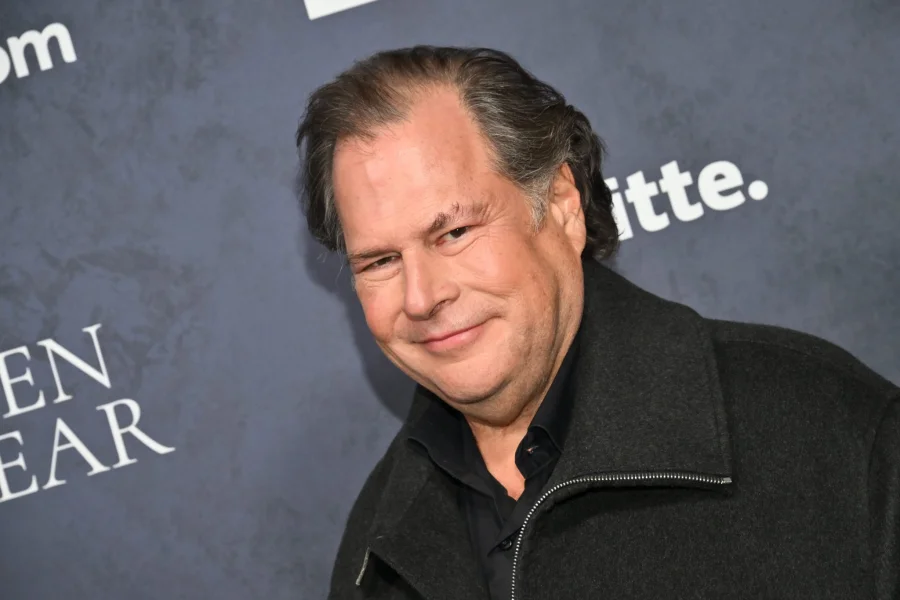
Salesforce just made a massive bet on itself — a record $25 billion bet, to be exact. But the way it's paying for that bet has sent a clear signal to the market that has many investors feeling uneasy. The cloud software giant, in a bold move to counter fears that its growth story is fading, has turbocharged its stock buyback program with a mountain of debt. The immediate payoff? A juicy boost to earnings per share. The hidden cost? A full-year cash flow growth outlook that's been slashed by roughly half.
Salesforce's $25 Billion Debt-Fueled Stock Buyback: A Record Move
Alongside its record first-quarter fiscal 2027 results, Salesforce announced it had commenced its largest-ever accelerated share repurchase (ASR) — a staggering $25 billion. This is not a slow, methodical buyback. An ASR is a rapid-fire transaction where a company buys a huge chunk of its own stock from an investment bank, which then borrows the shares to deliver immediately. It's a powerful tool to instantly boost earnings per share (EPS) by reducing the number of shares outstanding. This $25 billion ASR is part of a much larger, $50 billion stock buyback authorization that Salesforce's board approved back in February 2026. In the first quarter alone, the company returned a total of $27.5 billion to shareholders, with the vast majority — $27.1 billion — going toward this single, massive share purchase.
Why This Matters Right Now
This isn't just a financial maneuver; it's a high-stakes strategic message. Salesforce is trying to aggressively counter a growing narrative on Wall Street — the so-called "saaspocalypse." This term refers to the fear that traditional software-as-a-service (SaaS) companies are seeing their growth stall as customers shift spending toward generative AI. By pouring $25 billion into its own stock, Salesforce is essentially saying, "We believe our stock is undervalued, and we are so confident in our future that we are willing to go into debt to prove it." For investors, this creates a critical question: Is this a brilliant use of cheap debt to reward shareholders, or a risky gamble that prioritizes short-term stock price over long-term financial health?
How the Debt-Fueled Buyback Unfolded
The timeline of this massive financial operation began in February 2026, when Salesforce's board authorized a $50 billion share repurchase program. This was a huge number that immediately raised eyebrows. Then, in March 2026, the company took the first concrete step by issuing $25 billion in senior notes — essentially, corporate debt. This debt was the fuel for the buyback engine. On Wednesday, alongside its Q1 FY2027 earnings report, Salesforce confirmed it had used that debt to launch the $25 billion ASR. The speed and scale of the transaction are what make it so remarkable. The company didn't just announce a plan; it executed the largest single chunk of it in one go.
Who Is Affected and What Officials Are Saying
The most directly affected group is Salesforce's shareholders. For those who believe in the company's long-term prospects, the buyback is a positive signal that management thinks the stock is cheap. The immediate EPS boost is also a clear benefit. However, the move also impacts debt holders and potential future investors. By taking on $25 billion in new debt, Salesforce has increased its financial leverage, making it more sensitive to interest rate changes and economic downturns. While Salesforce CEO Marc Benioff has been a vocal advocate for the company's AI future, the official line on the buyback is that it's a disciplined capital allocation strategy to deliver shareholder value. The company has framed the reduced cash flow guidance as a direct, temporary consequence of the debt issuance, not a sign of underlying business weakness.
What We Know So Far — and What Remains Unclear
What We Know: Salesforce has launched a $25 billion ASR. It funded this by issuing $25 billion in debt. The company's full-year cash flow growth guidance has been cut by roughly 50% to account for the debt service costs. The buyback is part of a larger $50 billion authorization. Q1 FY2027 results were described as "record."
What Remains Unclear: The long-term impact on Salesforce's balance sheet is not yet fully known. Will the company continue to use debt for the remaining $25 billion of the authorization? How will the increased debt load affect Salesforce's ability to invest in R&D, particularly in the competitive AI space? And crucially, will the EPS boost from the buyback be enough to offset the slower cash flow growth in the eyes of the market?
Risks, Concerns, and the Balanced View
The primary risk is financial leverage. Taking on $25 billion in debt increases Salesforce's interest expense, which directly eats into cash flow. This is why the company had to slash its cash flow guidance. If interest rates remain high or the economy slows, this debt burden could become a significant drag on profitability. Critics argue that this money could have been better spent on acquisitions, R&D, or even returned to shareholders through a more sustainable dividend. The "balanced view" is that while the buyback is a powerful signal of confidence, it also introduces a new layer of financial risk that wasn't there before. The bullish perspective is that Salesforce is using cheap debt to buy back undervalued stock, a classic value-creation strategy. The bearish view is that it's a short-term fix that masks underlying growth challenges.
Why Similar Trends Are Growing
Salesforce is not alone in this strategy. Across corporate America, many large, cash-rich companies are turning to debt to fund massive stock buybacks. The logic is often the same: with stock prices under pressure and borrowing costs relatively manageable, buying back shares is seen as a more attractive investment than internal projects. This trend is particularly pronounced in the tech sector, where companies are facing a "growth scare" as the AI revolution reshapes spending priorities. The "saaspocalypse" narrative has put immense pressure on legacy SaaS companies to prove their relevance, and a massive buyback is one of the most dramatic ways to do so.
- Salesforce's $25 billion ASR is the largest in the company's history.
- The buyback is funded by $25 billion in newly issued senior notes.
- The company's full-year cash flow growth guidance was cut by approximately 50%.
- The move is part of a broader $50 billion buyback authorization approved in February 2026.
"Salesforce really wants to counter the narrative that an AI-related 'saaspocalypse' has endangered its growth." — Fortune
What Investors and Shareholders Should Know Now
For current and potential investors, the key takeaway is to look beyond the headline EPS boost. The critical metric to watch now is free cash flow. The company's guidance cut is a direct result of the debt, and investors need to see if cash flow can recover as the debt is paid down or refinanced. It's also important to monitor Salesforce's AI strategy. The buyback is a financial engineering move; the real long-term value will be created (or destroyed) by the company's ability to win in the AI market. Investors should ask: Is this buyback a sign of strength, or a sign that management has run out of better ideas to grow the business?
What Could Happen Next
In the near term, expect continued debate among analysts about the wisdom of this move. The stock price may remain volatile as the market digests the trade-off between higher EPS and lower cash flow. Salesforce could also announce further ASRs for the remaining $25 billion of its authorization. The company's next earnings call will be crucial, as management will face intense scrutiny over its capital allocation strategy and its plans to generate organic growth. The success of this gamble ultimately hinges on whether Salesforce's core business can grow fast enough to make the debt load feel manageable.
Our Take: Why This Story Matters Beyond One Incident
This story is a perfect case study of the tension between short-term shareholder returns and long-term corporate health. Salesforce's move is a high-stakes bet that its stock is undervalued and that its future is bright. But it's also a clear admission that the "saaspocalypse" narrative is real enough to warrant such a drastic response. For the broader market, it serves as a reminder that even the most dominant tech companies are not immune to the pressures of a rapidly changing landscape. The real question isn't whether the buyback will boost EPS this quarter, but whether it will help Salesforce build a stronger, more resilient company for the next decade.
FAQs
Why did Salesforce take on debt to buy back its own stock?
Salesforce took on $25 billion in debt to fund an accelerated share repurchase (ASR). The primary goal is to quickly reduce the number of shares outstanding, which instantly boosts earnings per share (EPS). This is a strategic move to signal confidence in the company's value and counter market narratives about slowing growth, even if it means increasing financial leverage.
How does the $25 billion buyback affect Salesforce's cash flow?
The debt taken on to fund the buyback comes with interest payments. To account for these new interest expenses, Salesforce has cut its full-year cash flow growth guidance by roughly 50%. This means the company expects its cash flow to grow at a much slower pace than it originally projected, directly due to the cost of the debt.
Is a debt-fueled stock buyback a good or bad sign for investors?
It's a mixed signal. A bullish view is that it shows management believes the stock is undervalued and is using cheap debt to create value for shareholders. A bearish view is that it's a risky financial engineering tactic that prioritizes short-term stock price over long-term financial health and could limit the company's ability to invest in future growth, especially in AI.
What is the "saaspocalypse" narrative that Salesforce is trying to counter?
The "saaspocalypse" is a term used to describe the fear that traditional software-as-a-service (SaaS) companies are facing a severe growth slowdown. The theory is that corporate customers are shifting their IT spending away from conventional cloud software and toward new generative AI tools and platforms, threatening the growth models of established players like Salesforce.