The world is watching with bated breath after Russian President Vladimir Putin issued a stark warning of retaliation, accusing Ukraine of a devastating attack on a student dormitory in the occupied city of Luhansk. The accusation, which has been flatly denied by Ukraine, threatens to dramatically escalate a conflict already marked by immense suffering. At least six people are reported dead, and the emotional fallout is already reverberating across the globe.
Putin's Retaliation Threat After Accusing Ukraine of Student Dormitory Attack
According to reports from Russian state media and officials, the incident occurred in the city of Luhansk, a region in eastern Ukraine that has been under Russian occupation since 2014. Russian officials claim that a Ukrainian drone strike hit a building housing students, resulting in multiple casualties, including children. In response, President Putin has publicly stated that he has ordered his military to "prepare options" for a retaliatory strike, framing the event as a "terrorist" act.
Why This Matters Right Now
This is not just another battlefield report. The accusation of targeting a civilian dormitory, especially one housing students, carries immense emotional and political weight. For the Kremlin, it provides a powerful narrative to justify further escalation and rally domestic support. For Ukraine, it is a dangerous accusation that could lead to a significant and unpredictable military response from Russia. The international community is now on edge, watching to see what form Putin's promised retaliation will take. The potential for a wider, more destructive phase of the war has just increased dramatically.
How the Incident and Accusation Unfolded
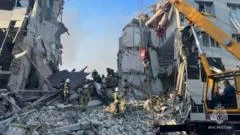
The timeline of events is still murky, with both sides presenting conflicting accounts. Russian officials were the first to report the attack, stating that a Ukrainian drone struck a student dormitory late in the evening. They released images and videos showing a heavily damaged building with rescue workers sifting through the rubble. The Russian Defense Ministry quickly blamed Ukraine's military, calling it a deliberate strike on a civilian target. Ukraine's military, for its part, has categorically denied the accusation. In a separate development, Ukraine claimed responsibility for a successful strike on Russia's elite "Rubicon" drone military unit, also located in the occupied east. The Kremlin has linked these two events, accusing Ukraine of indiscriminately targeting civilians.
Who Is Affected and What Officials Are Saying
The immediate victims are the students and residents of the dormitory in Luhansk, along with their families. The reported death toll of at least six, including children, has sent shockwaves through the region. Russian President Putin, in a televised address, stated, "This is a terrorist act against civilians. Our response will be severe." He has tasked the Russian General Staff with presenting a range of military options. Ukrainian officials have dismissed the Russian claims as a "provocation" and a "false flag" operation designed to justify further attacks on Ukrainian infrastructure and cities. The United Nations and other international bodies have called for restraint and an independent investigation, but the situation remains highly volatile.
What We Know So Far — and What Remains Unclear
What We Know:
- Russian President Putin has publicly vowed retaliation for a strike on a student dormitory in Luhansk.
- Russian officials report at least six fatalities, including children.
- Ukraine has denied responsibility for the attack on the dormitory.
- Ukraine has confirmed a separate strike on a Russian military drone unit in the same region.
- Putin has ordered his military to prepare options for a retaliatory strike.
What Remains Unclear:
- The exact circumstances of the dormitory strike and who was responsible.
- The verifiable number of casualties and the identities of the victims.
- The specific nature and scale of Russia's planned retaliation.
- The extent to which the dormitory was a purely civilian target or if it had any military association.
Risks, Concerns, and the Balanced View
The primary risk is a dramatic and unpredictable escalation of the war. Putin's vow of retaliation could lead to massive missile strikes on Ukrainian cities, targeting energy infrastructure or government buildings. There is also a risk of Russia using more powerful or unconventional weapons. From a balanced perspective, it is crucial to note the history of the conflict. Russia has been accused of numerous attacks on civilian infrastructure, including apartment buildings, hospitals, and schools. Critics argue that the Kremlin's outrage over this incident appears selective, given its own track record. However, regardless of the past, any attack on a student dormitory is a grave event. The key question remains: is this a genuine tragedy or a manufactured pretext for escalation? The lack of independent verification makes it impossible to say with certainty.
Why Similar Trends and Accusations Are Growing
This incident fits a disturbing pattern in modern warfare: the battle for narrative control. Both sides in the Ukraine conflict routinely accuse the other of targeting civilians. These accusations are powerful tools for shaping international opinion, justifying military actions, and maintaining domestic support. As the war grinds on, both Russia and Ukraine are increasingly using information warfare alongside kinetic operations. The targeting of a "student dormitory" is a particularly potent symbol, designed to evoke maximum outrage. This trend of high-stakes accusations is likely to continue as the conflict enters a potentially more dangerous phase.
"This is a terrorist act against civilians. Our response will be severe." — President Vladimir Putin, in a televised address.
What Readers and Observers Should Know Now
For those following the conflict, this is a critical moment. The next 24 to 48 hours will be crucial in determining the scale of Russia's response. It is important to treat all unverified claims from both sides with caution. Rely on official statements from neutral international bodies and verified news reports. For people in Ukraine, particularly in major cities, the threat of a massive retaliatory strike is very real. For the global community, this event underscores the fragility of the situation and the constant risk of a wider conflagration. The best course of action is to stay informed through credible sources and prepare for a period of heightened tension.
What Could Happen Next
The most likely scenario is a significant Russian missile and drone barrage targeting Ukrainian energy infrastructure and military command centers. Putin may also order strikes on government buildings in Kyiv as a symbolic act of retaliation. A more extreme, but less likely, scenario could involve a ground offensive or the use of a new weapon system. The international community will likely increase diplomatic pressure on both sides to de-escalate, but Putin's public vow makes backing down politically difficult. The world is now waiting to see if this accusation becomes the spark for a new, more devastating chapter in the war.
Our Take: Why This Story Matters Beyond One Incident
This story is a stark reminder of how quickly a war can escalate based on unverified claims and political calculations. Whether the attack on the dormitory was a tragic mistake, a deliberate Ukrainian strike, or a Russian false-flag operation, the consequence is the same: more death and a heightened risk of a wider war. The incident exposes the brutal reality that civilians remain the primary victims of this conflict, and that the battle for truth is as fierce as the battle on the ground. For the sake of millions of innocent people, we must hope that cooler heads prevail, but the rhetoric from Moscow suggests a very different path ahead.
FAQs
What did Putin say about the student dormitory attack?
President Putin accused Ukraine of a "terrorist" attack on a student dormitory in Luhansk and vowed a "severe" military retaliation. He has ordered the Russian military to prepare options for a response.
Did Ukraine admit to attacking the student dormitory?
No. Ukraine's military has categorically denied the Russian accusations. While Ukraine confirmed a separate strike on a Russian military drone unit, it stated it does not target civilian infrastructure.
How many people were killed in the Luhansk dormitory strike?
According to Russian officials, at least six people were killed, including children. These figures have not been independently verified by neutral sources.
What kind of retaliation is Russia expected to take?
While the exact nature is unknown, experts anticipate a large-scale missile and drone barrage targeting Ukrainian energy infrastructure, military command centers, or government buildings in Kyiv. The scale and intensity are expected to be significant.