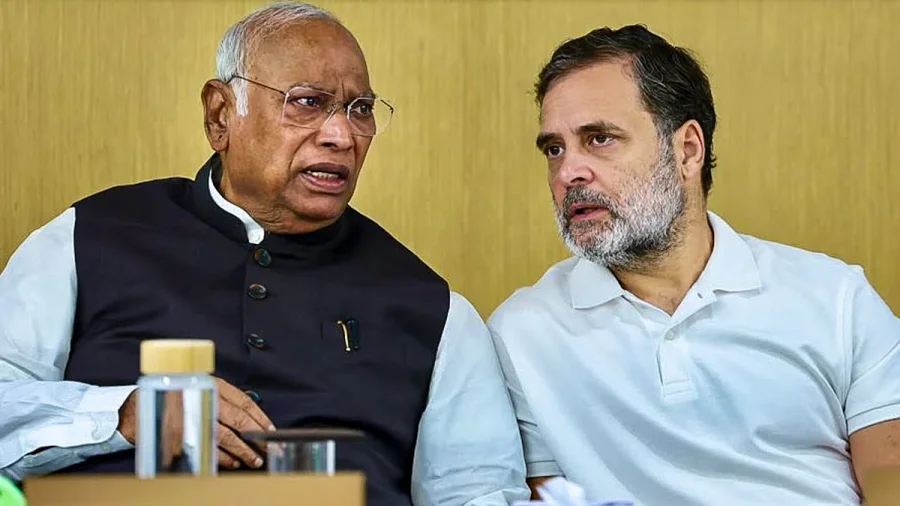
The political temperature in New Delhi rose on Tuesday as Leader of Opposition Rahul Gandhi levelled a serious charge against the electoral process, alleging "match-fixing" through Electronic Voting Machines (EVMs) and voter lists. Speaking at the Congress Working Committee (CWC) meeting, Gandhi did not just raise concerns—he issued a call to arms, urging his party to take its "resistance" from the streets to the floor of Parliament.
Rahul Gandhi's 'Match-Fixing' Charge: What Exactly Did He Say?
Addressing the top decision-making body of the Congress party, Rahul Gandhi claimed that "match-fixing" was taking place in elections through EVMs and voter lists. He asserted that the party's allegations of "vote chori" (vote theft) and electoral irregularities were increasingly being discussed by the public.
Gandhi's choice of words—"match-fixing"—evokes the language of sport, suggesting a predetermined outcome rather than a fair contest. He called on the Congress to continue its campaign of "virodh" (opposition) and "pratirodh" (resistance), signalling that the party intends to keep the pressure on the electoral machinery.
Why the Congress Is Taking the EVM Fight to the Streets and Parliament
The Congress party has long questioned the reliability of EVMs and the accuracy of voter lists. By framing the issue as "match-fixing," Gandhi is attempting to elevate it from a technical grievance to a moral crisis.
For the common voter, the allegation strikes at the heart of democratic trust. If the tools of voting are compromised, the very foundation of representation is shaken. The Congress's strategy appears to be twofold: mobilise public sentiment on the ground while simultaneously raising the issue vocally in the legislature.
How the Election Commission Responded to the Allegations
The Election Commission of India (ECI) has maintained its position that its orders follow the law. According to the poll body, differences among commissioners are normal and do not indicate any impropriety.
The ECI's response underscores a familiar tension in Indian electoral politics: political parties alleging systemic bias, and the constitutional body asserting its adherence to legal procedure. The Commission has consistently defended the integrity of EVMs, which have been used in multiple general elections.
What This Means for the Congress Worker and the Voter
For the average Congress worker, Gandhi's message is clear: the fight is not over. The call for "resistance" from the streets to Parliament suggests a sustained campaign rather than a one-time protest.
For the voter, the allegation raises uncomfortable questions. If the Congress's claims are true, the legitimacy of recent electoral outcomes is in doubt. If they are not, the party risks eroding faith in a system it once helped build. Either way, the public discourse around EVMs is likely to intensify.
Confirmed Facts vs What Remains Unclear
Confirmed: Rahul Gandhi made these allegations at the CWC meeting on 29 September. He called for continued "resistance." The Election Commission has responded by stating its orders follow the law.
Unclear: The specific evidence behind the "match-fixing" claim has not been detailed in the original statement. It is not yet known whether the Congress will file formal complaints or pursue legal action. The exact nature of the "differences among commissioners" referenced by the ECI remains unspecified.
Risks and Balanced View: The Electoral Trust Deficit
Allegations of this magnitude carry significant risks. On one hand, they highlight genuine concerns about electoral transparency that many voters share. On the other, repeated claims without conclusive proof can breed cynicism and undermine faith in democratic institutions.
The Congress's challenge is to substantiate its claims in a way that convinces the public and the courts, not just its own cadre. The Election Commission's challenge is to demonstrate that its processes are robust and impartial. Both sides have a stake in preserving the credibility of India's electoral system.
The Wider Trend: A Pattern of Electoral Contention
This is not the first time EVMs have been at the centre of a political storm. Since their introduction, various parties have questioned their reliability, demanded paper trails, and staged protests. The debate has often been cyclical: allegations, denials, technical reviews, and then a return to the same arguments.
What makes this instance notable is the language used. "Match-fixing" is a potent metaphor that resonates with the public's understanding of fairness. It suggests that the game is rigged, not just flawed. Whether this framing gains traction will depend on how the Congress takes its case forward.
Practical Reader Guidance: What to Watch For Next
For citizens following this story, the key developments to watch are: any formal complaints filed by the Congress with the Election Commission, the ECI's detailed response to specific allegations, and the tone of the debate in the upcoming Parliament session.
Voters should also look for independent expert commentary on EVM security and voter list accuracy. The issue is technical, but its implications are deeply political. Staying informed means looking beyond party lines and seeking verified information.
Future Outlook: Where Does the Resistance Go from Here?
Rahul Gandhi's call for "resistance" indicates that the Congress plans to keep the issue alive. The party may organise protests, raise the matter in Parliament, and push for electoral reforms.
The Election Commission, for its part, is likely to continue defending its processes and may issue further clarifications. The coming weeks will reveal whether this remains a political slugfest or evolves into a substantive debate about electoral integrity.
Our Take
Rahul Gandhi's "match-fixing" allegation is a serious charge that deserves serious scrutiny. It speaks to a growing anxiety among a section of the electorate about the fairness of the voting process. At the same time, the burden of proof lies with the accuser. The Congress must move beyond rhetoric and present concrete evidence if it wants to convince the public and effect change. The Election Commission, meanwhile, must ensure its actions are transparent and beyond reproach. Ultimately, the health of Indian democracy depends on both sides engaging in a fact-based dialogue rather than a shouting match.
Frequently Asked Questions
What did Rahul Gandhi allege about EVMs?
Rahul Gandhi alleged that "match-fixing" was taking place through Electronic Voting Machines (EVMs) and voter lists, implying a predetermined electoral outcome.
What is the Congress's "resistance" campaign?
It refers to the party's plan to continue opposing alleged electoral irregularities through public protests ("virodh") and sustained resistance ("pratirodh") both on the streets and in Parliament.
How has the Election Commission responded?
The Election Commission stated that differences among commissioners are normal and that its orders follow the law, defending the integrity of its processes.
What happens next in this dispute?
The Congress is expected to escalate its campaign, potentially filing formal complaints and raising the issue in Parliament. The Election Commission may issue further clarifications.