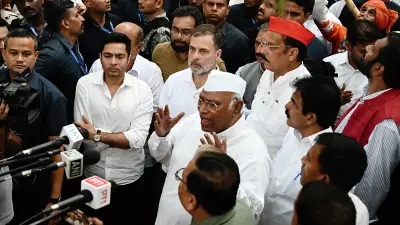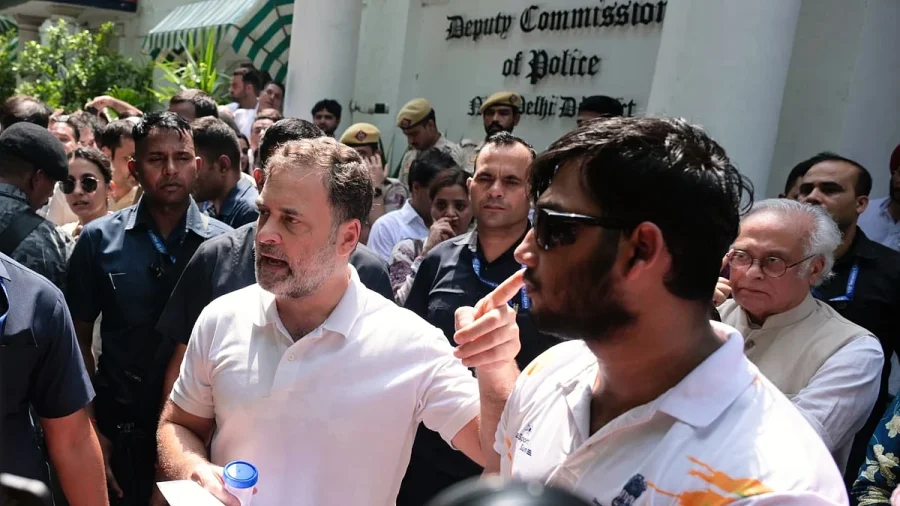
The image of the Leader of Opposition sitting on the ground outside a Delhi police station is not just a political spectacle — it is a deliberate escalation. Rahul Gandhi's dharna on Friday, 21 August, over pellet injuries suffered by a 19-year-old during the 20 July protests has turned into a direct confrontation between the Congress and the BJP over accountability, communalism, and the limits of political protest.
Why a Police Station Became the Centre of a Political Battle
The protest is not about a vague demand. The Congress is asking for one specific thing: an FIR over injuries to Sahil Lochab, who was hurt during the Cockroach Janta Party (CJP)-led march to Parliament on 20 July. The party says the dharna will continue until Delhi Police registers the case.
"Our demand is simple — register an FIR and give us the FIR number. LoP Rahul Gandhi is giving voice to this demand," Congress Rajya Sabha MP and general-secretary (communications) Jairam Ramesh told reporters at the Parliament Street police station.
The Communalisation Charge: What Congress Is Really Saying
The sharper accusation from the Congress is that the BJP is communalising the pellet gun issue. The party argues that instead of addressing the injury suffered by a young man, the ruling party is diverting attention by raising non-issues.
This is a familiar political pattern in India — when a demand becomes uncomfortable, the narrative shifts to identity. The Congress is trying to frame this as an evasion of accountability, not just a law-and-order matter.
How the 20 July Protest Led to This Moment
The sequence matters. On 20 July, the CJP-led agitation featured a march to Parliament. During that protest, Sahil Lochab sustained pellet injuries. The Congress has since been demanding an FIR, arguing that the use of pellet guns against a civilian protester requires legal scrutiny.
The delay in registering the FIR, according to the Congress, is not procedural — it is political. By staging a dharna at the police station itself, Rahul Gandhi is forcing the issue into public view.
Who Is Affected and Why This Resonates Beyond Politics
For ordinary citizens, this is not just a Congress-versus-BJP fight. The use of pellet guns in protests has been a contentious issue in India for years, particularly in Kashmir and during Delhi protests. The question of police accountability — when force is justified and when it crosses a line — affects every citizen.
A 19-year-old injured during a protest is not an abstract statistic. The Congress is betting that the emotional weight of a young man's injury will outweigh political fatigue.
What Delhi Police and the BJP Have Said So Far
As of now, there is no confirmed statement from Delhi Police on why the FIR has not been registered. The BJP's response, according to the Congress, has been to raise unrelated issues and frame the protest as politically motivated.
Without an official police statement, the exact reason for the delay remains unclear. The Congress claims it is deliberate; the BJP has not publicly detailed its position on the specific FIR demand.
What This Protest Really Signals for Indian Politics
This dharna is not just about one FIR. It is a test of how far the Leader of Opposition can push a demand before it becomes a law-and-order problem. It is also a signal that the Congress intends to use street-level protest as a primary tool of opposition.
By choosing a police station as the venue, Rahul Gandhi is drawing a line — the demand is not for a parliamentary debate but for administrative action. That is a different kind of political pressure.
Confirmed Facts vs What Remains Unclear
Confirmed: Rahul Gandhi staged a dharna at Parliament Street police station on 21 August. The Congress demands an FIR over pellet injuries to Sahil Lochab. Jairam Ramesh publicly stated the demand for an FIR number.
Unclear: Why Delhi Police has not registered the FIR. Whether the BJP has directly responded to the specific demand. The full extent of Sahil Lochab's injuries and his current condition.
All speculation about police motives or political strategy is inference, not verified fact.
Why the Congress Is Choosing This Battle Now
The timing is not accidental. With the opposition trying to consolidate against the BJP, a visible, emotional issue like pellet injuries gives the Congress a moral high ground. It is easier to rally support around a young man's injury than around abstract policy disagreements.
The party is also testing whether sustained street protest can force administrative action — a strategy that has worked in the past but carries risks of being labelled disruptive.
Risks and the Other Side of the Argument
Critics may argue that the Congress is politicising a police matter. If the FIR process is genuinely underway, the dharna could be seen as unnecessary pressure on law enforcement. There is also the question of whether the CJP-led protest itself was lawful — if the march violated norms, the police response may be legally defensible.
The BJP's apparent strategy of raising non-issues suggests it sees the pellet gun demand as politically inconvenient. But the Congress's counter is simple: a citizen was injured, and the law must take its course.
The Bigger Pattern: Police Accountability and Political Protest
This incident fits a wider trend of opposition parties using police stations and courts as sites of protest. From farmers' marches to anti-corruption agitations, the physical presence of leaders at institutions of the state creates a visual that parliamentary debates cannot match.
The question is whether this tactic translates into actual administrative outcomes or remains symbolic.
What Should Citizens and Observers Watch For
For those following the story, the key indicators are simple: Does Delhi Police register the FIR? Does the BJP offer a substantive response? And does the Congress sustain the dharna long enough to force a decision?
For citizens, the broader lesson is about how police accountability works in India — and whether political pressure is sometimes the only way to make it function.
What Happens Next
The Congress has said the dharna will continue until the FIR is registered. If the police comply, the protest ends with a political victory for the opposition. If not, the standoff could escalate — possibly to larger protests or legal action.
The next 24 to 48 hours will determine whether this remains a focused demand or expands into a wider confrontation.
Our Take
This is not just about pellet guns or one FIR. It is about whether the Leader of Opposition can use street protest to force state institutions to act. The Congress has chosen a young man's injury as its symbol — emotionally powerful, legally specific, and politically difficult to dismiss.
The risk is that the issue gets lost in the noise of political accusation. But the core question remains valid: when a citizen is injured during a protest, who is accountable, and how is that accountability enforced?
Frequently Asked Questions
Why is Rahul Gandhi sitting on dharna at a Delhi police station?
Rahul Gandhi is demanding that Delhi Police register an FIR over pellet injuries suffered by 19-year-old Sahil Lochab during the 20 July CJP-led march to Parliament. The Congress says the dharna will continue until the FIR is filed.
Who is Sahil Lochab?
Sahil Lochab is a 19-year-old who sustained pellet injuries during the Cockroach Janta Party (CJP)-led protest march to Parliament on 20 July. The Congress is seeking legal action over his injuries.
What does the Congress mean by saying the BJP is communalising the issue?
The Congress alleges that instead of addressing the FIR demand, the BJP is raising unrelated or identity-based issues to divert attention and evade accountability for the pellet gun injuries.
Has Delhi Police responded to the FIR demand?
As of the latest reporting, there is no confirmed public statement from Delhi Police explaining why the FIR has not been registered. The Congress claims the delay is deliberate, but this has not been officially confirmed.