
The world is watching with bated breath after Russian President Vladimir Putin publicly accused Ukraine of a deadly strike on a student dormitory in the Russian-occupied city of Luhansk. In an address that has sent shockwaves through diplomatic circles, Putin has vowed a swift and forceful military retaliation, raising fears of a dangerous new escalation in the nearly decade-long war.
While the Kremlin frames this as a deliberate attack on civilians, Ukraine has firmly denied the accusation, insisting its forces struck a legitimate military target — the elite Rubicon drone unit of the Russian military. The competing narratives have created a fog of war, leaving the international community scrambling for clarity as the threat of retaliation looms.
Putin's Accusation and the Threat of Retaliation
According to reports from Russian state media and international outlets, President Putin personally accused Ukrainian forces of carrying out a strike that hit a student dormitory in Luhansk. He claimed the attack resulted in multiple casualties, including children, and has ordered the Russian Ministry of Defense to prepare a range of options for a retaliatory strike. The exact nature and timing of this promised retaliation remain unclear, but the language from the Kremlin suggests a significant military response is being planned.
Why This Matters Right Now
This is not just another battlefield report. Putin's direct vow of retaliation signals a potential shift in the conflict's intensity. For months, the war has largely been fought along static front lines, but a deliberate strike on a civilian building — if proven — could provide Russia with a powerful propaganda tool and a justification for escalating attacks on Ukrainian infrastructure or even civilian centers. For the people of Ukraine, and for global markets already on edge, this development injects a new and dangerous level of uncertainty. The question on everyone's mind is: how far will Russia go in its response?
How the Incident Unfolded
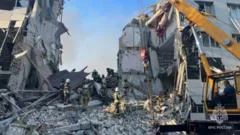
The incident reportedly occurred in the Luhansk region, a part of eastern Ukraine that has been under Russian occupation since 2022. Russian officials were quick to release statements claiming that a Ukrainian drone or missile struck a dormitory housing students, alleging four deaths and 35 children injured. Within hours, Putin made his public vow of retaliation, framing the event as a "terrorist act" by the Kyiv regime. The speed of the accusation and the promised response suggests the Kremlin is treating this as a major inflection point.
Who Is Affected and What Officials Are Saying
The immediate victims, according to Russian claims, are the students and residents of the dormitory in Luhansk. However, the ripple effects are far wider. Civilians on both sides of the front line now face the prospect of intensified hostilities. Ukrainian officials have categorically denied the Russian narrative. Ukraine's military stated that its forces successfully struck the Rubicon drone unit, a key Russian military asset responsible for operating advanced drones. They argue that Russia is using the civilian casualty claim to justify its own planned escalation and to distract from its military losses.
"Ukraine's military denied the Russian accusations." — Reuters
What We Know So Far — and What Remains Unclear
At this moment, the situation is defined by conflicting claims. What we know is that Putin has publicly accused Ukraine and promised retaliation. We also know that Ukraine has denied the specific accusation, claiming a military target was hit. What remains deeply unclear is the true nature of the target. Independent verification from organizations like the UN or the Red Cross is urgently needed but difficult to obtain in active conflict zones. The exact number of casualties and the extent of the damage also remain unverified. The biggest unknown is the scale and scope of Russia's promised retaliation.
Risks, Concerns, and the Balanced View
The most immediate risk is a dramatic escalation of violence. A Russian retaliatory strike could target Ukrainian government buildings, energy infrastructure, or even civilian areas in major cities like Kyiv or Kharkiv. There is also a risk of miscalculation, where a Russian response could inadvertently draw NATO closer to the conflict. From a balanced perspective, it is crucial to note that both sides have a history of using information warfare. Russia has been accused of staging or exaggerating civilian casualties in the past, while Ukraine has been accused of using inaccurate or indiscriminate weapons. Without independent verification, both narratives must be treated with caution.
Why Similar Trends and Concerns Are Growing
This incident fits a troubling pattern in modern warfare: the battle for the narrative is as important as the battle on the ground. Both Russia and Ukraine routinely accuse each other of targeting civilians to sway international opinion and justify their own actions. The use of drones and long-range missiles has made it easier for such incidents to occur, and harder to assign blame quickly. This event also highlights the growing danger of the conflict expanding beyond the front lines, with civilian infrastructure increasingly becoming a focal point of the war.
- Russian officials claim a drone strike hit a student dormitory in Luhansk.
- Ukraine's military says it targeted and hit the Russian Rubicon drone unit.
- Putin has ordered the Russian military to prepare options for retaliation.
What Readers, Users, or Investors Should Know Now
For those following the conflict, this is a moment to watch closely. The next 24 to 48 hours will be critical. Monitor official statements from both the Kremlin and the Ukrainian government. For investors, any major escalation could lead to volatility in energy markets, particularly natural gas and oil, as well as increased safe-haven demand for gold and the US dollar. For the general public, it is a stark reminder that the war in Ukraine remains highly volatile and capable of sudden, dangerous turns.
What Could Happen Next
The most likely scenario is a Russian retaliatory strike within days. This could take the form of a massive missile barrage on Ukrainian energy infrastructure, a symbolic strike on a government building in Kyiv, or an intensified ground offensive in a specific sector. A less likely but more dangerous scenario is a Russian attack that inadvertently or deliberately hits a target near a NATO border, triggering a broader crisis. Diplomatic efforts to de-escalate are expected but are unlikely to succeed given the current rhetoric from Moscow.
Our Take: Why This Story Matters Beyond One Incident
This story is a microcosm of the entire conflict: a clash of narratives, a high-stakes accusation, and the constant threat of escalation. Whether the dormitory was a genuine military mistake, a deliberate attack, or a false flag operation, the consequence is the same — more suffering for civilians and a world on edge. The real tragedy is that in this war, the truth is often the first casualty, and the people who pay the price are those caught in the crossfire.
FAQs
Why did Putin vow retaliation against Ukraine?
Putin accused Ukraine of carrying out a deadly strike on a student dormitory in the Russian-occupied city of Luhansk, claiming it was a deliberate attack on civilians. He has ordered the Russian military to prepare options for a retaliatory response.
Did Ukraine actually hit a student dormitory?
Ukraine's military has denied the accusation. It claims its forces successfully struck a legitimate military target — the Russian Rubicon drone unit — and that Russia is using the civilian casualty claim as a pretext for escalation.
What kind of retaliation is Russia expected to take?
The exact nature of the retaliation is unknown, but it is expected to be a significant military response. This could include a massive missile barrage on Ukrainian energy infrastructure, a strike on a government building, or an intensified ground offensive.
How does this affect the overall Russia-Ukraine war?
This incident injects a new level of danger and uncertainty into the conflict. It could lead to a major escalation in violence, potentially drawing in more international attention and increasing the risk of a wider confrontation. It also highlights the ongoing battle for narrative control in the war.