

Just as the global economy cautiously emerges from one crisis, another is beckoning at the doorstep — one that is completely out of politicians’ control. Markets and businesses breathed a sigh of relief last weekend when President Donald Trump announced a pending deal with Iran to cease hostilities in the Middle East and reopen the Strait of Hormuz to ship traffic. That blockaded chokepoint alone has sent energy prices and overall inflation soaring worldwide in recent months. Physical oil prices alone surged to $140 a barrel at one point, their highest level since 2008.
That brief relief seemingly ignored an announcement from the National Oceanic and Atmospheric Administration (NOAA) just a few days earlier, that could create more intractable trouble for businesses in the months ahead. The Climate Prediction Center issued an El Niño Advisory on June 11, 2026, confirming that El Niño conditions are present and expected to strengthen into the Northern Hemisphere winter 2026-27. The latest weekly Niño-3.4 index value was +0.7°C, with above-average sea surface temperatures across the central to eastern equatorial Pacific Ocean.
The $5.7 trillion warning from history
The 1997-98 El Niño was one of the most powerful on record, and its economic toll was staggering. A landmark study published in the journal Science estimated that the event cost the global economy approximately $5.7 trillion in lost output and damage over the following years. That figure includes not just immediate destruction from floods and droughts, but long-term losses in agricultural productivity, disrupted trade, and increased inflation that rippled through economies worldwide.
For context, $5.7 trillion is roughly equivalent to the entire annual GDP of Japan or Germany. The losses were spread across continents: Southeast Asia suffered severe droughts that devastated rice harvests, while parts of South America and Africa experienced catastrophic flooding. In the United States, the 1997-98 El Niño caused an estimated $4 billion in damage from storms and flooding in California alone.
Why the 2026 cycle could be even stronger
Scientists are now warning that the 2026 El Niño could potentially become one of the strongest events recorded in modern history. The NOAA advisory notes that El Niño conditions have developed rapidly over the past month, with sea surface temperatures warming at an accelerated pace. Some climate models suggest that the current warming in the Pacific could intensify beyond the levels seen in 1997-98, driven by a combination of natural variability and the background warming of the oceans due to climate change.
If the 2026 El Niño does reach historic strength, the economic consequences could be even more severe than the $5.7 trillion hit from 1997-98. The global economy is now far more interconnected, with supply chains that are more vulnerable to disruption. A single drought in a major grain-producing region can send food prices soaring worldwide, as seen during the 2022-23 inflation crisis.
Who is most at risk from a super El Niño
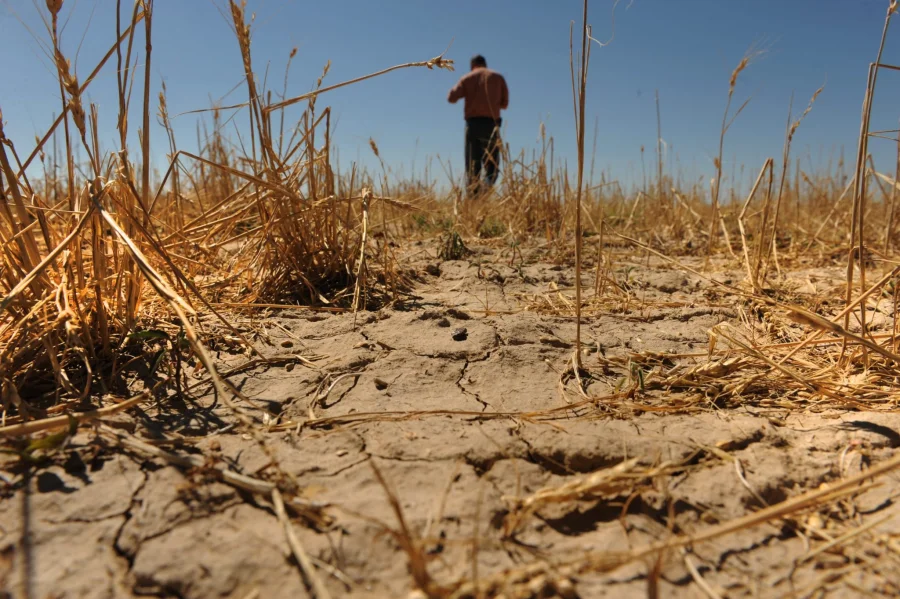
The human impact of a powerful El Niño is not evenly distributed. Developing nations in the tropics — particularly in Southeast Asia, parts of Africa, and South America — are most vulnerable because their economies rely heavily on rain-fed agriculture and have limited infrastructure to cope with extreme weather. For millions of smallholder farmers, a failed harvest due to drought or flood can mean the difference between survival and destitution.
In India, El Niño typically weakens the monsoon, leading to below-average rainfall that can devastate the kharif (summer) crop season. The 1997-98 event contributed to a severe drought in parts of India, affecting food production and rural incomes. A stronger 2026 El Niño could repeat this pattern, with implications for food inflation and rural demand that reverberate through the entire economy.
In the United States, the impact is more varied. El Niño often brings heavy rainfall to California, which can alleviate drought but also trigger flooding and landslides. In the southern states, it can suppress hurricane activity in the Atlantic, but increase storm risk in the Pacific. The net economic effect is complex, but the insurance industry is already bracing for higher claims from extreme weather events.
NOAA’s official warning and what it means
The NOAA advisory issued on June 11, 2026, is a formal El Niño Advisory, the highest alert level in the ENSO Alert System. The synopsis states: "El Niño conditions are present and expected to strengthen into the Northern Hemisphere winter 2026-27." This means that the peak impact — typically felt during the winter months in the Northern Hemisphere — could be particularly intense.
The advisory is based on observed sea surface temperatures (SSTs) that are now above-average across the central to eastern equatorial Pacific. The Niño-3.4 index, a key measure of El Niño strength, was +0.7°C in the latest weekly reading. For comparison, the 1997-98 event peaked at around +2.4°C, so the current warming still has room to intensify. Scientists will be watching closely over the coming months to see if the index climbs toward those historic levels.
The deeper meaning: climate change meets natural variability
What makes the 2026 El Niño particularly concerning is that it is occurring against a backdrop of record-warm global oceans. The past year has seen unprecedented sea surface temperatures worldwide, driven by climate change. When a natural El Niño event superimposes on this already-warmed ocean, the result can be amplified — both in terms of atmospheric effects and economic damage.
Some climate scientists argue that the economic models used to estimate the $5.7 trillion cost of the 1997-98 event may actually underestimate the true impact, because they do not fully account for the cascading effects of supply chain disruptions and long-term productivity losses. If the 2026 El Niño is indeed stronger, the economic toll could exceed even that staggering figure.
Confirmed facts vs what remains unclear
Confirmed: The 1997-98 El Niño cost the global economy an estimated $5.7 trillion, according to a peer-reviewed study in Science. NOAA has issued an El Niño Advisory for 2026, confirming that El Niño conditions are present and expected to strengthen. The Niño-3.4 index is currently at +0.7°C.
Unclear: Whether the 2026 El Niño will actually reach the strength of the 1997-98 event. The NOAA advisory notes that conditions are expected to strengthen, but the exact peak intensity is uncertain. The $5.7 trillion figure is an estimate and may not be directly comparable to future events due to changes in the global economy. The specific economic impact of the 2026 cycle cannot be predicted with precision at this stage.
Risks and a balanced view
While the warning from NOAA is serious, it is important to note that not all El Niño events cause catastrophic damage. The strength of an El Niño does not always correlate perfectly with the severity of impacts — the timing, location, and preparedness of affected regions also matter. Some regions may even benefit from El Niño, such as parts of the southern United States that receive much-needed winter rainfall.
However, the risk is real and significant. The combination of a potentially historic El Niño with an already-strained global economy — still recovering from pandemic-era inflation, supply chain disruptions, and geopolitical tensions — creates a dangerous cocktail. Businesses and governments that ignore the warning may find themselves unprepared for the economic shockwaves that could follow.
Wider trend: extreme weather as a systemic economic risk
The El Niño warning is part of a broader pattern: extreme weather events are increasingly being recognized as systemic risks to the global economy. From the 2022 Pakistan floods that caused $30 billion in damage to the 2023 heatwaves that disrupted European agriculture, climate-related shocks are becoming more frequent and more costly. The $5.7 trillion cost of the 1997-98 El Niño may soon look like a baseline, not an outlier.
Central banks and financial regulators are beginning to take note. The Network for Greening the Financial System (NGFS) has warned that climate-related risks could threaten financial stability. If the 2026 El Niño triggers a spike in food prices or a wave of insurance claims, it could test the resilience of the global financial system in ways that policymakers have not fully prepared for.
Practical guidance for readers
For investors: Monitor agricultural commodity prices, particularly grains like wheat, corn, and rice, which are most vulnerable to El Niño-related disruptions. Consider hedging against inflation risks and reviewing exposure to sectors like agriculture, insurance, and energy that are directly affected by extreme weather.
For businesses: Review supply chain vulnerabilities, particularly for raw materials sourced from regions prone to El Niño impacts. Consider building buffer stocks or diversifying suppliers to reduce exposure to a single region.
For individuals: Be aware that food prices may rise if the El Niño disrupts harvests. Planning ahead for potential price increases in staples like rice, wheat, and cooking oils can help manage household budgets. Stay informed through official sources like NOAA and local meteorological agencies.
Future outlook
The next few months will be critical. If the Niño-3.4 index continues to climb, the likelihood of a historic El Niño increases. The peak impact is typically felt during the Northern Hemisphere winter (December 2026 to February 2027), which means that the most severe economic effects may not be felt until early 2027. However, early warning signs — such as changes in rainfall patterns in Southeast Asia and South America — could emerge as early as late 2026.
Governments and international organizations should begin contingency planning now. The World Meteorological Organization (WMO) and national meteorological agencies are likely to issue further updates as the situation evolves. The key question is whether the global economy is better prepared than it was in 1997-98 — or whether the increased complexity of modern supply chains makes it even more vulnerable.
Our Take
The $5.7 trillion cost of the 1997-98 El Niño is a stark reminder that nature’s economic power dwarfs even the largest financial crises. The 2026 cycle may be even stronger, and it arrives at a time when the global economy is already fragile. While the Iran deal offers a moment of relief for energy markets, the El Niño warning is a far more fundamental threat — one that cannot be negotiated away.
The real test will be whether governments, businesses, and individuals take this warning seriously enough to prepare. History suggests that we often underestimate the economic cost of climate-related disasters until they are upon us. The 2026 El Niño may be the wake-up call that finally changes that pattern — or it may be another lesson learned the hard way.
Frequently Asked Questions
How much did the 1997-98 El Niño cost the global economy?
The 1997-98 El Niño cost the global economy an estimated $5.7 trillion in lost output and damage, according to a study published in the journal Science. This includes both immediate destruction and long-term economic losses.
Is the 2026 El Niño expected to be stronger than 1997-98?
Scientists are warning that the 2026 El Niño could potentially become one of the strongest on record, possibly exceeding the 1997-98 event. NOAA has issued an El Niño Advisory, confirming conditions are present and expected to strengthen into the Northern Hemisphere winter 2026-27.
What does NOAA’s El Niño Advisory mean?
NOAA’s El Niño Advisory is the highest alert level in the ENSO Alert System. It means that El Niño conditions are present and are expected to persist and strengthen. The advisory was issued on June 11, 2026, based on above-average sea surface temperatures in the equatorial Pacific.
How does El Niño affect food prices and inflation?
El Niño disrupts rainfall patterns, causing droughts in some regions and floods in others. This can devastate agricultural production, leading to higher food prices. The 1997-98 event contributed to significant food inflation worldwide, and a stronger 2026 cycle could repeat or exceed these effects.