Nvidia's chips already power the AI data centers that investors can't stop talking about. But the company is quietly placing a much bigger, riskier bet — one that could decide whether robots and self-driving cars ever become safe enough to share our streets and warehouses.
The AI chipmaker has invested billions in what it calls physical AI: machines that move, sense, and act in the real world. Its latest move is a full-stack safety system designed to stop those machines from harming people nearby.
Inside Nvidia's Halos Safety Architecture
Nvidia launched Halos in 2025 — a combination of hardware and software tools that let developers build safety guardrails into self-driving cars and other autonomous vehicles. The idea is simple: instead of every company inventing its own safety layer, Nvidia provides the foundation.
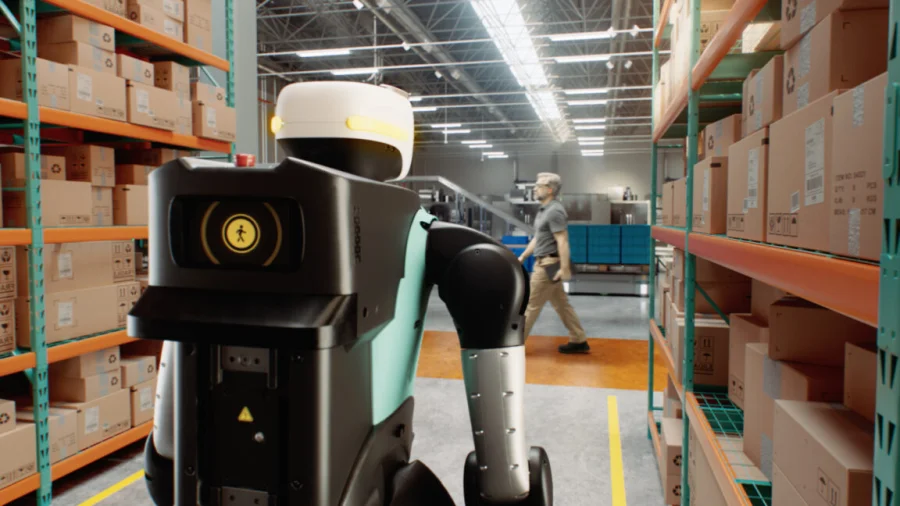
In June 2026, the company expanded that architecture with Halos for Robotics. The goal is to enable safe deployments of autonomous mobile robots in warehouses and humanoid robots in other environments.
Why Safety Is the Real Bottleneck for Physical AI
Self-driving cars and humanoid robots have been promised for years. The technology works in demos. The problem is what happens when it fails in public — a robotaxi misjudging a pedestrian, a warehouse robot colliding with a worker.
Those failures don't just hurt people. They trigger lawsuits, regulatory crackdowns, and public backlash that can set an entire industry back by a decade. Nvidia is betting that whoever solves safety first will own the market.
How Nvidia Built This Position
Nvidia's advantage didn't appear overnight. Its GPUs already train most of the world's AI models. Its automotive and robotics platforms — including chips designed for in-vehicle computing — have been shipping to automakers and robot developers for years.
Halos extends that reach. By offering a safety layer on top of its compute stack, Nvidia makes itself harder to replace. Developers who build on Halos are building on Nvidia.
Who This Actually Affects
For robotaxi companies, Halos could mean faster regulatory approval if safety standards become clearer. For warehouse operators, it could mean robots that can work alongside humans without constant supervision. For humanoid robot startups, it could mean a shortcut past years of safety engineering.
For the public, the stakes are more direct: whether the next machine that rolls down your street or works in your building has been built to avoid hurting you.
What Nvidia Has Confirmed — and What It Hasn't
Confirmed: Halos launched in 2025 for autonomous vehicles. Halos for Robotics was announced in June 2026. Nvidia has invested billions in physical AI.
Unclear: How many companies have adopted Halos. Whether regulators will recognize it as a safety standard. How effective it will be in real-world edge cases. Nvidia has not disclosed specific deployment numbers or independent safety testing results.
Why Nvidia's Position Is Hard to Dislodge
Nvidia's moat in physical AI isn't just chips. It's the combination of training infrastructure, in-vehicle compute, simulation tools, and now a safety layer. A competitor would need to match all of it.
That ecosystem lock-in is why Nvidia can afford to bet billions on a market that hasn't fully arrived yet. When it does, Nvidia wants to be the default.
The Risks Nvidia Isn't Advertising
Physical AI is far less predictable than data center AI. A chatbot that says something wrong is embarrassing. A robot that does something wrong is dangerous. If Halos fails in a high-profile incident, Nvidia's brand takes the hit alongside the operator.
There's also the question of liability. If Nvidia provides the safety layer, who is responsible when something goes wrong — the robot maker, the operator, or Nvidia? That legal question remains unresolved.
The Bigger Pattern: AI Moving Into the Physical World
Nvidia's bet reflects a broader shift. After years of AI living inside screens, the industry is pushing into factories, roads, and homes. The companies that solve physical safety will likely define the next decade of automation.
Nvidia is positioning itself not just as the chip supplier for that shift, but as the safety standard underneath it.
What This Means for Readers
If you're an investor, watch for Halos adoption announcements and regulatory recognition — those are the real signals, not the headline number. If you work in logistics, automotive, or robotics, Halos is worth understanding as a potential compliance layer. If you're simply a pedestrian or a worker, this is the quiet infrastructure deciding whether the robots around you are built to be careful.
What Happens Next
Expect Nvidia to push Halos deeper into automotive and robotics supply chains. Watch for partnerships with robotaxi operators and humanoid robot makers. The real test will be the first major incident — or the first major accident avoided — involving a Halos-equipped machine.
Our Take
Nvidia's data center business made it a trillion-dollar company. Physical AI is the harder, slower, riskier bet — and the one that could matter more. Safety isn't a feature here. It's the permission slip for robots to exist in public. Nvidia seems to understand that better than most.
Frequently Asked Questions
What is Nvidia Halos?
Nvidia Halos is a full-stack safety system — hardware and software — that helps developers add safety guardrails to self-driving cars, autonomous vehicles, and robots. It launched in 2025 and was expanded to robotics in June 2026.
Why is Nvidia investing in physical AI?
Nvidia sees robotics and autonomous vehicles as the next major wave of AI after data centers. By providing the safety layer, it aims to become the default platform for companies building these machines.
Does Halos make robotaxis and humanoid robots fully safe?
No. Halos is designed to reduce risk, not eliminate it. Real-world edge cases, regulatory acceptance, and liability questions remain unresolved.
How does this affect regular people?
If Halos becomes widely adopted, the robotaxis, delivery robots, and humanoid robots entering public spaces may be built with stronger safety standards — reducing the chance of accidents involving pedestrians and workers.