Nitish Kumar Finalizes Exit, BJP-Led Government to Take Charge in Bihar
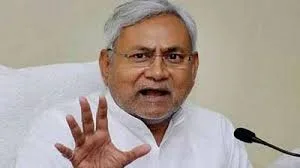
Bihar Chief Minister Nitish Kumar has initiated the formal transfer of power, meeting senior JD(U) leaders for nearly two hours on Saturday to finalize a government led by the Bharatiya Janata Party, a seismic shift that ends his two-decade dominance and realigns the state's political future. The move, expected to culminate in his resignation on April 13, directly impacts millions of citizens and resets the strategic calculus for both the ruling NDA and the opposition Mahagathbandhan ahead of national elections.
For the people of Bihar, this marks the abrupt end of an era defined by one man's political survival.
Full Event
The transition from Nitish Kumar's leadership is now in its operational phase. On Saturday, senior Janata Dal (United) leaders convened at the Chief Minister's official residence at 1, Anne Marg in Patna. The closed-door meeting, lasting close to two hours, centered exclusively on the mechanics of forming the next government.
Concrete signs of the impending change are visible. Kumar has reportedly begun moving personal belongings, including furniture, from the Chief Minister's residence to his private home at 7, Circular Road. This logistical shift underscores the permanence of the coming change.
Following his swearing-in as a Rajya Sabha member on Friday—which formally concluded his tenure in the state legislature—Kumar is expected to travel to New Delhi for meetings with top BJP leadership. He will then return to Patna to address a meeting of NDA legislators and likely chair a final cabinet meeting before submitting his resignation on April 13.
Why It Matters and What Changed
This is not a routine rotation of power. It represents the conclusive departure of Bihar's central political figure since 2005, dismantling the core of a political ecosystem built around him. Before now, Kumar was the indispensable pivot in any state alliance; now, the JD(U) is transitioning to a junior partner role within the NDA.
The change matters immediately because it transfers administrative control to the BJP, which will set the agenda for Bihar's governance, budget, and policy direction during a critical pre-election period. It also voids the existing opposition alliance's strategy, which was predicated on opposing a government led by Kumar.
Who Is Affected
Bihar's Bureaucracy and Administration: A complete overhaul in the Chief Minister's Office and likely reshuffles of key departmental portfolios are imminent, freezing or redirecting ongoing projects.
JD(U) Legislators and Workers: Party members face an identity crisis, moving from a leadership to a supporting role, with uncertain influence over future ticket distributions and policy.
The Opposition Mahagathbandhan: Their entire campaign narrative, built around criticizing "Nitish Kumar's betrayals," loses its primary target overnight, forcing a rushed strategic recalibration.
BJP State Leadership: Figures now in line for the chief minister's post and deputy roles face the immediate pressure of delivering stability and proving the party can govern Bihar alone.
What Most Articles Miss
Most coverage focuses on the "musical chairs" of alliances but misses the profound administrative vacuum and legal limbo created during this transition. The moment Kumar resigns, the state cabinet is dissolved. Every file, every pending decision, and every administrative order requiring cabinet approval grinds to a halt until a new ministry is sworn in. This gap, which could last days, stalls governance in a state grappling with law and order and development challenges, a practical consequence citizens will feel directly.
What To Do Now
For citizens, bureaucrats, and businesses awaiting government decisions, the immediate focus should be on identifying and securing time-sensitive approvals.
- Identify Pending Files: Immediately review all matters awaiting Chief Minister or state cabinet approval.
- Prepare for Delay: Officially note that these files will be in abeyance until the new CM and cabinet are sworn in.
- Monitor Official Channels: Watch for announcements from the Bihar Governor's office (governor.bih.nic.in) for the swearing-in schedule.
- Redirect Urgent Issues: For matters that cannot wait, explore if authority can be exercised by the Chief Secretary or other empowered officials during the interim period.
The expected outcome is a period of administrative inertia followed by a potential shift in policy priorities under the new leadership.
Interpretation
This transition is a BJP-engineered consolidation, not a simple partnership change. By elevating a BJP leader to the chief minister's post while allowing JD(U) deputies, the BJP secures command of the state machinery ahead of Lok Sabha elections. It effectively ends the era of Bihar politics where a regional satrap could dictate terms to national parties. Kumar's move to the Rajya Sabha is less a promotion and more a graceful exit from the center stage of state politics, marking the full integration of Bihar into the BJP's dominant national framework.
What Happens Next
The immediate sequence is clear: Nitish Kumar will resign on April 13. The BJP will then stake claim to form the government, presenting its legislative strength to the Governor. A BJP MLA will be sworn in as Chief Minister, with JD(U) nominees taking Deputy Chief Minister roles. The first test for the new government will be managing the opposition's planned show of strength on April 12, featuring Rahul Gandhi, and presenting a united front in the subsequent assembly session. Long-term, all eyes will be on the BJP's performance in managing Bihar's complex social coalitions and the JD(U)'s cohesion as a diminished force.
Key Facts
DetailInformation Key EventNitish Kumar-JD(U) meeting to finalize BJP-led government formation. Expected Resignation DateApril 13, 2024. Probable New CMTo be from the Bharatiya Janata Party (BJP). JD(U)'s Expected RoleTwo Deputy Chief Minister posts, including one for Kumar's son, Nishant. Recent Formal MoveNitish Kumar sworn into Rajya Sabha on April 12, vacating state legislature seat. Opposition ActionMahagathbandhan rally with Rahul Gandhi in Patna on April 12.
FAQ
Why is Nitish Kumar resigning now?
This is a structured transition within the NDA. Kumar's move to the Rajya Sabha and the planned leadership change appear to be part of a pre-negotiated agreement to bring Bihar under more direct BJP control ahead of national elections, while providing a dignified exit for the long-serving CM.
Who will be the next Chief Minister of Bihar?
While not officially announced, JD(U) sources indicate the next CM will be from the BJP. Names of senior BJP state leaders are in circulation, but the final decision will be announced by the BJP's parliamentary board after Kumar's formal resignation.
What does this mean for the 2024 Lok Sabha elections in Bihar?
It significantly strengthens the NDA's position. A BJP CM is likely to ensure the party's central leadership has greater control over campaign strategy and resource allocation in the state, aiming to maximize the alliance's seat count.
Is the Mahagathbandhan still a threat to the NDA?
The opposition alliance faces a strategic setback. Their narrative was tightly wound around Kumar. They must now quickly pivot to criticizing the BJP's governance model, all while managing internal cohesion among parties like RJD and Congress, which makes their challenge more difficult.