The Trinamool Congress and BJP have escalated their digital warfare ahead of the West Bengal Assembly elections on 23 April 2026, utilizing viral anthems and AI-driven reels to dominate the narrative across the state’s competitive political landscape.
Digital Anthems and Slogan Wars in the 2026 Bengal Polls
The campaign intensified in January 2026 with the release of the Trinamool Congress (TMC) track 'Jotoi koro hamla, abar jitbe Bangla,' which has already surpassed 12.8 crore views. The song positions Chief Minister Mamata Banerjee as the defender of Bengali pride against what the party describes as 'anti-Bengal feudal lords.' This was met with a BJP counter-campaign featuring the war cry 'Paltano dorkar, chayi BJP sarkar,' which has gained over 216,000 views on YouTube.
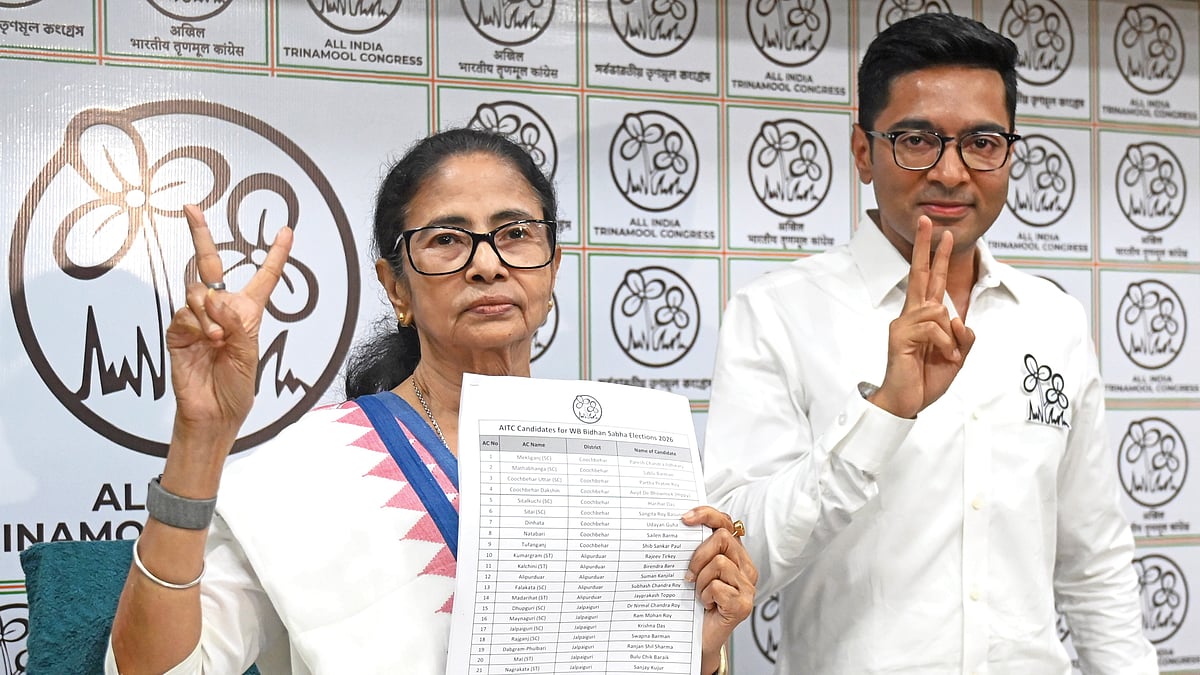
The digital battle took a controversial turn when the TMC highlighted a 'clerical error' by the Chief Electoral Officer of Kerala, who distributed Election Commission of India (ECI) guidelines bearing a BJP party seal. Mamata Banerjee has used this incident to allege collusion between the ECI and the BJP, waving newspaper reports of the error during her public addresses.
In response to the social media amplification of this controversy, the cyber police headquarters issued stern notices to several TMC leaders, including MP Mahua Moitra. The notices demand the removal of posts that the authorities claim undermine the Commission's neutrality and threaten public order. However, TMC representatives have continued to share these notices as further evidence of their claims.
Evolution of Campaign Strategies Since the 2021 Elections
The 2026 digital campaign marks a shift from the 2021 'Khela Hobe' versus 'Pishi Jao' era. While the previous election relied on catchy folk-tune parodies, the current cycle is defined by sharper, more personalized content. The TMC has moved away from centralized messaging to a decentralized social media cell that operates as a real-time crisis management unit.
The Indian Political Action Committee (I-PAC) continues to serve as the strategic backbone for the TMC, evolving its 2021 'Didi Ke Bolo' helpline model into a more sophisticated data-mapping exercise. This system now links booth-level feedback directly to digital content creation, allowing for constituency-specific messaging that was not as prevalent in previous cycles.
Impact on Voters and the Rise of Social Media Slurs
The digital war has moved beyond official party handles into a 'free-for-all' among supporters on platforms like WhatsApp and Instagram. TMC General Secretary Abhishek Banerjee has raised concerns over the prevalence of sexual slurs and death threats directed at the Chief Minister, framing these attacks as an insult to all women in Bengal.
On the ground, candidates are using digital platforms to address cultural anxieties. To counter TMC claims that a BJP government would restrict certain foods during festivals, BJP candidates have used viral videos to show themselves campaigning with local fish, such as katla machh, to signal their alignment with Bengali traditions. This indicates that digital content is now being used to perform 'cultural audits' of candidates in real-time.
Structural Differences Between TMC and BJP Digital War Rooms
The two parties are employing fundamentally different organizational structures to manage their online presence for the 2026 polls.
- TMC Strategy: Uses a decentralized cell and the 'Didi’r Doot' mobile app to gamify campaign tasks for volunteers and provide real-time updates.
- BJP Strategy: Operates a centralized IT cell led by Amit Malviya, focusing on national narratives of corruption and law-and-order breakdown.
- Content Volume: The TMC ecosystem has reportedly produced over 10,000 short videos and reels for this election cycle alone.
While the BJP relies heavily on the emotional pull of national leaders like Narendra Modi and Amit Shah, the TMC is focusing on a 'tit-for-tat' strategy, countering BJP criticisms of Bengal by highlighting issues in BJP-ruled states like Uttar Pradesh and Gujarat.
Data-Driven Mobilization and AI Graphics in Modern Campaigning
The mechanism of the 2026 campaign relies on integrating voter-level data with creative output. The BJP has introduced AI-style graphics that utilize Bengali cultural icons and film characters to rebrand the party as 'pro-development' and 'Bengal-friendly.' This is a direct attempt to shed the 'outsider' label that hampered their 2021 campaign.
The TMC’s I-PAC-led strategy uses SMS, robocalls, and digital ads to reach an estimated nine crore people. The 'clerical error' controversy involving the ECI seal serves as a primary example of how digital cells now seize on administrative lapses to build a narrative of institutional bias, which is then amplified through volunteer networks to bypass traditional media filters.
No independent expert commentary was available in the source material for this article.
Key Deadlines for the West Bengal Assembly Elections
The nomination process for the upcoming phases is scheduled to conclude on 8 April 2026 and 12 April 2026. These dates will mark the transition from digital sparring to the final high-intensity ground campaign.
West Bengal Election 2026: Digital Campaign Metrics at a Glance
The following table summarizes the key figures and dates associated with the ongoing digital and electoral battle in West Bengal.
Key Fact Detail Main organizations Trinamool Congress (TMC) and BJP Main action Digital warfare and viral campaign songs Date of Polls 23 April and 29 April 2026 Location West Bengal TMC Song Views 12.8 crore (as of March 2026) BJP Song Views 216,000+ (on YouTube) Nomination Deadlines 8 April and 12 April 2026 Election Results Date 4 May 2026 Next confirmed step Closure of nominations on 8 April 2026
Institutional Neutrality and the 'Clerical Error' Controversy
The legal fallout from the cyber police notices issued to TMC leaders will be a critical factor to watch as the election dates approach. If the TMC continues to amplify the 'clerical error' regarding the BJP seal on ECI documents, it could lead to a formal petition or a larger debate regarding the neutrality of election oversight in the final weeks of the campaign.
Readers should also observe whether the BJP's use of AI-generated cultural icons successfully bridges the gap with rural voters who have historically favored the TMC’s localized messaging. The outcome on 4 May 2026 will likely serve as a case study for the effectiveness of decentralized versus centralized digital war rooms in Indian state elections.
Common Queries Regarding the 2026 Bengal Election Campaign
When are the West Bengal Assembly elections 2026?
The elections are scheduled to take place in two main phases on 23 April and 29 April 2026. The final results will be announced on 4 May 2026.
What is the TMC's main slogan for the 2026 polls?
The primary slogan is 'Jotoi koro hamla, abar jitbe Bangla' (Attack us all you like, Bengal will win again). It focuses on defending Bengali pride against external political forces.
What is the controversy regarding the ECI and the BJP seal?
The controversy arose after the Chief Electoral Officer of Kerala distributed ECI guidelines that featured a BJP party seal. The ECI attributed this to a 'clerical error' involving a 2019 document, but the TMC has cited it as evidence of institutional bias.