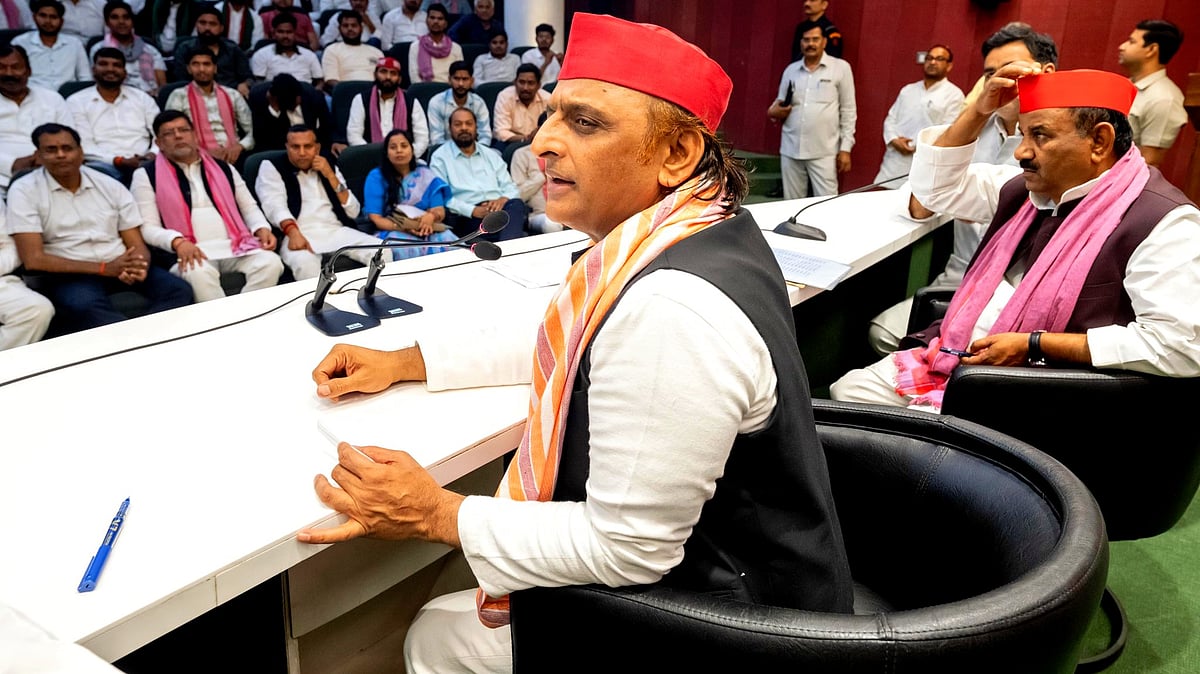
Samajwadi Party President Akhilesh Yadav on Sunday challenged Prime Minister Narendra Modi’s 8,931-day governance record, citing poor global rankings and a major security failure following the sinking of an Iranian warship near Indian shores. Yadav argued that longevity in office means little if the country’s performance on economic and social indicators has declined compared to previous years.
Akhilesh Yadav questions the outcomes of 8,931 days in power
Speaking to PTI Videos in Lucknow, Akhilesh Yadav dismissed the focus on the number of days Prime Minister Narendra Modi has served in public office. He stated that the true measure of a leader is not the time spent in power but the measurable changes in the lives of citizens. Yadav pointed to several global rankings where he believes India has slipped or failed to show progress.
The Samajwadi Party leader raised specific questions about the happiness index, per capita income, and corruption levels. He asked where India stands today regarding unemployment and the safety of women. Yadav suggested that the current administration has focused more on the optics of staying in power than on solving these fundamental issues that affect the daily lives of millions.
The critique also extended to environmental concerns. Yadav asked if India's rivers and water bodies are in a better state now than they were a decade ago. He argued that the government must provide data-driven answers to these questions instead of relying on the milestone of 8,931 days, which combines Modi’s time as the Chief Minister of Gujarat and as the Prime Minister of India.
Yadav also attacked the government's handling of the economy, specifically the trade relationship with China. He claimed that the Indian market has been handed over to Chinese interests, which he views as a threat to national sovereignty. This economic dependence, combined with what he described as a crumbling foreign policy, formed the core of his address.
The context of the 8,931-day milestone and the Milan exercise
The figure of 8,931 days represents the total time Narendra Modi has held a top executive office since he first became the Chief Minister of Gujarat in October 2001. Supporters of the Prime Minister often use this number to show stability and experience. However, the opposition is now using this same timeline to demand an account of the long-term results of this tenure.
This political attack comes at a time of high tension in the Indian Ocean. Last month, India hosted the Milan naval exercise, a large-scale multilateral wargame designed to show India’s role as a regional security leader. The Iranian warship IRIS Dena was a participant in this exercise and had also attended the International Fleet Review in Visakhapatnam.
On March 4, 2026, the IRIS Dena was torpedoed and sunk by a US submarine in international waters off the coast of Sri Lanka. US Defence Secretary Pete Hegseth confirmed the strike, stating it was the first time an enemy warship had been sunk by a torpedo since the second World War. The fact that this happened to a ship that had just been a "guest" of the Indian Navy has provided the opposition with a potent political weapon.
Why the sinking of a guest warship affects India's regional standing
The sinking of the IRIS Dena is not just a military event; it is a diplomatic crisis for New Delhi. Akhilesh Yadav used a domestic analogy to explain the gravity of the situation. He compared it to a guest being killed inside a host's home while the host stands by and watches. This imagery targets the government’s claim of being a "Vishwa Mitra" or a friend to the world.
For the average citizen, this incident raises questions about maritime security in the Indian Ocean. If a warship participating in an Indian-hosted exercise can be targeted so close to Indian waters, it suggests a gap in the security umbrella India claims to provide. This affects how neighboring countries view India’s ability to protect its strategic sphere of influence.
The incident also strains India's delicate balancing act between the United States and Iran. India has long maintained a friendly relationship with Iran, which is a key partner for energy and regional connectivity through the Chabahar port. By allowing a "friendly" nation to be targeted after an official visit, Yadav argues that India has effectively isolated itself and lost the trust of long-term allies like Russia and Iran.
What changes for India's defense and foreign policy strategy
The critique by Yadav points to a shift in how the opposition will challenge the government on national security. Instead of focusing only on border disputes, the narrative is moving toward strategic autonomy and the risks of military hardware dependence. Yadav listed several countries that provide India with critical technology, creating a fragmented defense system.
- India relies on France for fighter aircraft like the Rafale.
- Communication systems and surveillance tech often come from Israel.
- Heavy weaponry and legacy systems are largely sourced from Russia.
- Many consumer and industrial components are manufactured in China.
Yadav argued that this mix of suppliers makes India vulnerable during a conflict. If a war breaks out, India would need to coordinate support from multiple nations that may have conflicting interests. This "broken" foreign policy, as Yadav calls it, could lead to a situation where India has the equipment but lacks the diplomatic or technical support to use it effectively in a crisis.
Risks of escalating tensions in the Indian Ocean
The primary risk now is the potential for the Indian Ocean to become a theater for the US-Iran conflict. Until now, most direct military actions between these two nations were confined to the Persian Gulf or the Middle East. The strike off the coast of Sri Lanka brings this volatility directly into India’s backyard, posing a risk to commercial shipping and regional stability.
There is also a risk of a diplomatic rift with Tehran. If Iran perceives that India did not do enough to ensure the safety of its vessel or failed to condemn the strike strongly, it could impact joint projects. The loss of Russia’s traditional support, as alleged by Yadav, further complicates India’s position in a multipolar world where it seeks to lead the Global South.
Internal political risks are also growing. The opposition is likely to use the "8,931 days" figure as a benchmark for every failure they identify. By framing the debate around measurable outcomes like the happiness index and unemployment, they are attempting to move the political conversation away from cultural or religious issues and toward governance performance.
Confirmed next steps for the government and opposition
The Ministry of External Affairs is expected to face intense questioning in the upcoming Parliament sessions regarding the IRIS Dena incident. While the government has not yet issued a detailed rebuttal to Yadav’s specific claims about the 8,931-day record, the BJP is likely to release its own data comparing the current administration's achievements with the previous UPA era.
On the diplomatic front, Indian officials are likely to hold high-level talks with Iranian counterparts to manage the fallout of the sinking. The Indian Navy may also review its protocols for multilateral exercises like Milan to ensure better security coordination for participating foreign vessels in the future.
Key Numbers and Facts
The confirmed figures behind this story at a glance.
Key Fact Detail Main person or groupAkhilesh Yadav (Samajwadi Party) Main action or decisionCritique of PM Modi's 8,931 days in power Date of statementMarch 22, 2026 Incident citedSinking of Iranian warship IRIS Dena Date of ship sinkingMarch 4, 2026 Location of strikeOff the coast of Sri Lanka Primary concernFailure of foreign policy and strategic autonomy Next confirmed stepParliamentary scrutiny of maritime security
The shift from political longevity to strategic accountability
The challenge posed by Akhilesh Yadav marks a transition in Indian political discourse where the length of a leader's tenure is no longer a shield against criticism. By linking the 8,931-day milestone to the sinking of a foreign warship, the opposition is forcing a conversation on the real-world costs of India's diplomatic choices. The government now faces the difficult task of proving that its long tenure has resulted in a stronger, more secure nation, rather than one that is merely reactive to the actions of global superpowers in its own waters.
Frequently Asked Questions
What is the 8,931-day record mentioned by Akhilesh Yadav?
This number represents the total days Narendra Modi has served as a top executive, including his time as Chief Minister of Gujarat and his tenure as Prime Minister. Yadav uses this figure to argue that despite this long period, key social and economic indicators have not improved enough.
What happened to the Iranian warship IRIS Dena?
The IRIS Dena was sunk by a US submarine torpedo on March 4, 2026, off the coast of Sri Lanka. The ship had recently participated in India's Milan naval exercise, leading to political criticism that India failed to protect a guest vessel in its region.
Why is India's defense dependence on multiple countries a concern?
Yadav argues that relying on France, Israel, Russia, and China for different parts of the military infrastructure creates a fragmented system. In a war, this could lead to logistical and diplomatic failures if these supplier nations do not agree with India's actions.