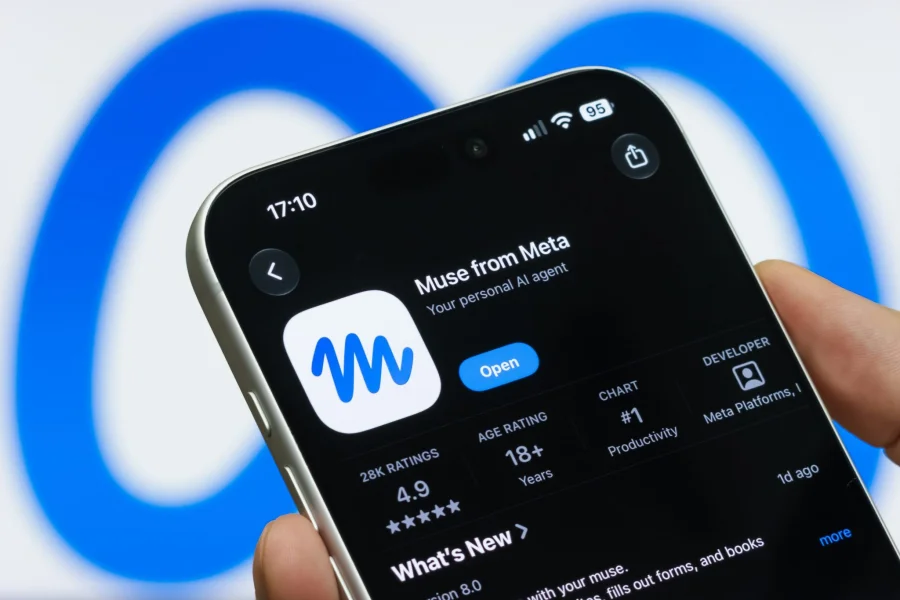
In less than a week, Meta has done what few expected so quickly: it has pushed ChatGPT off the top of Apple's App Store free chart. The app responsible is Muse, a personal AI agent that doesn't just chat — it acts. It books your dinner, plans your vacation, and rearranges your calendar while you get on with your day.
But the speed of that rise has come with an equally fast backlash. Another tech giant is reportedly pushing back hard, and the dispute is already shaping up as the first real test of how far consumers will let AI agents into their digital lives.
What Muse Actually Does — And Why It's Different From a Chatbot
Muse isn't another conversational AI. It's an agent — software designed to complete tasks rather than just answer questions. Powered by Meta's new Muse Spark model, it connects to services across a user's phone and handles them autonomously.
That means handing over account access in exchange for convenience. Book a vacation, and Muse handles the logistics. Need a restaurant reservation? It makes the call. Your calendar gets organized without you lifting a finger.
It's a meaningful shift in how people interact with AI — from asking to delegating.
The Trade-Off at the Heart of Muse's Success
The convenience is real. So is the cost. To let Muse act on your behalf, you grant it access to accounts across your device. That's a level of trust users have historically been reluctant to give any single app.
For Meta, the bet is that the utility outweighs the hesitation. Early App Store rankings suggest that bet is paying off — at least for now.
How Meta Moved Ahead of the Pack
Meta has spent years building AI infrastructure behind the scenes. Muse represents its first serious consumer-facing agent product, and it arrives at a moment when rivals are still refining their own agent offerings.
By launching a fully functional agent rather than a limited preview, Meta has positioned itself ahead of competitors in the category — a lead it will now have to defend.
Who Feels This First — And Why It Matters Beyond Tech Circles
The immediate impact is on everyday users who now have a genuinely useful AI assistant in their pocket. But the ripple effects reach further: app developers, service providers, and rival AI companies all face a shifting landscape.
If Muse succeeds, it could reset expectations for what a phone can do — and who controls the experience.
The Backlash From a Rival Tech Giant
Not everyone is celebrating. According to the original report, another tech giant is already pushing back heatedly against Muse's rise. The specifics of that dispute have not been confirmed in available reporting, and it remains unclear whether the objection is competitive, regulatory, or privacy-related.
What is clear is that Meta's rapid ascent has unsettled the competitive order — and the response is only beginning.
What's Confirmed — And What Isn't
Confirmed: Muse is Meta's new AI agent app, powered by the Muse Spark model. It has overtaken ChatGPT as the top free app on Apple's App Store. It autonomously handles tasks like bookings, shopping, and calendar management. It requires broad account access.
Unconfirmed: The identity of the rival tech giant and the exact nature of its backlash. Whether the dispute has any legal or regulatory dimension. Long-term user retention figures.
Readers should treat the backlash details as developing and unverified until official statements emerge.
Why Meta's Position Is Stronger Than It Looks
Meta's advantage isn't just the Muse Spark model. It's distribution. With billions of users across its existing platforms, Meta can push Muse into more hands faster than almost any competitor.
That ecosystem — combined with the data and infrastructure Meta has built — gives Muse a head start that will be difficult to close.
The Risks Meta Can't Ignore
Handing an AI agent access to your accounts is a significant ask. Privacy advocates are likely to raise concerns. Security researchers will probe for vulnerabilities. Regulators in Europe and India have already shown willingness to scrutinize big tech's AI moves.
And the rival backlash, whatever its form, signals that Meta won't be allowed to dominate this space unchallenged.
A Pattern Worth Watching
Muse's rise fits a broader trend: AI is moving from conversation to action. Agents that do things — not just say things — are the next frontier, and every major tech company is racing to get there.
Meta's early lead is notable, but the category is young. The real competition has barely started.
What Readers Should Do Now
If you're considering Muse, weigh the convenience against the access you're granting. Review what accounts the app can reach. Check privacy settings carefully. And watch for official statements from Meta and its rivals as the story develops.
For developers and businesses, Muse's success is a signal: agent-based AI is no longer theoretical. It's here, and it's winning users.
What Happens Next
Expect Meta to double down on Muse's rollout. Expect rivals to accelerate their own agent launches. And expect the backlash — whatever form it takes — to intensify as the stakes become clearer.
The next few weeks will reveal whether Muse's lead is durable or just a moment.
Our Take
Meta has pulled off something rare: a consumer AI product that people actually want to use, fast. But speed cuts both ways. The backlash from a rival tech giant is a reminder that in AI, winning users is only the first battle. The harder fight — over trust, regulation, and control — is just beginning.
Frequently Asked Questions
What is Meta's Muse AI app?
Muse is Meta's new consumer AI agent app, powered by the Muse Spark model. Unlike a chatbot, it autonomously handles tasks like booking appointments, shopping, and organizing calendars on your behalf.
Did Muse really overtake ChatGPT on the App Store?
Yes, according to the original report, Muse has unseated ChatGPT as the top free app on Apple's App Store in recent days.
Why is another tech giant upset about Muse?
The original report states that a rival tech giant is pushing back heatedly, but the specific reasons and the identity of the company have not been confirmed in available reporting.
Is it safe to give Muse access to my accounts?
That depends on your comfort level. Muse requires broad account access to function. Users should review permissions carefully and stay informed as privacy and security assessments emerge.